Ads are great. Nobody's disputing that.
But when a customer is on the fence, they don't trust your ad copy nearly as much as they trust another customer who's already been through it.
That's the whole idea behind a testimonial: a real customer telling other people why your brand was worth their money and time. It's not a review left on autopilot, it's your customer doing your best marketing for you, for free.
The tricky part isn't understanding why testimonials work. It's knowing how to actually get one worth using, and what to do with it once you have it.
That's what this guide covers:
- What counts as a testimonial (and what doesn't)
- How to ask customers without it feeling like a chore for them
- The different formats testimonials can take, and when to use each
- How to actually write, film, and format one that converts
- Where to use testimonials once you've got them
Let's get into it.
What’s a Testimonial?
A testimonial is an honest review of your products or services from loyal customers, employees, or colleagues who have experienced great results from using your products or services. It’s like the star ratings you see on Google search results.
Customer testimonials carry a strong message because they’re endorsements from real people who know your business.
Ads are great – there’s no doubt about that.
But, your loyal customers will do a better job of persuading potential customers to buy from you.
Here’s a great illustration:
When passing by a cafe and seeing people laughing and having fun, chances are you’ll feel compelled to check the place out.
That feeling isn’t because they had a very fancy signboard or some other alluring enchantment but because of the happy customers you saw.
No images, copy, or videos—just other people enjoying themselves at a cafe and you want a piece of that.
That’s what a testimonial can do for your eCommerce business: it will ignite a level of curiosity in potential customers because the loyal customers spoke about the awesomeness of your products.
5 Benefits of Testimonials for Businesses
There are several benefits of customer testimonials for an eCommerce business, but how they increase conversions stands out the most.
90% of buyers read online reviews before deciding which products or services to buy.
Boost trust and credibility
The testimonials tell a story to potential clients about how your business cares for them enough to offer exactly what they need. After reading or watching several customer stories, they are assured your business is credible enough for them to transact with.
Effectively highlight the value of your product and service
Another benefit of getting happy customers to share their stories is that it highlights your deliverables as high-quality products that potential clients need.

Overcome objections from potential customers
They’ll help you settle any objections from new customers and answer questions that relate to the value of your deliverables and business operations.
Boost sales
According to Econsultancy data, businesses that include testimonials on their website saw an 18% increase in sales.
Boost your SEO
Yotpo, a user-generated content software, proved this hypothesis over 9 months and saw a 45% rise in traffic of sites using customer reviews.
We’ve covered the benefits of testimonials for your eCommerce business; how about we show you how to create them?
How to Ask Customers to Create Testimonial Videos
It’s a big ask, to be honest.
While it can be as simple as saying, “Do you mind recording a video of how helpful our product has been?”, it’s not always that easy.
Your best bet is to have a structure in place so you get the right responses when you ask.
Here’s a format to help you create that structure.
Choose the right moment
When asking for favors, it’s super important to pick the right moment.
Too soon and you’ll scare customers away. Too late and you may not get the right vibe.
So, what is the right moment?
It’s when the stars of delight, sincerity, and enthusiasm are twinkling in your customer’s eyes. 🙃
…And how do you know when that is?
- When the customer has been around for a while. Approaching new customers is not a great idea.
- When the customer is fresh off a positive interaction with your brand, like a great sales experience, product delivery, etc.
- When it’s a happy moment, like a brand anniversary or other milestone.
- When you’ve just had positive feedback from the customer.
Personalize your outreach
The way you ask customers can affect the kind of response you get.
If it’s generic, your request will sound like a choice they can overlook. That means limited responses, if any.
How do you avoid this?
By adding personality to your messages.
Start your email or Instagram DM by addressing the customer by their name. For the record, ‘Hello there’ or ‘Greetings’ is generic. Go with ‘Hi Daryl’ instead.
Reference a few transactions they’ve made with you in the past, so they know they’re on your mind.
You also wanna highlight why you picked them specifically and how you think their message will help.
Provide guidelines, not scripts
In making your request, giving out scripts for their stories will likely do more harm than good.
How so?
Well, the final video might come off as biased and stilted.
While wanting to create a script for them might come from a good place, it will influence their testimony.
Your best bet is to provide a guideline.
This will help them tell their stories and stay focused without drifting away.
The guideline could be a set of questions.
- What were you trying to solve with our product or service?
- What was your previous solution like?
- Which of our product’s features stood out for you?
- What’s the one thing you’ve really enjoyed about working with us?
Questions like these are straightforward.
Think of them as pointers that allow customers to express their thoughts without sounding biased.
Highlight ease of participation
When you reach out, be sure to inform them how to create the video.
Perhaps give them options.
If you’ve got an in-person office, they either come in and you record them or they do it themselves.
And if they decide to go the DIY route, here’s what you wanna do:
- Recommend easy-to-use apps they can use.
- Share clear step-by-step instructions on how to record the video.
- Show them how to submit the testimonial video.
- Offer tech support to assist them every step of the way.
Essentially, if you think of anything that can help out, share it with them.
Express gratitude and follow up
Once they’ve agreed to record the video, let them know how much that means to you and the brand.
You wanna, again, highlight the impact their testimonial will have on your brand.
Why is this important?
You’ll be strengthening your relationship with them. They’ll see themselves as part of the family.
A certified stakeholder if you will.
With this approach, they’ll be more motivated.
And then you also wanna encourage them to share their testimonial online so it has more reach and views.
Finally, follow up with a personalized thank-you note as the icing on the cake.
But what if they decide they’ll come in so you can record them?
How do you go about that?
Here’s how…
How to Create Compelling Testimonial in 5 Steps
To create high-quality testimonial videos that’ll have a magical impact on your audience, here are four steps to follow.
Step #1: Identify your target audience
First thing you wanna do is define who gets to see your video content.
Sure, you probably have a good idea of your ideal customer, but the video may not be for them.
Let’s say you run a cosmetic brand.
If the customer sharing their testimonial is a professional model, their experience may not resonate well with your average customer. Although both can be your customers, they’re in different places.
So, what’s the solution?
Identify the right audience for the video to be certain you’re reaching them.
How do you do that?
- Identify and categorize the pain points your primary audience faces.
- Create customer personas based on these classifications.
- Highlight where they’re located and note their interests.
This way, when a customer from any category shares their testimony you know just whom to target within your community.
2. Choose the right subjects
Before you ask a customer to record a testimonial, you need to ensure they can deliver the kind of storytelling experience you want.
To know if they can, here are some questions to answer:
- Do they love your product or service well enough to do that?
- Can they properly articulate their experiences?
Now, you’ll know the answer to these questions if you’ve:
- Spoken to them about their experience with your product. Were they eloquent enough?
- Reviewed their recent feedback. Was it mostly positive?
If the answer to both questions is yes, you’ve got yourself a winner.
Also, if you can have a variety of these ‘winners’, even better. So instead of one customer, you collaborate with several of them to connect with real people across the board.
Not sure how to pull off working with multiple customers?
You can collaborate with influencers using a platform like Insense. You just need to send your product over so they can give a testimonial that’s not biased.
3. Decide the Type of Testimonial You Want to Create
There are several ways to display testimonials for your business. Choose one that can influence your target audience and aligns with your brand’s values.
Quote testimonials
These are like ads or infographics that display positive statements from satisfied customers or brand ambassadors. Including the customer’s name or picture helps potential customers relate to them and enhances your credibility.
Keep it to 2-3 sentences. Always include a name and photo, add a job title and company if it's B2B.
Video testimonials
Video testimonials combine motion pictures and audio to tell a customer’s experience with your brand. They can help build credibility with potential leads.
Aim for 30-90 seconds for social or landing pages, up to 2 minutes for a dedicated testimonials page or sales deck. Lead with the strongest line in the first 10 seconds since that's what decides whether someone keeps watching.
Social media testimonials
Social media is where customers can freely share their opinions, look for recommendations, and influence what others buy. When happy customers share their experience with your brand, interact with their post.
No length to manage here since it's the customer's own post, but if you're repurposing it (screenshotting to your own feed, adding to a carousel), crop to the single strongest line or clip rather than the whole post.
Interview testimonials
This is a normal interview where you ask loyal customers about their experience with your product or service, the challenges they faced, and how your brand helped. You can share it as written content, video, or audio.
Full interviews run long, so plan to cut it down: a 15-20 minute conversation edited to a 60-90 second highlight reel, or 3-4 short quotes if you're repurposing it as text.
Case study testimonials
A case study is a detailed analysis of a loyal client’s experience with your product or service. It is especially useful for B2B brands that want to show potential clients how they can achieve results.
The one format where longer is fine, 500-800 words or a 3-5 minute video, since B2B buyers are reading for depth, not skimming.
Creator or influencer testimonials
This type of testimonial uses an influencer, celebrity, or spokesperson to support your brand. Choose someone who has used your product or service and aligns with your brand’s objectives.
Match the length to the platform: 15-30 seconds for TikTok/Reels, up to 60 seconds for YouTube Shorts. Longer than that and it starts to feel like an ad instead of a testimonial.
4. Tell a story
Even though a testimonial is a form of video marketing strategy, it’s primarily a story.
A story told by satisfied customers of their journey in using your product.
And that should be the focus every step of the way.
To pull that off, you need to allow customers to speak in their own words. That’s why we talked earlier about only providing guidelines, not scripts.
5. Highlight benefits and features
At the same time, the story needs to follow a pattern.
In telling their story, ensure customers are specific about the actual ways your product was helpful.
That means drilling down about the features they used that transformed their experience.
You get the point.
To make the video more captivating, you might wanna throw in clips of the product in action when the customer is highlighting a feature.
Now that’s a short template on how to create a testimonial video.
But aside from these steps, there are other tips that, when followed, will give you the kinda success-story video you want.
Let’s go over some of them.
6. Ask creators for testimonials
We know what you’re thinking – fine, we can guess.
Who are the creators again and why do I need them for testimonials?
Think of them as influencers who specialize in creating content for their followers. They are trusted and followers can always rely on them for credible information.
In a 2021 survey by Statista, over 60% of millennials trusted the recommendations of influencers when buying beauty products. The survey showed a higher percentage among generation Z.
Hence, you can be sure of seeing returns on your investment when you partner with creators.
You can ask a creator to do a review of your product or service and share it with their audience.
This is how you can get that done:
You need to find a creator in your niche.
To do so, feel free to sign up with Insense to put together an influencer brief. The brief is needed to effectively communicate your objective to the content creator.
Here’s how the process works:

Once you’re in the Insense space, click on Fill out a brief under Create a Campaign.
From there, you can proceed to add your brand’s information.
All of these are so the creator is familiar with your objectives.
The next step is to input your campaign details including the company logo as seen in the image below.
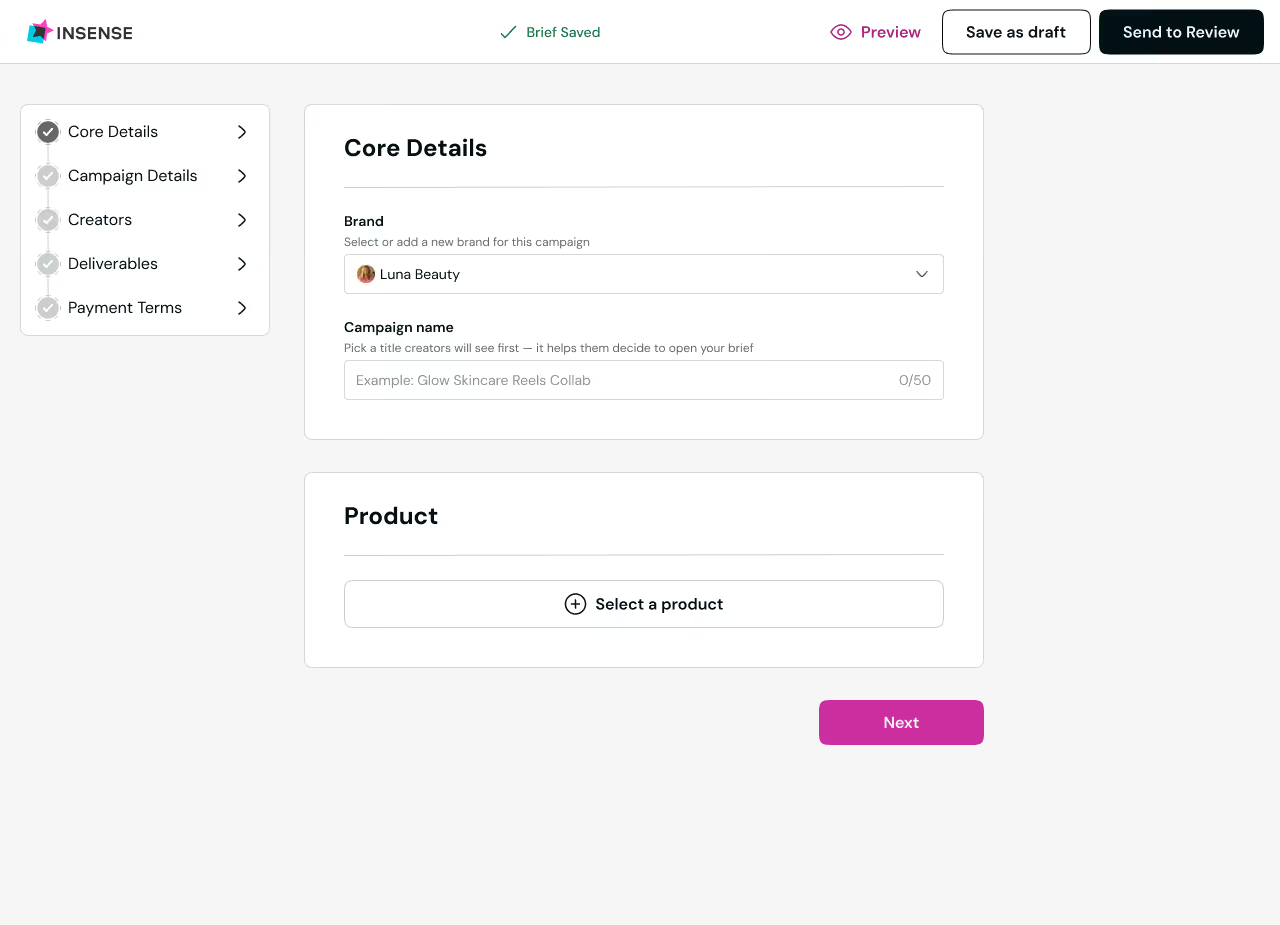
Moving on, you will need to select your preferred campaign which in this case would be customer content creation. Then, don’t hesitate to follow the on-screen instructions as you go on.
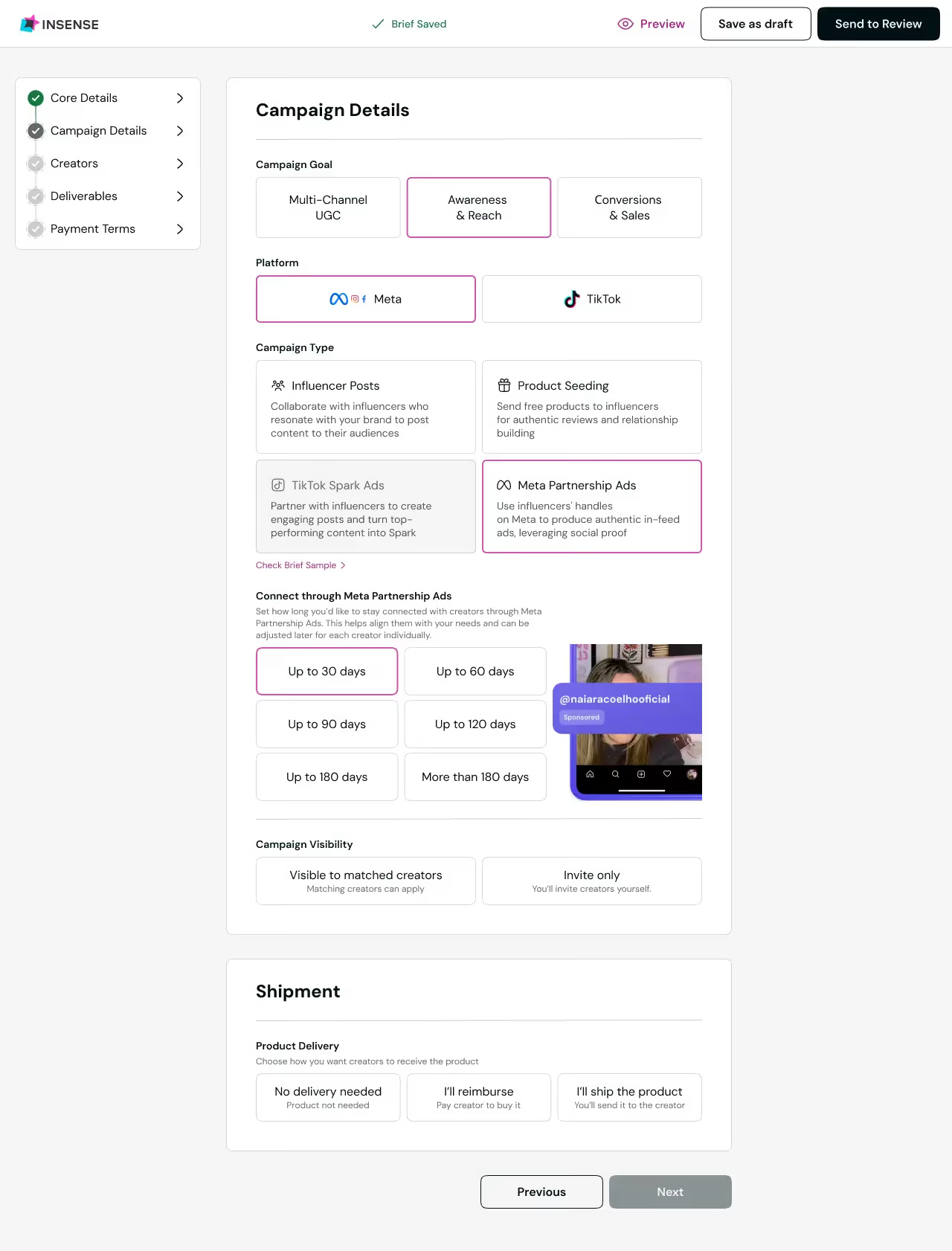
After completing your influencer brief using our template, share it with your creator so they can get started on the testimonial.
We’ve shown you how to get customers to share their own testimonials so your brand’s conversion rates can go up.
We’ve reached the end of this guide.
Let’s wrap up with some closing words.
Now Over to You
There you have it!
In this guide, we’ve discussed everything you need to create killer testimonials.
Keep in mind that you can always work with creators to create testimonials for your business.
Well, if you still have questions about how creators can help out, don’t hesitate to book a free demo with Insense and we’ll guide you every step of the way.
Thanks for reading.


.avif)