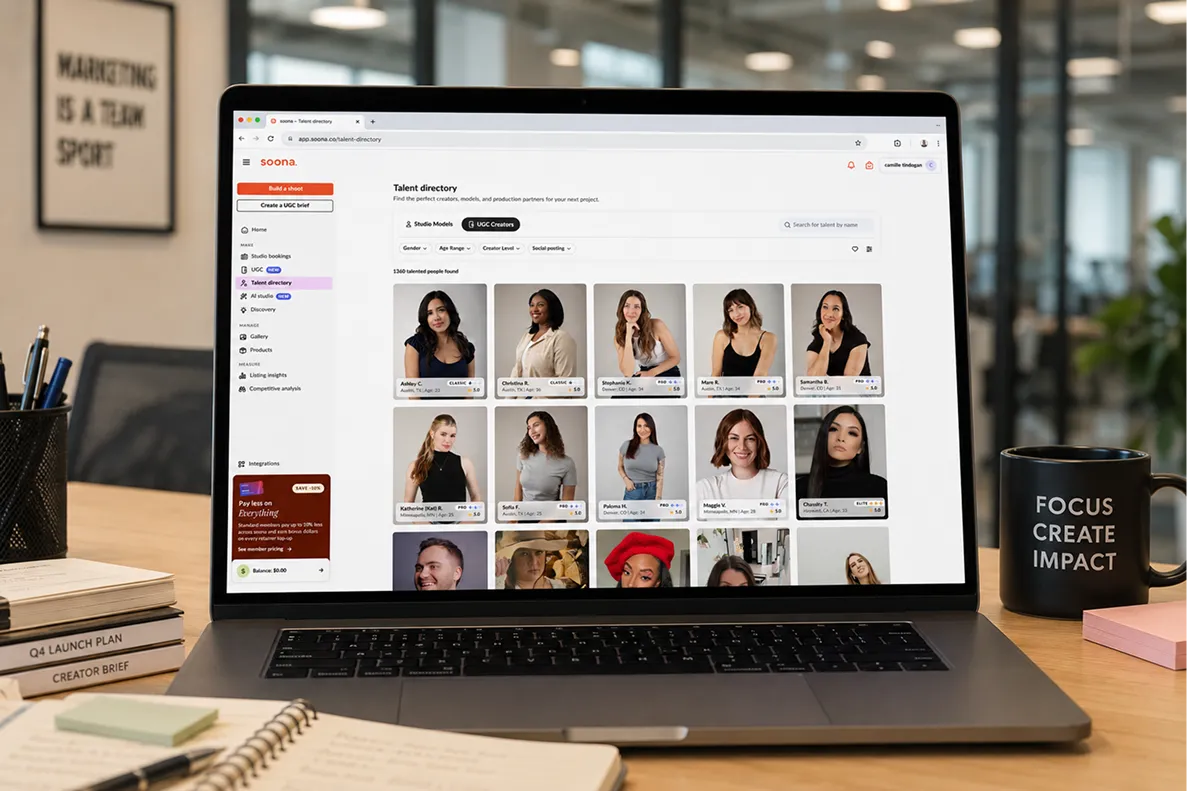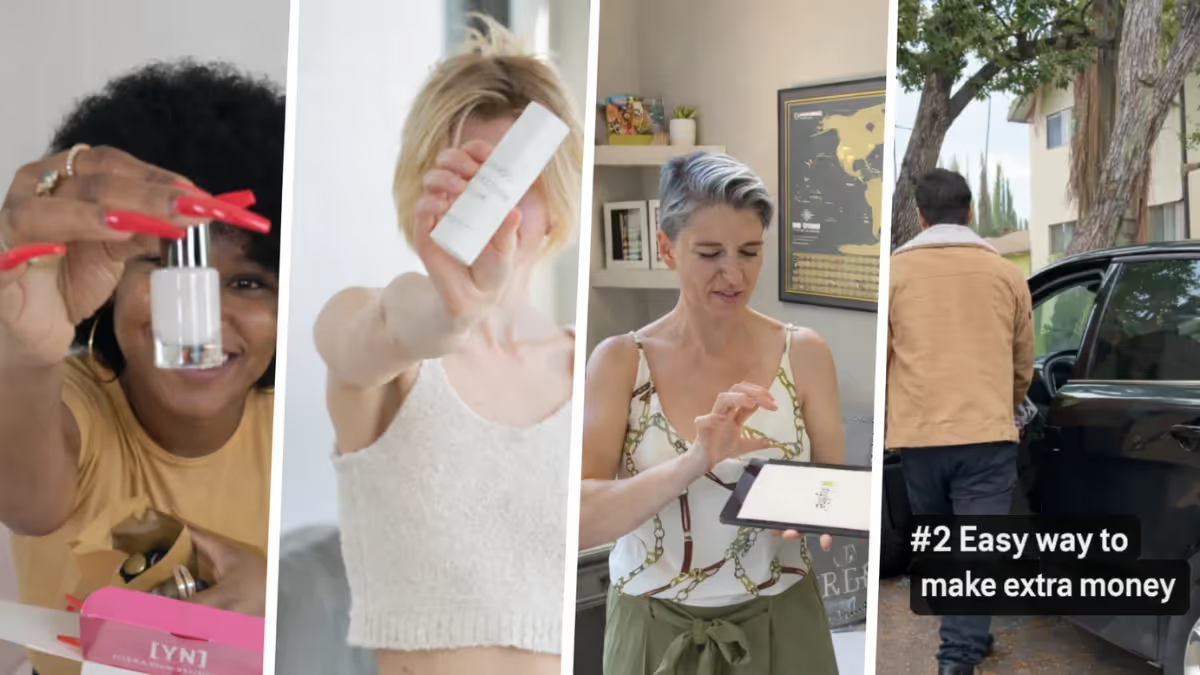
Instagram influencer marketing is a production strategy where brands and agencies partner with creators to scale performance-ready content.
In 2026, performance marketers use Instagram-specific tactics to leverage high-intent discovery and native commerce tools.
This guide explains how to scale creator content using micro-influencers and AI-powered workflows to improve creative velocity.
Let's get into it.
Why Instagram Still Dominates Influencer Marketing
Instagram remains the dominant force for performance marketing because 81% of users research new products directly on the app.
The platform provides a full-funnel experience that connects creator discovery to native commerce tools like in-app checkout and product tags.
Brands and advertising agencies use this infrastructure to turn organic creator content into directly attributable revenue for their growing businesses.
Performance brands on Insense have seen massive returns by leveraging this ecosystem to scale their creative production and ad velocity.
For example, the skincare brand goPure achieved a 204x ROI by using high-quality creator videos on their Instagram product pages.
This proof of success makes Instagram the most reliable channel for brands wanting to lower customer acquisition costs via creators. The platform continues to outpace competitors by offering the highest quality of user attention and a seamless path to purchase.
Instagram Influencer Marketing Trends You Can’t Ignore
The Instagram influencer landscape has shifted more in the last two years than in the five before that.
Here are the trends shaping how smart brands are working with creators right now.
Micro and Nano Creators: Bigger Isn't Better Anymore
Follower count is no longer a primary performance metric. Instagram nano-influencers with under 10,000 followers deliver an average engagement rate of 6.23 percent. This is the highest of any tier on the platform. Brands and advertising agencies report higher ROI from these creators compared to macro-influencers.
This shift allows performance teams to hire multiple niche creators for the cost of one celebrity account. It builds a high-volume creative pipeline for paid social ads.
The reason people come back is all down to trust. People trust recommendations from individuals like friends and family over brands, and smaller influencers sit much closer to that “trusted friend” end of the spectrum than celebrities or macro accounts.
Performance-Based Collaborations: Paying for Results, Not Reach
The influencer marketing industry has matured a lot in the past few years, and one of the clearest signs of that is the shift in how brands are paying for partnerships.
49.6% of brands now prefer commission-based partnerships over flat fees, and it's easy to understand why. This model directly aligns creator incentives with brand outcomes rather than impressions that may or may not convert.
Performance-based models come in a few flavours:
- Affiliate commissions (where a creator earns a percentage of every sale they drive)
- Tiered bonuses (a flat fee plus performance bonuses when specific KPIs are hit)
- Hybrid structures that combine a modest base rate with commission upside
For creators who know their audience converts, it's actually a better deal because their earning potential is unlimited.
The shift also encourages longer-term creator relationships, which is where the real magic happens. A creator who's been working with your brand for six months knows your tone, your audience, and what makes their followers buy.
To help you more with performance-based influencer marketing, you can check our deep dive on how to build, launch, and scale campaigns that drive measurable results.
AI-Assisted Content: Scale Without Losing Authenticity
The question in 2026 isn't whether to use AI in your content workflow, it's how to use it without sacrificing the authenticity that makes creator content work in the first place.
Unilever's approach here is worth looking at closely, because they've done it at a scale most brands aspire to.
Their teams now take a single product image and use AI to spin it into multiple formats, languages, and versions.
The results for their Beauty & Wellbeing brands (TRESemmé, Dove, Vaseline, Clear) were hard to argue with: up to 55% savings on content costs, 65% faster turnaround, double the click-through rates, and users staying engaged three times longer with their previous assets.
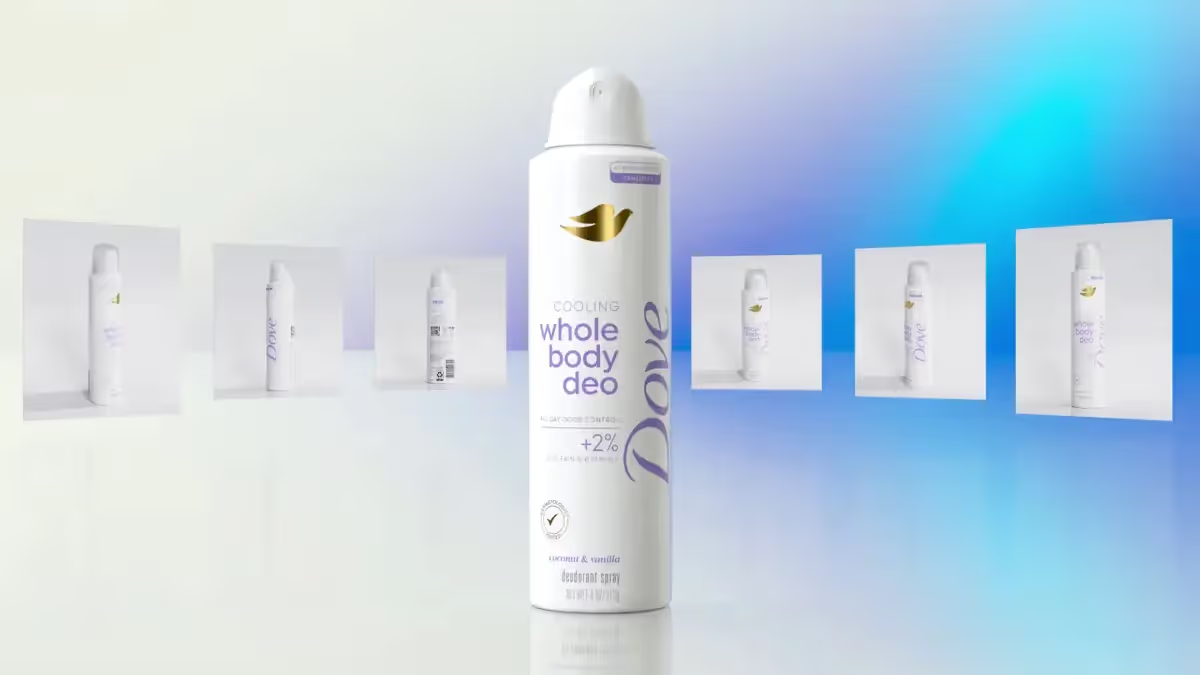
Unilever's new CEO has set a target of putting half the company's marketing budget into social media while significantly scaling up influencer partnerships… and you simply can't execute at that level without AI doing the heavy lifting on production.
Now, most brands aren't Unilever, but the principle scales down really well.
AI can help you write better briefs faster, turn a creator's Reel into a carousel and a Story and a paid ad without a full production team, and tell you which content angles are resonating so you're not just briefing into the void.
The creator still brings what AI can't replace (their voice, their community's trust, the authentic delivery that makes people actually buy). AI just handles the operational stuff that used to slow everything down.
Affiliate-First Monetization: The Creator Commerce Shift
Platforms like LTK (formerly LIKEtoKNOW.it) and ShopMy have turned affiliate commerce into a genuinely powerful, trackable, full-funnel strategy for both sides.
LTK drives $4.1 billion in trackable annual sales across 40 million monthly users, working with over 5,000 retailers and supporting more than 200,000 creators globally.
What makes these platforms compelling for brands is the accountability they create. Every click, every conversion, every commission is trackable. You can see exactly which creators are driving real revenue versus just engagement, and build your roster accordingly.
The affiliate-first approach also changes the nature of creator relationships for the better.
When a creator is genuinely earning from what they recommend, there's a natural incentive to only push products they actually believe in, which is exactly the kind of authentic endorsement that converts.
High-Impact Instagram Tactics That Works Now
Knowing the trends is one thing. Knowing exactly which content formats and features to actually use is another thing entirely.
These are the tactics that are driving real results on Instagram right now, and how to brief your creators to make the most of them.
Using Reels and Shop Tags For Direct Conversion
Reels get double the reach of carousels. More importantly, they're shown to non-followers via the Explore tab and Reels feed, meaning every Reel is also a discovery tool.
Add shoppable product tags into that mix, and the funnel comes together beautifully. After watching a product video on Instagram, roughly 48% of users take a follow-up action, such as searching for more details or visiting a website.
With product tags and in-app checkout, many of those users don't even need to leave the app because the path to purchase is built right into the content.
Try this: When briefing creators for Reels, push for native-feeling content. The first three seconds need to hook viewers. Trending audio almost always helps, and use text overlays for people watching without sound.
Carousels: The Trust-Building Powerhouse Brands Underestimate
Instagram carousel posts are hitting the highest engagement rate of any content format in 2026, averaging 0.55% compared to 0.50% for Reels.
That probably sounds counterintuitive when Reels are getting all the attention, but think about it from a user behavior perspective. Someone who swipes through eight slides is actively choosing to spend time with that content.
Carousels with 8–10 slides consistently achieve the highest engagement rates, often exceeding 2%, and those with 7–10 slides generate 23% more engagement than carousels with fewer than 4 slides.
Try this: brief your creators to hook hard on slide one. If the first frame doesn't earn the swipe, nothing else matters. And always close with a clear ask.
Stories: The Warm-Up Act That Makes the Sale
Stories are more of a relationship-deepening tool than a discovery tool. They're a relationship-deepening tool. And in influencer marketing, relationships are what make people buy.
The interactive features inside Stories are massively underused by brands:
- Polls are low effort for followers and make them feel like they're part of a conversation.
- Q&As give creators a chance to basically run a live FAQ that builds purchase confidence.
- Quizzes turn product education into something that feels like entertainment rather than a pitch.
Try this: ask your creators to use Stories to warm up their audience before making a product recommendation, not after. E.g., A "have you tried X?" poll today, then a genuine product reveal tomorrow.
Collaborative Posts: The Reach Hack You're Probably Not Using Yet
Instagram's Collab feature (where a creator invites your brand account as a co-author on a post) is one of the easiest ways to partner with influencers.
The “shared” post lives on both profiles at the same time, shown to both sets of followers, with all the likes, comments, saves, and shares pooled into one combined engagement total.
The reason it works so well goes beyond the numbers. Your brand is reaching the creator's audience without the content feeling like a brand ad.
Common Mistakes to Avoid
Even the most well-intentioned Instagram campaigns can fall flat. Here are the biggest influencer marketing mistakes to watch out for:
- Choosing influencers by follower count alone. A million followers means nothing if 0.3% of them are actually engaged. Ask yourself: does this creator's audience actually overlap with my target customer? Always audit for fake followers and inflated engagement before signing off on a partnership.
- Ignoring FTC compliance and transparent labelling. In the US, paid partnerships must be clearly disclosed with an #ad, #sponsored, or Instagram's native "Paid Partnership" label. Brief your creators on this explicitly.
- Overusing discount codes and creating offer fatigue. Yes, discount codes are a great conversion tool, but lean on them too heavily and you train your audience to only buy when there's a deal on the table. Consider performance incentives that don't rely on discounting: exclusive bundles, early access, or limited-edition products give creators something compelling to offer without undercutting your margins.
How Insense Helps Brands Win on Instagram
Everything we've covered in this guide is a lot to manage across spreadsheets, email threads, and disconnected tools. That's exactly the problem Insense was built to solve.
Here's how it all comes together on the platform:
- A Creator Marketplace built for finding the right fit. Insense gives you access to 20,000+ vetted Instagram and TikTok creators, all human-screened for quality. Filter by niche, location, gender, follower count, engagement rate, audience demographics, and even the hashtags a creator posts to.
- Briefs that actually get the content you need. Insense's built-in brief builder walks you through goals, creative requirements, and guidelines in a structured, intuitive way so creators know exactly what you're looking for.
- Meta Partnership Ads (whitelisting). Find influencers open to Partnership Ads, request account-level access in one click, and connect directly to their Instagram handle through Insense.
- Affiliate program management in one place. Insense lets you find influencers already enrolled in affiliate programs or enrol them into your own and handles commission payments directly through the platform.
- Influencer outreach at scale. Build AI-generated creator lists based on your brief parameters, auto-applied email templates, and a centralized dashboard to manage replies and move creators through your pipeline.
- Content rights, payments, and performance tracking sorted. Every piece of content commissioned through Insense comes with full digital copyright so it’s yours to repurpose as ads, carousels, Stories, or anywhere else you need it. Payments are automated and handled in-platform, and a performance dashboard tracks views, reach, engagement, and spend across all your campaigns in one place.
Ready to see it in action? Start your free trial or book a demo with the team and find your next best-performing creator in under 48 hours.
.avif)

.avif)