Beauty dominates as one of the largest industries within paid social. However, the brands who are winning customers via social media acquisition aren't necessarily the ones with the biggest ad budgets.
They're the ones with the right creator collaborations.
Today’s beauty shoppers are increasingly skeptical of polished brand ads. Instead, they trust the makeup influencer (a content creator with a stylized library of beauty and cosmetics content), whose skin tone matches theirs, speaks their language, whose page they've followed for months. Someone who's already introduced them to products they love.
Trust is the asset, providing a vital opportunity for companies to leverage makeup influencers for significant impact.
This guide cuts through the noise, showcasing 25 of the best make up influencers across Instagram, TikTok, and YouTube right now. Rated not just according to follower count, but by demographic reach, niche content, and commercial relevance.
We’ve picked out the best make-up influencers across a creative and diverse scene: bridal specialists, shade-range advocates, science-led reviewers, South Asian, Latina, and Muslim community creators, and more. Directly reflecting the extensive array of cosmetic products available on the market right now.
If you're building a creator roster, preparing a product launch, or trying to get more out of your ROAS, here's where to look.
Top Makeup Influencers by Platform
The beauty industry's advertising landscape has undergone a fundamental transformation in recent years.
Social media is no longer just a supplementary channel, it’s one of the main marketplaces where products are discovered, trends are born, and purchase decisions are made.
Instagram, TikTok and YouTube are the three top dominating social media platforms for advertising, brand awareness and reach. For makeup brands, understanding the distinct role each platform plays is essential to building an effective, multi-channel strategy.
Below you will find a rundown of each platform’s demographics, and what kind of content works best, alongside our picks of top makeup influencers you can collaborate with for powerfully effective campaigns.
Top 10 makeup influencers on Instagram
Content style on Instagram is generally polished and aspirational which works great for visual brand storytelling, via high-quality product photos, reels, and stories.
Instagram's core beauty audience is millennials and Gen-Z, but brands targeting older demographics may find surprisingly engaged audiences too. You can check out each creator’s audience age split in our creator marketplace. We've added links to their creator profiles below.
Here are 10 of the best makeup influencers on Instagram:
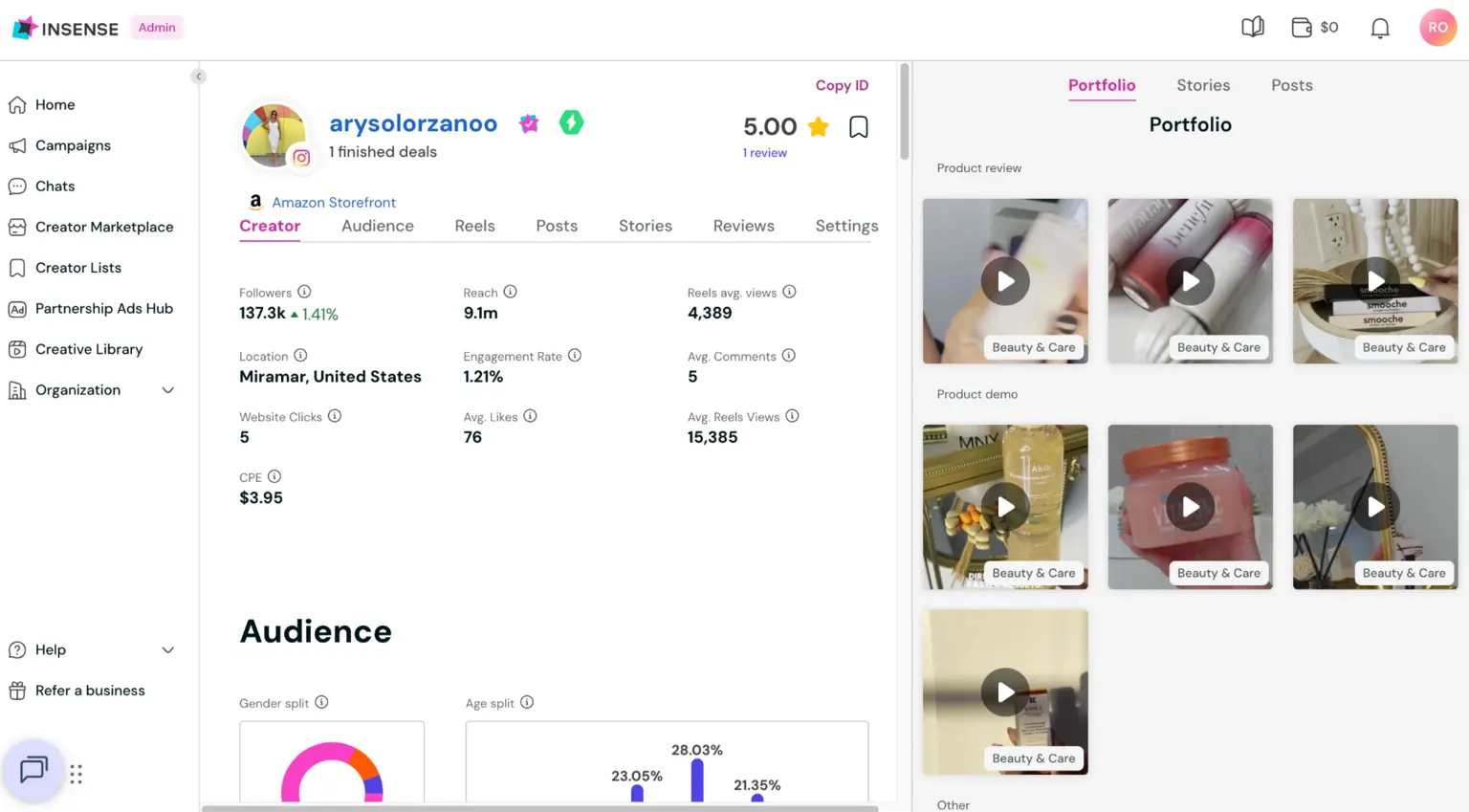
- Ary Solorzano - @arysolorzanoo
A popular make-up influencer within the Latina community. Ary shares content around beauty, lifestyle, and motherhood. With a 137k following on Instagram, she's also active on TikTok (199K) and YouTube (78K). She produces close-up makeup application videos, product unboxings, plus skin/face tutorials. Her creative style is candid and personal.
- Lola González - @lolagfdez
Lola is based in Tenerife, Spain (127k followers). She is a science student by day and a beauty creator by night. Her science background gives her product reviews a layer of credibility that most popular makeup influencers can't offer. This is a rare and valuable asset in makeup influencer marketing, where ingredient-conscious consumers are a fast-growing segment. Lola operates in a sweet spot between high-quality visual output and genuine personal authority.
- Anna Kozlova - @annakozlovaugc
A self-described "Makeup & Fragrance Beauty Influencer" with 251K followers on Instagram, based in Texas, USA. She’s also active on TikTok (132K followers). Anna’s content is almost entirely close-up, macro-level makeup application. This is the kind of hyper-specific, high-utility content that drives genuine saves, shares, and purchase decisions. Suitable for English-language, US-based, prestige beauty consumers.
- Zara Alkiwi - @zarakiiwii
A beauty and film make-up influencer (113K followers), based between Ontario and New York. Her bio sets the tone immediately: "I talk beauty and film" and "Brown eyes are underrated". Zara has carved out a distinctive niche in makeup influencer marketing. Her focus on brown eyes and cinematic beauty suggests a highly engaged, specific audience rather than a broad general beauty following.
- Minahil Ali Wattoo - @minahilaliwattoo
Minahil occupies a unique and strategically valuable intersection for brands. She is simultaneously a prestige make-up influencer, and the founder of a South Asian/Muslim community hub in Canada. This combination reaches an audience that is both high-purchasing-power and genuinely underserved by most beauty campaigns. Minahil speaks English, Hindi, Panjabi, Urdu. She has 278K followers, and is based in Toronto.
- Legna Fuentes - @fuentes_legna
With 172K followers, based in the US, and audience reach across the US and Latin American markets. Legna is operating in the realm of makeup as art, and doing it at a high level. As an Artist, Makeup & Nails | UGC creator, her audience is likely drawn to her for the artistry first. That community tends to be deeply engaged and highly influential within their own peer networks, making her a strong candidate for product seeding as well as creating ad-ready content.
- Maria Angelica Fassrainer - @maryandpalettes
Maria is a "Makeup Creative Nerd," based in Miami (169K followers). Producing content mostly catering to Spanish-speaking Latina women, the plus-size community, beauty enthusiasts, and pop culture fans. Her audience follows her as a person as much as for any specific content vertical, which means her recommendations carry exceptional personal trust. The comments on her red carpet post ("she's a STARRRR," "you look beautiful!") speak to a community that genuinely roots for her.
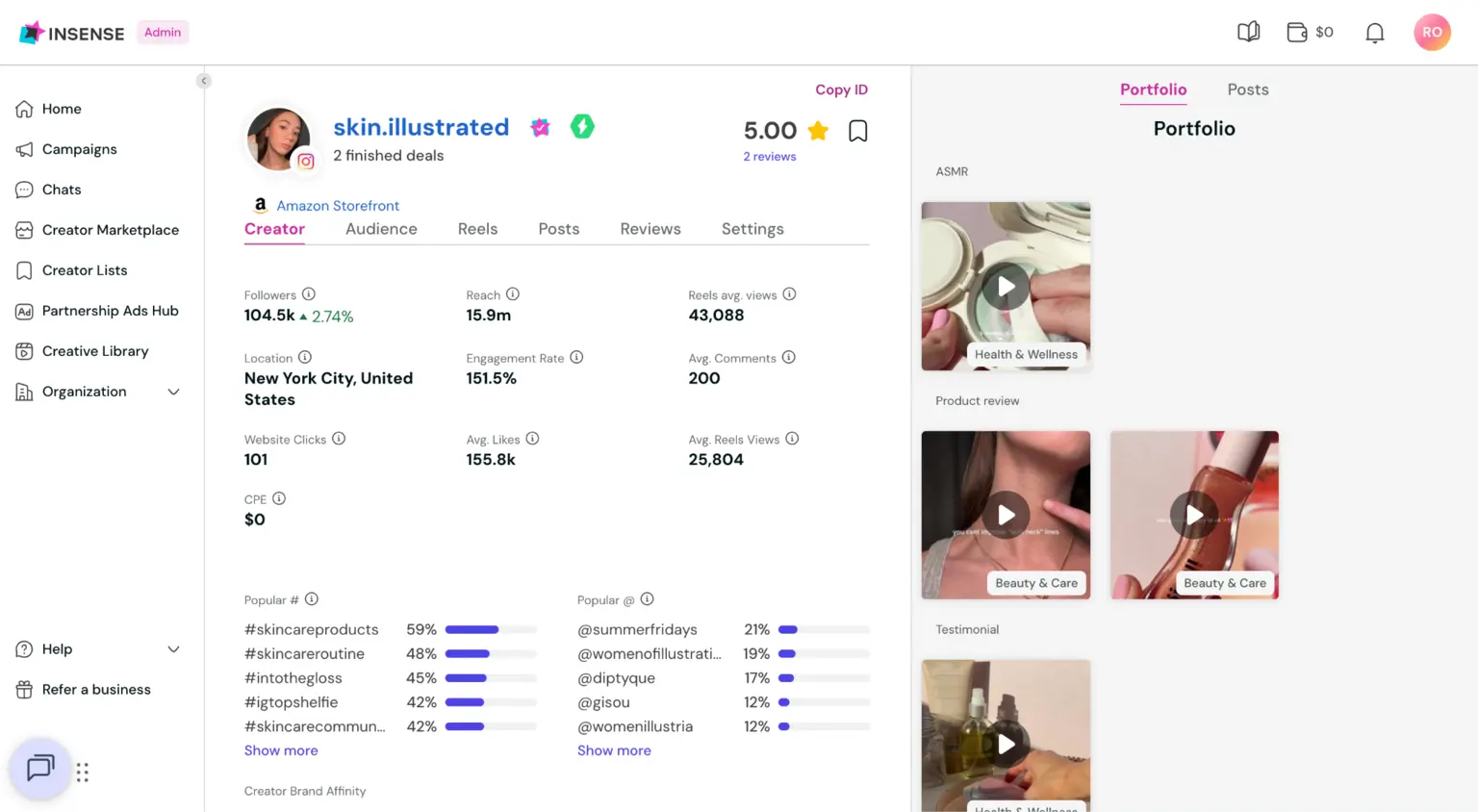
- Emily Sophia - @skin.illustrated
Emily Sophie is a popular NYC-based makeup influencer with 104K followers. Her feed is built around close-up, softly lit, skin-first beauty content. Her handle, ‘skin.illustrated’, perfectly captures her positioning. She showcases makeup technique and product discovery, plus product review content. Relatable, self-aware content that performs well for engagement and shares, with charming illustrated graphics alongside reels.
- Michmoon - @michmoon
Michmoon has 372K followers on Instagram, TikTok 1.7M, Facebook 850K, and YouTube 1.2M, making her total cross-platform reach comfortably above 4 million. She is a special effects and body paint make-up influencer operating at a professional level, with full-face characters, body paint, SFX looks, and abstract art pieces. Primarily Spanish-speaking, Latin American audience with massive scale.
- Yuyi - @rareyuyi
With 136k followers particularly active across the US and Latin America, Yuyi’s bio describes her as both a Makeup Artist & Content Creator. Showcasing tutorials, product reviews, and technique tips, mostly in Spanish, she is a popular makeup influencer who teaches, not just showcases, which builds a particularly loyal and engaged audience. Her tone is approachable, informative, and fun.
Top 10 makeup influencers on TikTok
TikTok thrives on raw, fast-paced, authentic content. Think quick tutorials, product hauls, "get ready with me" videos, dupe guides, and viral trend participation.
72% of Gen Z users have a TikTok account, and this generation makes up about 60% of the platform's user base
Here are 10 of the best makeup influencers on TikTok for brand collaboration:
- Darina - @darina.makeup
17.6K followers, 158.1K likes ~ a healthy likes-to-followers ratio that suggests her content consistently outperforms her audience size in reach. Darina identifies as a "UGC & Beauty Creator," based in Germany. She's active across TikTok, Reels (Instagram), and YouTube Shorts with content mostly utilizing the transformation format: before/afters, technique reveals, and satisfying beauty process videos that are the backbone of short-form beauty content on TikTok.
- Selena Marchand - @selenamup
1.4M followers and a staggering 72.4M likes, Selena is a macro-creator operating at the top tier of makeup influencer marketing. Canadian, English-language millennial, her "Millennial Makeup School" and "Mature Makeup" positioning makes this explicit. Her audience is likely older than the typical TikTok beauty demographic, which is a meaningful differentiator. These are consumers with purchasing power, looking for content that speaks to their actual skin concerns and lifestyle rather than teenage trends.
- Kendra Matthies - @kendra_matthies
1.1M followers, 67.1M likes. Kendra Matthues is a Michigan-based Bridal Makeup Artist, Esthetician, and Educator, active across TikTok, Instagram, YouTube, and Facebook. Being both a licensed Esthetician and a working Bridal Makeup Artist means her content carries real professional authority. The wedding niche is particularly valuable - brides and bridesmaids researching products for the most important makeup day of their lives are highly motivated buyers.
- SINA - @sina.makeup
438.5K followers, 9.2M likes, Venezuelan-American make-up influencer based between the US and Venezuela, Sina creates entirely in Spanish firmly within the Venezuelan beauty creator ecosystem, which is a tight-knit and highly engaged community. For brands wanting access to Spanish-speaking Latina audiences in both the US and Latin America simultaneously, this dual-market reach is genuinely valuable.
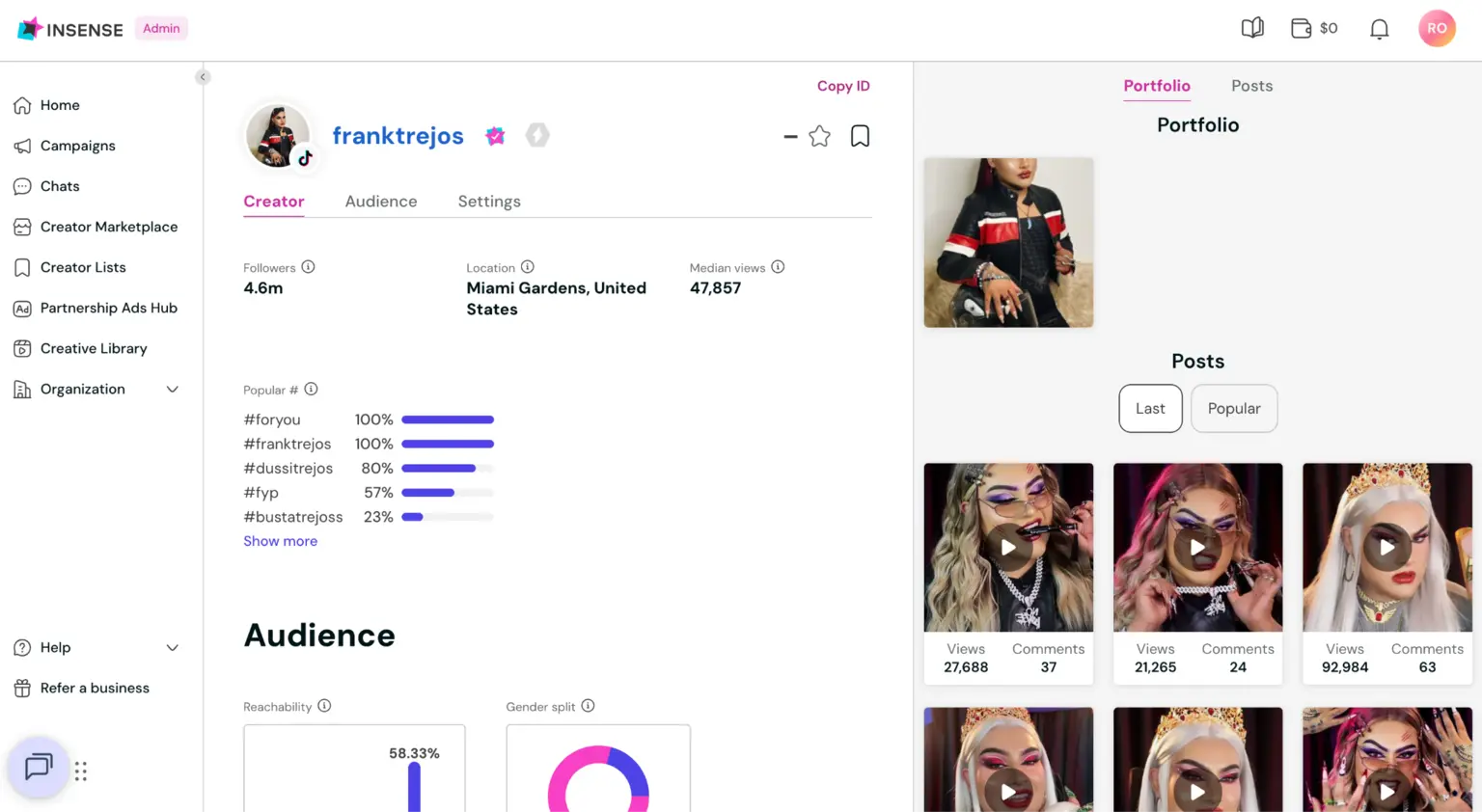
- Frank Trejos - @franktrejos
4.6M followers and 128.3M likes, Colombian Spanish-language creator "MAMÁ LADY" ~ a fierce community identity common in Latin LGBTQ+ and beauty spaces. Frank's followers aren't just beauty fans; they're part of a community with a name and a shared culture. His makeup videos sit at the intersection of professional skill and performance, which is what drives viral reach at this scale. Frank’s audience doesn't just consume beauty content, they celebrate it.
- Pooja Jain - @poojajain2282
163K followers, 2.4M likes, NJ/NYC-based Make-up influencer. Her bio states "makeup is just science" "affordable brown girl makeup & skincare." For South Asian consumers, finding a creator who specifically addresses their undertones, skin concerns, and aesthetic preferences is rare. Pooja reinforces a science-forward, results-oriented approach to beauty that makes her a credible voice for ingredient-conscious South Asian, South Asian-American, and "brown girl" beauty consumers across the US.
- Jenni Arizala - @makeupbyjenni_
624.9K TikTok followers, 6.1M likes, 123K on Instagram, 80K on YouTube ~ a powerful cross-platform presence. Jenni Arizala is a NYC-based, Afro-Latina Colombian makeup influencer, focusing on beauty specifically for black, brown-skinned, and olive/tan-toned women. Her audience follows her because she solves a real problem: finding makeup that actually works on their skin.
- Iqra Hussain - @iqrahussain._
With 14.5K followers, 399K likes, Iqra Hussain is an emerging micro-influencer with a likes-to-follower ratio of roughly 27:1, which signals that her individual videos are consistently pulling far beyond her subscriber base. She is a working makeup artist based in the UAE, creating primarily for a Middle Eastern audience. Her content is tutorial and transformation-led. The Gulf beauty industry is one of the fastest-growing in the world, with high purchasing power and strong appetite for premium products.
- Nazeea Harun - @nazeea
Nazeea Harun is a Toronto-based, 26 year old makeup influencer. Her content niche is culturally specific in a way that's rare and genuinely valuable. She creates specifically for Muslim, South Asian, and Middle Eastern women in Canada. She has 323.2K followers and 23M likes ~ a likes-to-follower ratio of roughly 71:1. This extraordinary ratio means her content is going significantly viral on a regular basis.
- Louise Rozz - @louiserozzz
122.8K followers, 12.7M likes, & based in Poland, Louise Rozz has her own self-described "peaceful energy" aesthetic. A calm, ASMR-adjacent makeup aesthetic which attracts a specific and deeply loyal audience who return for the atmosphere as much as the tutorials. This also makes her content highly rewatchable, which directly drives the incredible likes-to-followers ratio she's achieving (103:1, the highest of any creator reviewed across all 10 TikTok makeup influencer profiles.).
Top 5 makeup influencers on YouTube
YouTube is the home of long-form, in-depth beauty content. Full tutorials, multi-step skincare routines, product reviews with real-time testing, and "first impressions" videos lead the way here.
Viewers come to YouTube to learn rather than browse. People actively seeking out beauty tutorials are likely to convert into buyers.
Here’s our pick of popular makeup influencers on YouTube:
- Jackie Aina - @jackieaina
3.5M+ subscribers, 427M+ total views. One of the most influential Black beauty creators on the platform, she built her reputation on inclusive content for deeper skin tones before it became an industry talking point. Combines honest reviews with strong personality and a loyal, engaged community.
- Madddnot - @madddnot
83K+ subscribers, 6M+ total views. Spain-based beauty creator with a distinctly soft, feminine aesthetic and a strong focus on eye-specific and named-look tutorials. Her video lengths typically run 15–25 minutes, suggesting an audience willing to sit with longer-form tutorial content rather than short-form clips.
- Hindash - @Hindash
1.7M+ subscribers, 106M+ total views. UAE-based, gender-fluid makeup artist whose content is among the most visually and philosophically distinctive in the beauty space. Painterly, meditative, and deeply artistic. A strong fit for prestige or artistic brand positioning.
- Hayley Kim - @HayleyKimakim
1.35M subscribers, 135M+ total views. US-based Korean-American creator. She's skin-first, with a natural-aesthetic, and consistently positions herself against heavy or high-glam makeup. This makes her a strong and authentic fit for skincare-makeup hybrids and clean beauty.
- Christen Dominique - @christendominique
5M+ subscribers, 616M+ total views. Latina creator covering tutorials, reviews, and lifestyle. Warm, accessible, and highly consistent, with a longer-form YouTube-native format that suits deeper product storytelling.
Why Makeup Brands Need Influencer Marketing
Makeup is one of the most personal product categories in existence, and that's exactly why traditional advertising often falls flat for beauty brands.
A polished studio ad can show you what a foundation looks like in perfect lighting, but it can't tell you how it holds up on oily skin after eight hours, or whether the shade range actually works for deeper complexions.
That gap between brand messaging and lived experience is precisely where influencer marketing and UGC step in.
Trust is the core currency in beauty
Consumers buying makeup want to see the product on someone who looks like them, lives like them, or has skin concerns like theirs.
A popular makeup influencer, especially a micro or nano creator with a niche, loyal following, carries a level of trust that no brand account can replicate. When a beauty creator says "this concealer actually covers my dark circles," their audience believes it in a way they simply wouldn't believe the brand saying the same thing.
UGC fills the gap between aspiration and reality
User generated content: unboxing videos, "wear tests," before-and-afters and honest reviews, gives potential buyers the closest thing to trying a product themselves.
This is especially critical because beauty purchases are high-consideration relative to their price point. Someone buying a $40 lipstick often spends more time researching it than they would a $200 household item.
The algorithm favors authentic content
Platforms like TikTok and Instagram are built around content that feels native and real. Beauty content thrives in this environment.
Brands that tap into this through creator partnerships or by reposting UGC can achieve visibility that paid media alone can't buy at the same efficiency.
Social proof compounds over time
Every piece of UGC is a permanent, searchable endorsement.
A review video from two years ago still converts customers today.
Influencer content and UGC build a body of social proof that functions almost like an always-on word-of-mouth engine, something makeup brands in particular benefit from because their product cycles (launches, seasonal collections, shade expansions) create constant opportunities for fresh content.
The competitive reality
The beauty market is extraordinarily crowded, with indie brands, celebrity lines, and legacy players all competing for attention.
Influencer marketing has effectively leveled the playing field. A small brand with a smart creator strategy can outperform a legacy brand with a massive ad budget, simply because authentic storytelling travels further than broadcast messaging in this space.
In short, makeup brands need influencer marketing not as a trend, but as a structural response to how beauty purchase decisions are actually made: through peer recommendation, visual proof, and the kind of trust that only comes from someone who has genuinely used the product.
How To Choose the Best Makeup Influencers for Your Brand
Choosing the right makeup influencer isn't about finding the biggest name, it's about finding the right fit. Here's how to think through each of those criteria seriously.
1. Match creator skin type to product use case
If you're launching a matte foundation designed for oily skin, partnering with a creator who has dry skin and consistently uses dewy, hydrating products means the content will either look wrong or feel inauthentic to their audience.
The creator's skin type, tone, and concerns should map directly to what your product is solving.
Go further than just skin type, look at the creator's existing content for alignment. Do they already talk about the problem your product addresses?
Do they have viewers who comment asking for recommendations in that area?
A creator whose audience trusts them specifically on, say, long-wear products for humid climates is worth far more for a transfer-proof mascara than a creator with triple the following who covers glam editorial looks.
For shade-range products like foundations or concealers, creator diversity across your campaign isn't optional, it's essential.
Consumers with deeper or more complex undertones are actively watching to see whether a brand includes the make up influencers who represent them.
.webp)
2. Analyze engagement rate and comment intent
Follower count is a vanity metric.
A creator with 80,000 followers and a 6% engagement rate will almost always outperform a 500,000-follower account with 0.8%, both in content visibility and in actual purchase influence.
But engagement rate alone isn't the full picture either. You need to look at comment intent: what people are actually saying. There's a meaningful difference between:
- Passive engagement: "gorgeous 😍", "love this look" - these signal affinity but not action
- Purchase intent signals: "omg what foundation is that?", "need that highlighter!!", "has anyone tried this, is it worth it?" - these tell you the audience is actively in shopping mode
High comment intent means the creator's followers treat them as a source of buying decisions, not just entertainment.
3. Verify ad-ready technical capabilities
Before signing, verify a few things about ad-ready technical capabilities.
First, lighting: makeup content requires clean, consistent lighting that shows true color and texture.
A creator filming in moody ambient light might look beautiful on their feed but will make your product look muddy.
Second, video resolution and stability, especially if you plan to repurpose the content in paid ads, you need footage that holds up at scale and across placements.
Third, editing pace and style: some creators edit in a way that's engaging for their audience but unusable for brand ads (heavy filters, jump cuts, trending audio that carries licensing risk).
Run Beauty Influencer Campaigns with Insense
The 25 makeup influencers in this guide represent what effective beauty creator marketing actually looks like in practice: diverse communities, authentic voices, and genuine audience trust built across Instagram, TikTok, and YouTube.
The opportunity to scale revenue through influencer marketing is massive.
Either by putting your products in front of the right people, via makeup influencers they already trust. Or by receiving tailored UGC from experts in makeup influencer content, ready for you to use in your own channels.
The next step is connecting with them.
Here's how to run makeup influencer campaigns efficiently with Insense.
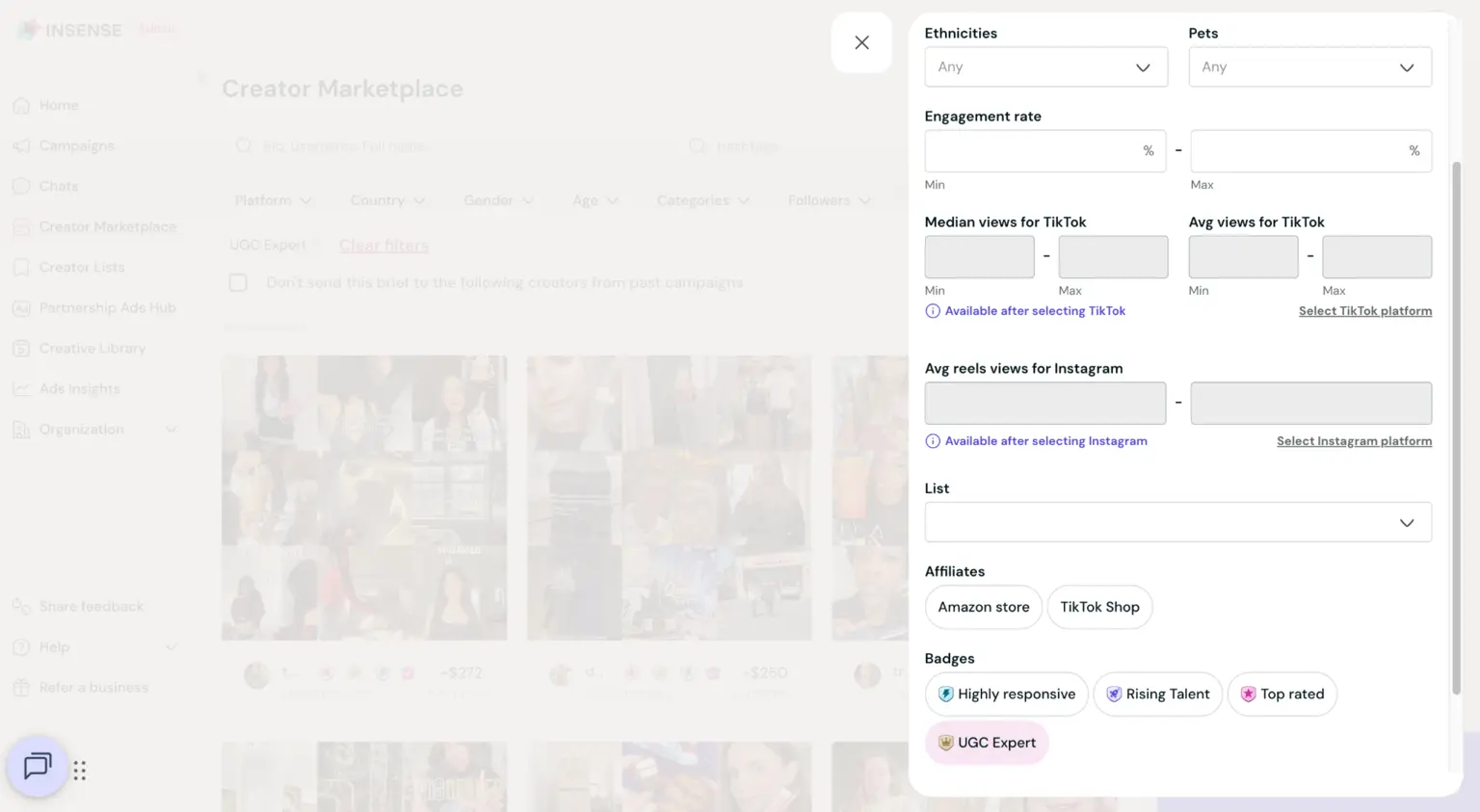
- Find the best makeup influencers. Use Insense's creator marketplace to filter by niche, platform, audience demographics, and content style. Search by hashtags to reach specific corners of the makeup community.
- Give creators a detailed brief. Use Insense's brief builder to define how the product should be applied, what claims are on and off the table, and what the creative direction should look like, whilst still retaining the authenticity that makes creator content work.
- Collect creator-made UGC. Whether you need TikTok-native videos, Instagram Reels, or ad-ready UGC for paid social, Insense centralises the whole process. You can collect, store, manage usage rights, content, and revisions all from one central place.
- Test formats and double down fast. Launch across a mix of creators and content styles, see what performs, then scale the winners quickly. Insense makes it straightforward to re-engage top-performing creators and repurpose content that's already working.
OR - hand it off entirely. If you'd rather not manage creator campaigns in-house, Insense's managed service handles everything. So you can do what you do best while your creator campaigns work their magic in the background.
Ready to connect with the best makeup influencers? Try Insense for free or book a demo now.

.avif)