Social commerce, a.k.a. the ability to browse, buy, and check out without ever leaving your fave social apps is now a major part of how people shop.
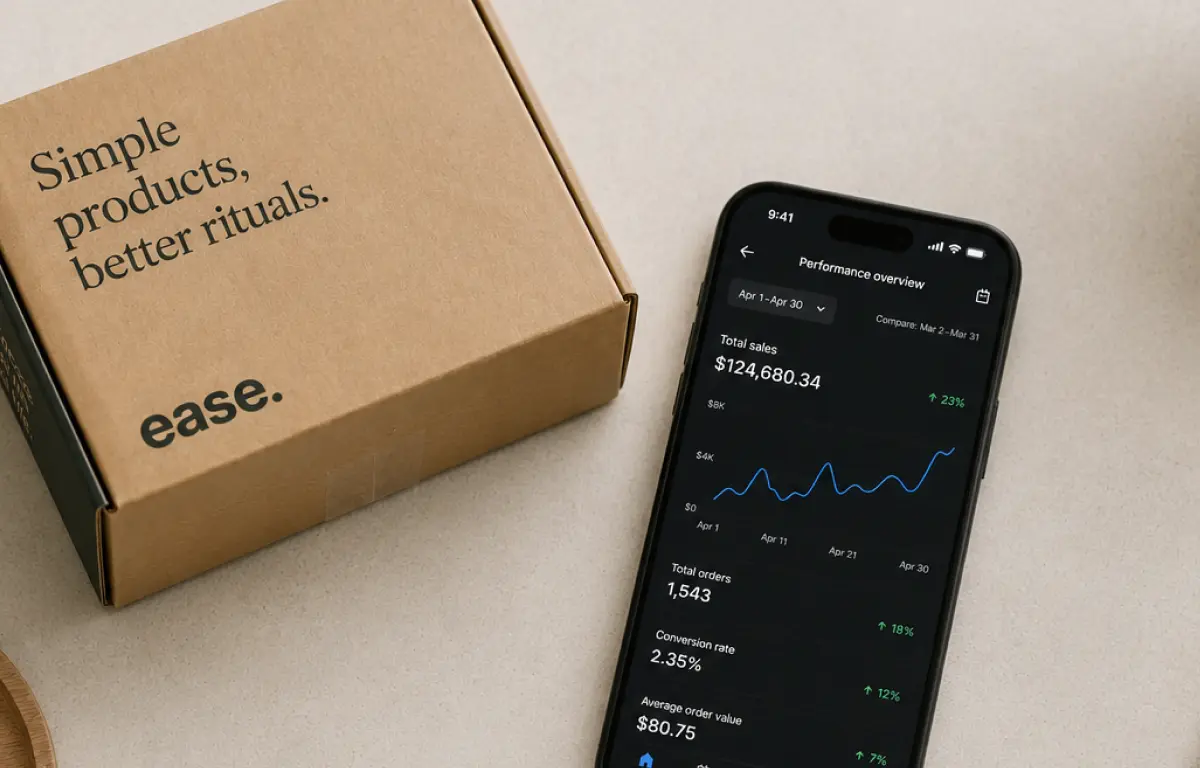
In fact, social platforms drove around 17% of all global online sales in 2025, which is a massive jump for a channel that barely existed a few years ago.
This number should be a wake-up call.
When almost a fifth of commerce happens inside TikTok, Instagram, and other social platforms, having a social storefront isn’t something you should be pushing down your to-do list.
Instead, invest early or risk missing one of the fastest-growing slices of ecom revenue today.
What Is Social Ecommerce?
Social ecommerce means you sell products or services inside social platforms, not on a separate website.
Instead of customers seeing a product and then being directed to an external website to buy, social commerce lets them make a purchase without leaving the app.
It’s obviously still ecom because the transaction happens online, but the shift is the location of the storefront. Rather than pushing people toward your website and adding another step to the journey, you move the buying experience to the platforms they’re already using.
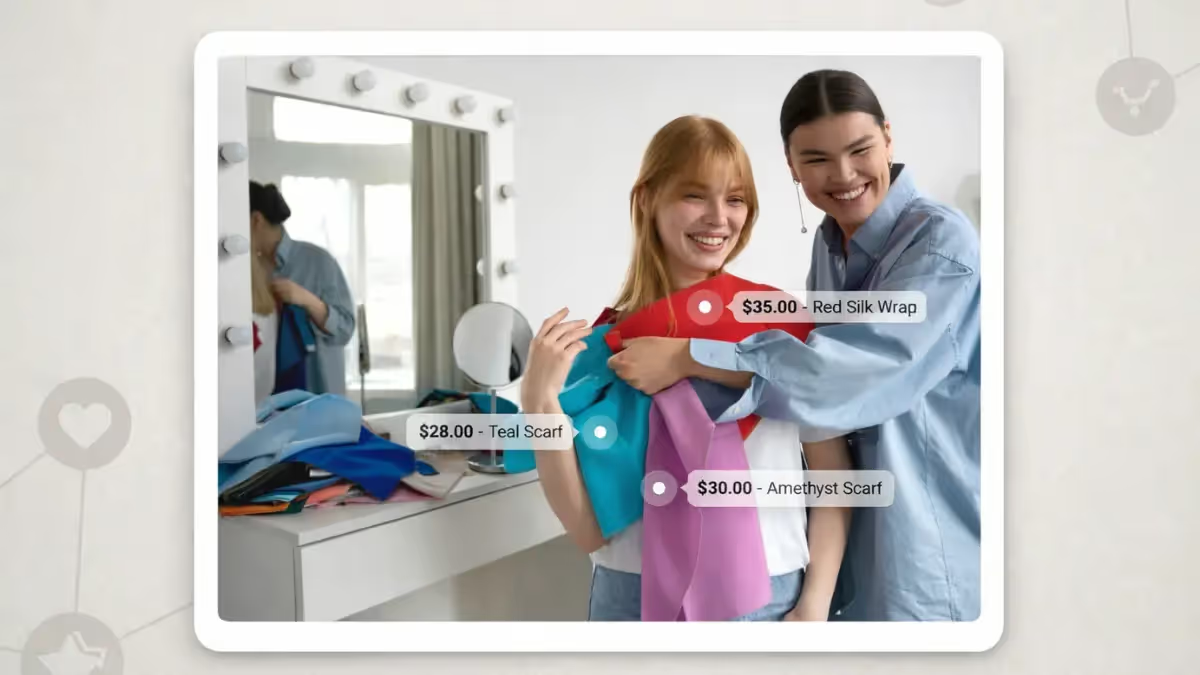
This is particularly handy if you work with creators because it opens up a faster, more direct path to conversion. Creators can tag products or link to in-platform shops and their audiences can buy immediately.
Why Social Ecommerce Matters
Customers already scroll, shop, and get influenced on the same apps. Social ecommerce connects those dots, and that’s kind of a big deal for your brand.
Apparently, the typical internet user spends about 2 hours and 30 minutes on social media every day. And, between 2023 and 2025, the number of US social shoppers grew from 96 million to around 104 million.
So, when we say “kind of a big deal”, we mean a big, big deal.
- Provide a zero step checkout. Social ecommerce removes any extra steps in the buying process that end up slowing people down. When someone sees a product in a Reel, TikTok, or Story, they can tap the tag and check out on the spot.
- Reach massive built-in audiences. Millions of people already scroll, tap, and scroll some more on social platforms every day. Social ecommerce lets you meet them where they’re spending most of their time.
- Understand what shoppers actually want. Social platforms are constantly collecting signals about what users watch, like, save, and follow. Social ecommerce lets you act on that data by showing the right products to the right people.
- Tap into a trend that won’t fizzle out. Social platforms continue to invest hard in shop features, creator tools, and native checkouts, while more and more customers create accounts every day. Let’s just say social media isn’t going anywhere any time soon.
Key Elements of a Social Ecommerce Strategy
Like any other type of marketing and sales tactic, it really helps to have a strategy for your social ecommerce.
This is the connective tissue that will join together your creators, product catalog, shoppable content formats, and your storefronts so they become a fully rounded ecosystem.
Here’s what each of those is and why it’s important.
- Shoppable Content Formats. Shoppable posts (a.k.a. posts that users can tap to buy from) are the foundation of a social ecommerce strategy. They help shoppers discover new products and buy natively through whatever app they’re on.
- User-generated content and social proof. UGC gives customers a window into what it looks like to actually use, wear, or eat your product. It adds a layer of proof to your existing shoppable content to build much-needed trust.
- Livestream shopping. Livestreams take that old QVC vibe and make it faster and more interactive. Viewers can ask questions, see your products in action, and buy on the spot.
- Platform storefronts. Facebook, Instagram, and TikTok all offer in-app stores that become extensions of your existing ecom site. You can upload your catalog and sync all your inventory so people can shop without needing to leave the app.
Each of these components can work alone, but they work much, much better when they all build on each other. Here’s how:
Social Ecommerce Trends and Examples
Look, social commerce has moved well past the “early experiment” phase. It’s now a core part of how customers shop, and these trends show exactly why.
TikTok Shop and Instagram Shopping
TikTok Shop and Instagram Shopping continue to lead the charge, mostly because they’ve nailed the art of the good old impulse purchase.
In fact, 58% of TikTok users have bought something from the platform’s shop. In 2024, 47.2 million TikTokers made a purchase, a number that’s set to rise to 55.6 million in 2027.
But while both TikTok and Instagram are ascending to the heady heights of social ecom fame, they still do things a bit differently.
TikTok has a whole shop section of the app where users can browse products and see videos of creators actually using and reviewing those products.
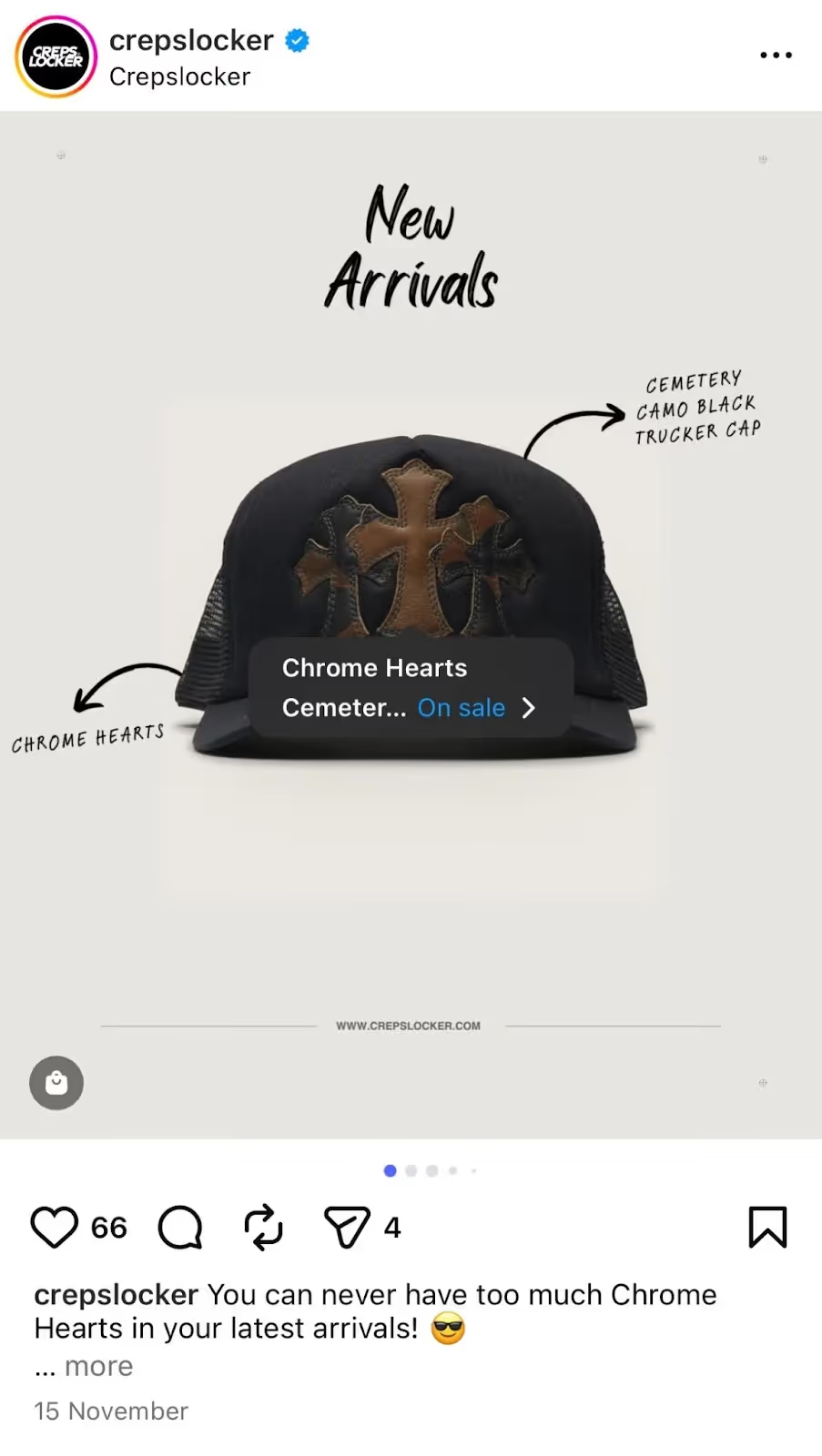
Instagram, on the other hand, lets brands tag products in posts and add a “shop now” button to their profiles, but there’s no dedicated shopping section of the app.
The Live Commerce Boom
Shoppers can’t resist a livestream.
The blend of entertainment, social proof, and impulse buying is an intoxicating mix, and the data backs it up.
The global live commerce market was estimated at $128.42 billion in 2024 and is anticipated to reach $168.73 this year. Another source found that 66% of shoppers are interested in live streamed shopping events and there’s a reason why.
“Going live” as some creators call it lets brands demo products, answer questions, and build hype, which makes buying feel really natural (and hard to resist).
Shifts in Consumer Behavior
Shoppers have become far more comfortable buying through social platforms. The old “I only trust a brand’s website” mindset has softened as people spend more time engaging with creators and making small, low-risk purchases in-app.
Younger buyers started this trend, but older demographics are now catching up as the experience becomes smoother, more secure, and more familiar.
Recent data confirms the shift: by 2025, about 56% of UK consumers say they’ve already bought via social or entertainment platforms, and social-commerce retail in the UK is now a multi-billion-pound market, with forecasts expecting social-sales to more than double over the next few years.
Another recent report from the Times found that 76% of UK consumers plan to make at least one purchase directly through social media in 2025.
And that’s not all. 71% of social media buyers say their purchases are spontaneous, which is yet another reminder that social commerce fuels impulse buys.
Social shopping is not a fringe behavior anymore, it’s actually a mainstream way for consumers to shop.
How to Set Up Social Ecommerce with Insense
1. Launch Shoppable Content
Shoppable content always works best when it comes from creators your audience already trusts.
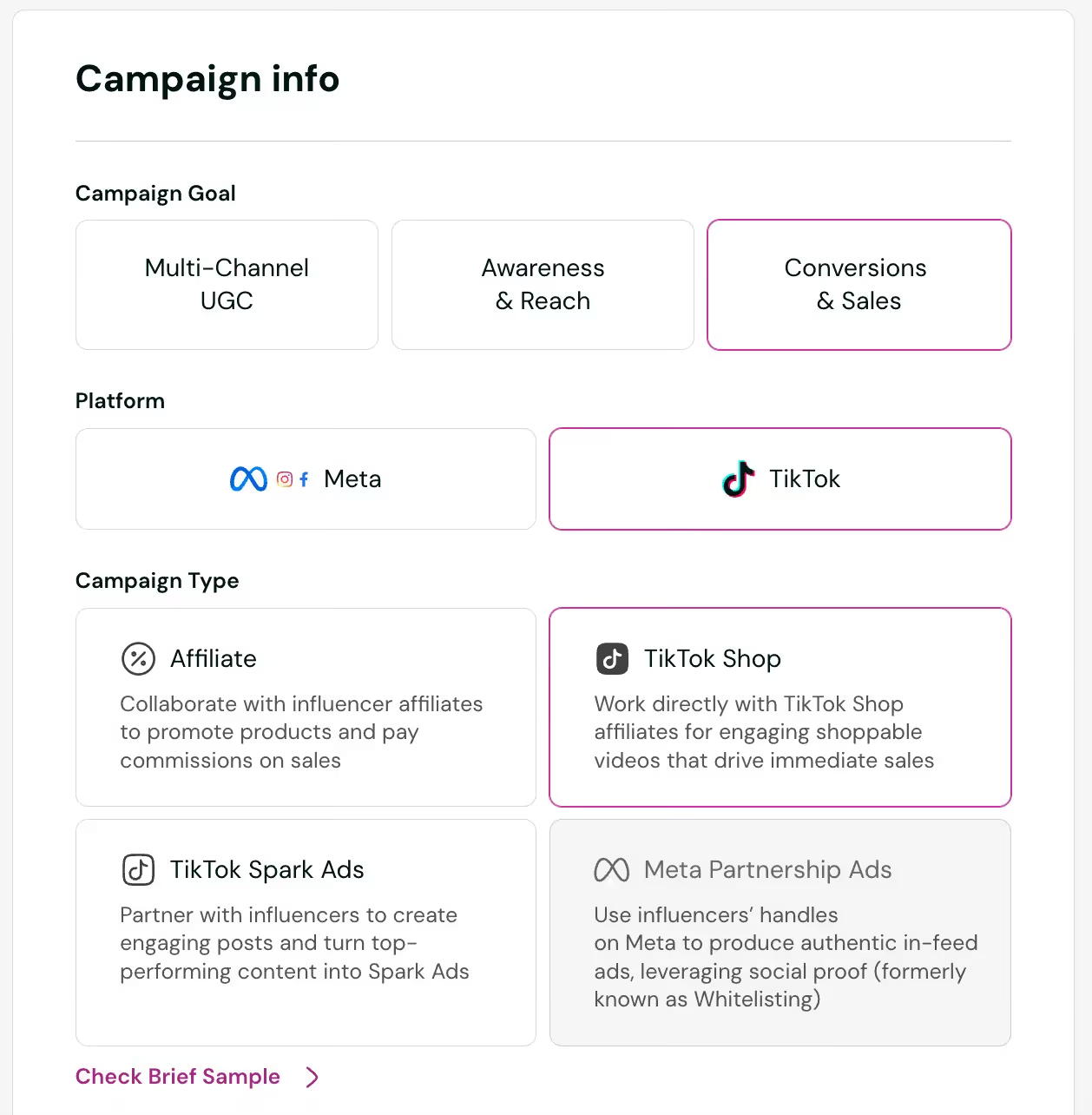
With Insense, you can source good-fit creators, brief them, and collect high-performing content that slots straight into TikTok Shop or Instagram Shopping.

Using the platform’s brief creator tool, you can build out specific guidelines for shoppable posts on whichever social channel you want. If you get stuck, there are brief templates and samples to help you out.
2. Host Live Shopping Events
Livestreams need charismatic creators who can demo products, answer questions, and keep energy high.
You can recruit creators specifically for live shopping formats, run coordinated product drops, and collect real-time content that drives viewers straight to checkout.
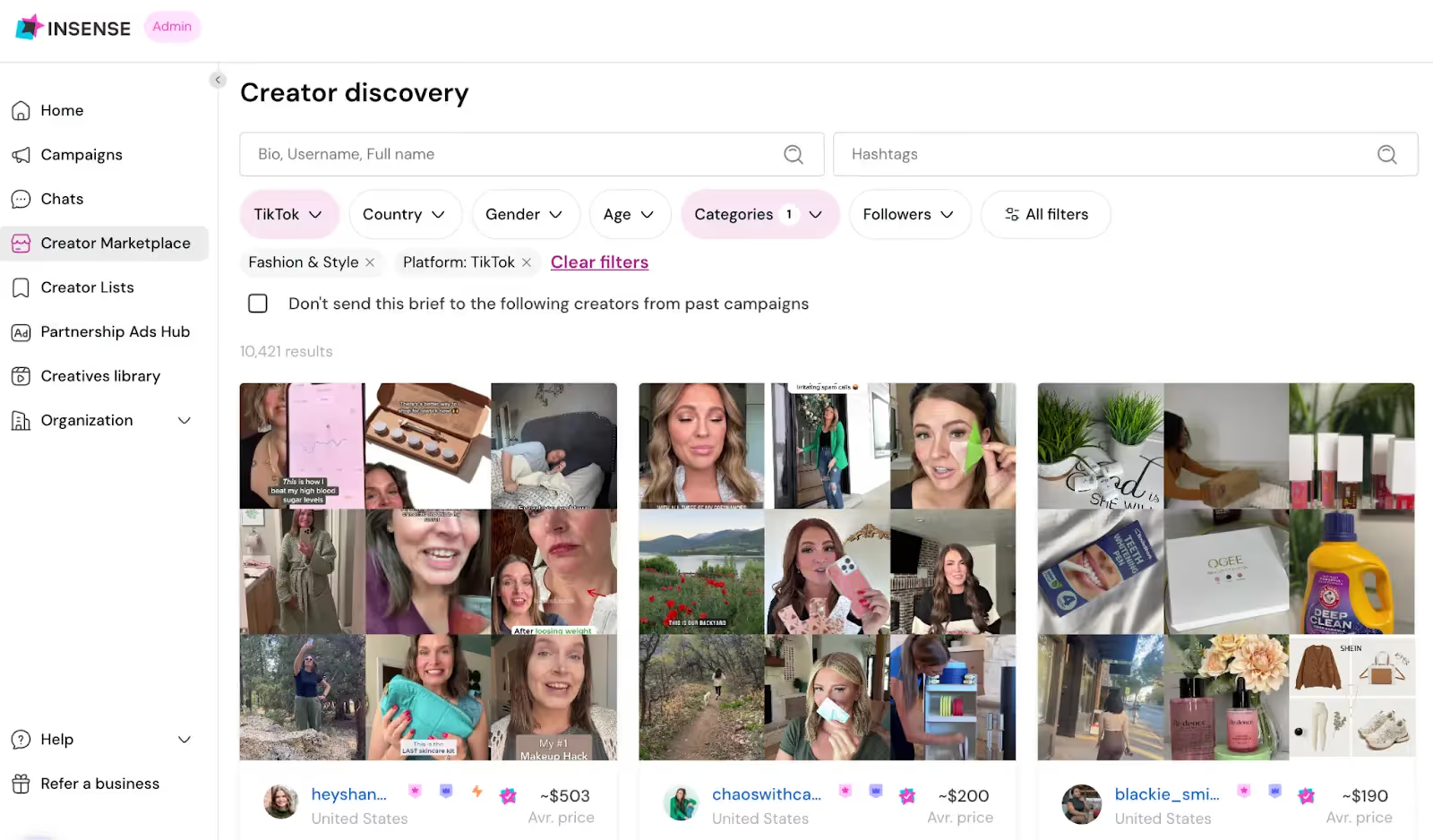
The marketplace lets you filter creators to find ones who specialize in a certain channel, then you can browse their portfolios to see previous posts.
3. Scale User-Generated Content
UGC is your social ecommerce engine, but scaling it is the hard part.
Insense gives you an always-on UGC workflow: batch recruit creators, request multiple variations, test different angles, and build a huge content library for your storefront, ads, and organic channels. You get rights-ready assets at scale, so you never run out of content for TikTok Shop, Instagram Shopping, or your in-app product pages.
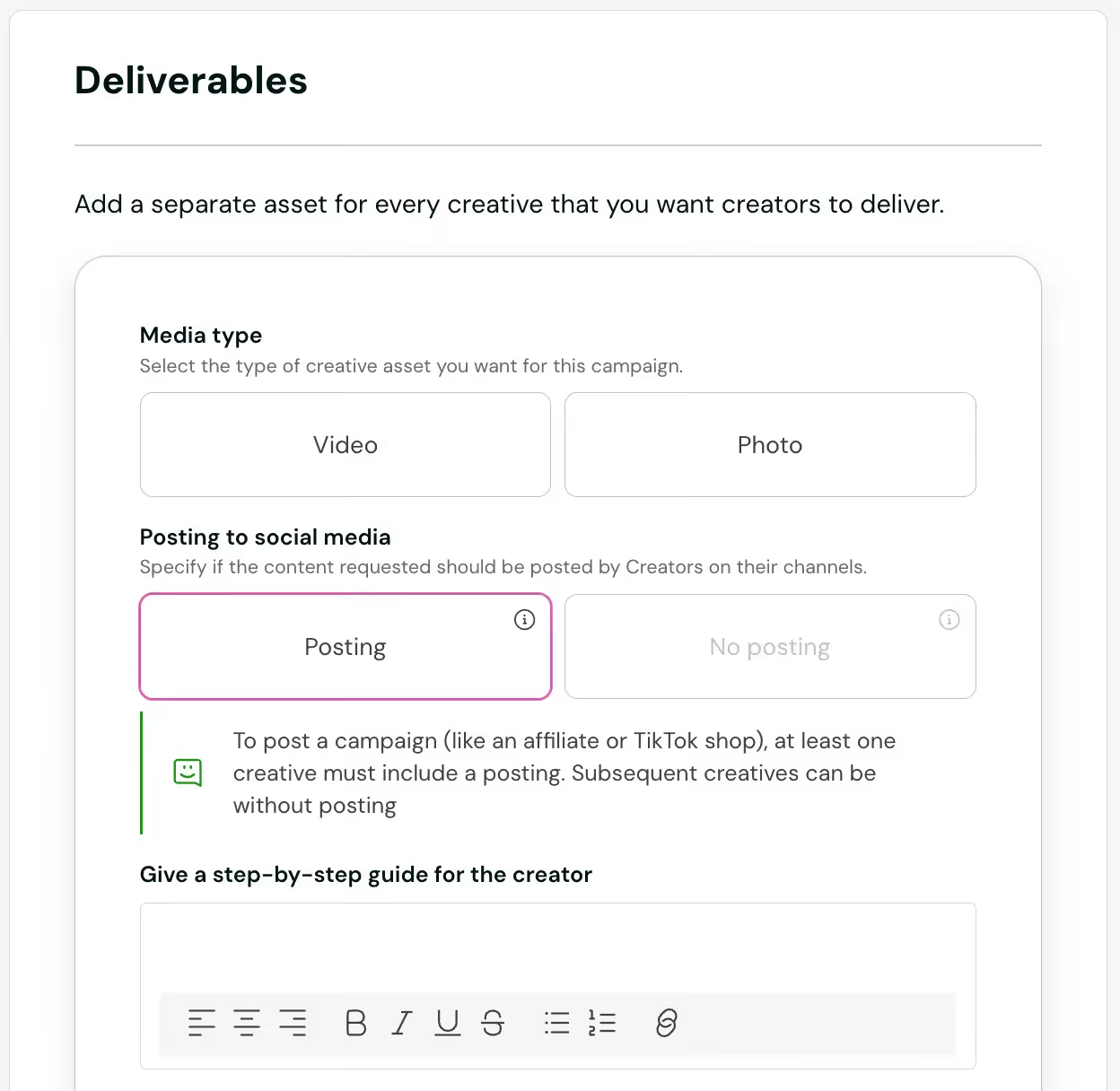
With Insense’s detailed briefing process, you can make sure you only get the kind of UGC you want by laying out exactly what creators should submit, what they should avoid, and exactly what deliverables you need.
4. Optimize Storefront Performance
No-brainer, but your shop only works if your content performs.
With Insense, you can test creators, formats, hooks, and product angles to see what resonates the most with your specific audience.
You can also use content collected via Insense to refresh your product detail page (PDP) videos, try new creative directions, and replace low-performing assets with ones that have decent results.
Tips for Succeeding in Social Ecommerce
- Use high-quality product visuals with clear shoppable overlays. Make it easy for shoppers to buy with clean, sharp visuals and clear tags or overlays.
- Include compelling UGC reviews and product demos. Real people using your product will always beat polished brand ads. Mix quick reviews, unboxings, and detailed demos to build trust.
- Schedule content around high-activity periods. Plan shoppable posts and creator drops around launches, promos, and seasonal moments. Social platforms get noisier during these periods, so showing up with fresh content gives you a better shot at getting a slice of the pie.
- Track engagement and ROAS per creator piece. Look at what’s actually driving clicks, adds-to-cart, and purchases. Use those insights to double down on the creators, formats, and product angles that convert and get rid of the ones that don’t.
The Social Shopping Boom You Can’t Afford to Ignore
The numbers do not lie.
Social ecommerce is becoming the default way people discover and buy.
TikTok Shop, Instagram Shopping, livestreams, UGC, in-app storefronts… they’re all converging into one giant shift in shopper behavior that you just can’t afford to ignore.
If you want to make the most of this wave, you need creators, UGC, and shoppable content at scale, and that’s exactly what Insense helps you do.
Try Insense for free to start sourcing creators and building social-commerce content today, or book a demo and we’ll walk you through how top brands are doing it.



.avif)