All great campaigns start with an idea.
But ideas on their own are… slippery. They might sound good in a brainstorming session (maybe even exciting), but without structure they tend to unravel once you try to scale them.
That’s where creative concepting comes in. It’s the stage where curiosity, insight, and imagination get shaped into something clear enough to guide a team and flexible enough to work across platforms.
In this piece, we’ll explore how you can go beyond ideation to test, stretch, and ultimately land ideas in the real world.
What Is Creative Concepting?
Creative concepting is the process of turning a raw idea into a clear direction for a campaign.
You know sometimes you get those big, slightly unhinged, optimistic ideas? Creative concepting grounds that inspiration in reality and bridges the (sometimes massive) gap between your initial pie-in-the-sky idea and a real-life, successful campaign.
A “good” concept also acts like a blueprint. It gives everyone in your team the same reference point so everything feels consistent, regardless of the channel or format.
Without this kind of concept, campaigns can end up feeling like fragmented assets. They might be nice on their own, but they don’t slot into the bigger picture.
Core Elements of a Strong Creative Concept
These are the building blocks that make sure your big idea is, firstly, interesting, but also clear, memorable, and built to work across the channels your audience is on.
Audience Insight
Every great concept needs an audience, but you need to go beyond surface-level demographics if you want to really figure out what moves your people.
Start by asking:
- What problem are they trying to solve?
- What do they care about right now?
- What frustrates or delights them in this space?
You can get answers to these through customer interviews, social listening (what are people talking about on IG, TikTok, YouTube?), community forums, or even the comment sections of competitor content.
Once you have this insight, frame it as a simple tension or truth you can build on.
For example: “People want sustainable fashion, but they don’t want it to feel expensive or hard to access.”
This kind of insight gives your concept its edge because it taps into a feeling your audience already has.
Key Message
Your key message is the thing you want your audience to remember after seeing your campaign. This becomes the backbone of your concept and builds on your audience insights.
Here’s a simple way to find the ✨essence ✨of your concept:
- List everything you want to communicate. Write down every benefit, feature, or angle you think matters for this campaign.
- Circle the one thing that matters most to your audience. Look back at your audience insight: which point directly connects to what they care about or struggle with?
- Cut the rest. If you only had five seconds of their attention, what would you say?
- Make it sticky. Rewrite it until it’s short, clear, and easy to repeat.
- Pressure test it. Ask: Does every asset in the campaign ladder back to this? If not, refine it further.
Use your key message as a filter.
Every visual, headline, and piece of copy should reinforce it in some way. If something doesn’t connect back, it doesn’t belong in the campaign and in the bin it goes.
Emotional Hook
Your emotional hook is what will catch your audience’s attention.
It should make them feel a certain kind of way. Maybe it’s nostalgic, maybe it’s humorous, maybe it tugs at their heartstrings. Whatever it is, it needs to pull them in ASAP.
To find your emotional hook:
- Go back to your audience insights. What do they crave, fear, or aspire to? This is where the juicy emotions live.
- Pick one core emotion. Choose a single feeling to lead with, like humor, nostalgia, urgency, pride, joy, or FOMO.
- Frame your message through that lens. For example, if your key message is “Save time,” the hook could be humor about how people waste time, or relief about getting hours back.
Visual and Format Fit
Even the strongest concept will fall flat if it’s not shared in the right place or doesn’t quite match the visual. You want the creative to feel natural, and on TikTok that might mean a short 6-second skit, but on YouTube it might mean a longer pre-roll ad.
Think about where your campaign will run (TikTok? IG? YouTube?). The core message and emotional hook should stay the same, but the format should flex to fit the platform. Each asset should still feel like part of the same family, regardless of where it shows up.
The Creative Concept Process
Coming up with a big idea is a blast (who doesn’t like flexing their imagination?). But turning it from something intangible to a fully-functioning campaign takes a bit of work. Not loads, but there’s still some graft involved.
Here’s how you can test, refine, and launch your big, bold concepts.
Research and Brief
Before you start sketching out ideas, gather the raw material. Collect customer insights, cultural trends, competitor examples, and campaign goals.
At this stage, your goal is to gather raw insight, spot trends, and put together something you know is going to be a hit with your audience. Everything you learn at this point can (and should be) instilled into a creative brief that keeps everyone on the same page.
Here’s how to collect that data:
Customer insights
- Run a quick Google Form or Instagram poll to ask direct questions.
- Talk to 5-10 existing or potential customers about their challenges and motivations.
- Read Amazon reviews, Reddit threads, or competitor product feedback to see what people complain about/love.
- Look at your most-visited pages or common customer service questions to see what people care about.
💡Tip: Once you know the angles that resonate, plug them into the right fields in Insense’s creative brief tool. You can document insights, any particular angles you want covered, potential hooks, must-have talking points, and content formats you want. Creators then see all of this upfront so they go into a project already knowing what you want.
Cultural Trends
- Use tools like Google Trends or track hashtags on TikTok and Instagram.
If you want to see what’s trending in a specific location, using a tool like a VPN for Lousiana can help you view region-specific search results, ads, and social content as if you were actually there
- Keep tabs on trending topics, memes, and conversations your audience engages with.
- Skim reports from places like Deloitte, HubSpot, or Hootsuite to spot shifts in behavior.
💡Tip: When you identify trends and hot formats, you can specify them directly in your brief. Creators in Insense’s marketplace are already pros at nailing trending formats so you don’t have to teach someone something that’s native to TikTok or Reels.
Competitor Examples
- Check out the Meta Ad Library or TikTok’s Creative Center to see real ads your competitors are running.
- Browse competitor’s social feeds and websites to see what’s performing well.
- Look for case studies or user generated content (UGC) marketing blogs that analyze competitor campaigns.
💡Tip: Upload competitor examples or reference links to your brief so creators instantly understand what you’re looking for. You can also save creator content you like in the platform for inspiration.
Once you’ve got a load of data, you can put it all into a creative brief. Use Insense’s Integrated Creative Brief tool to guide you through the must-have fields creators need to succeed.
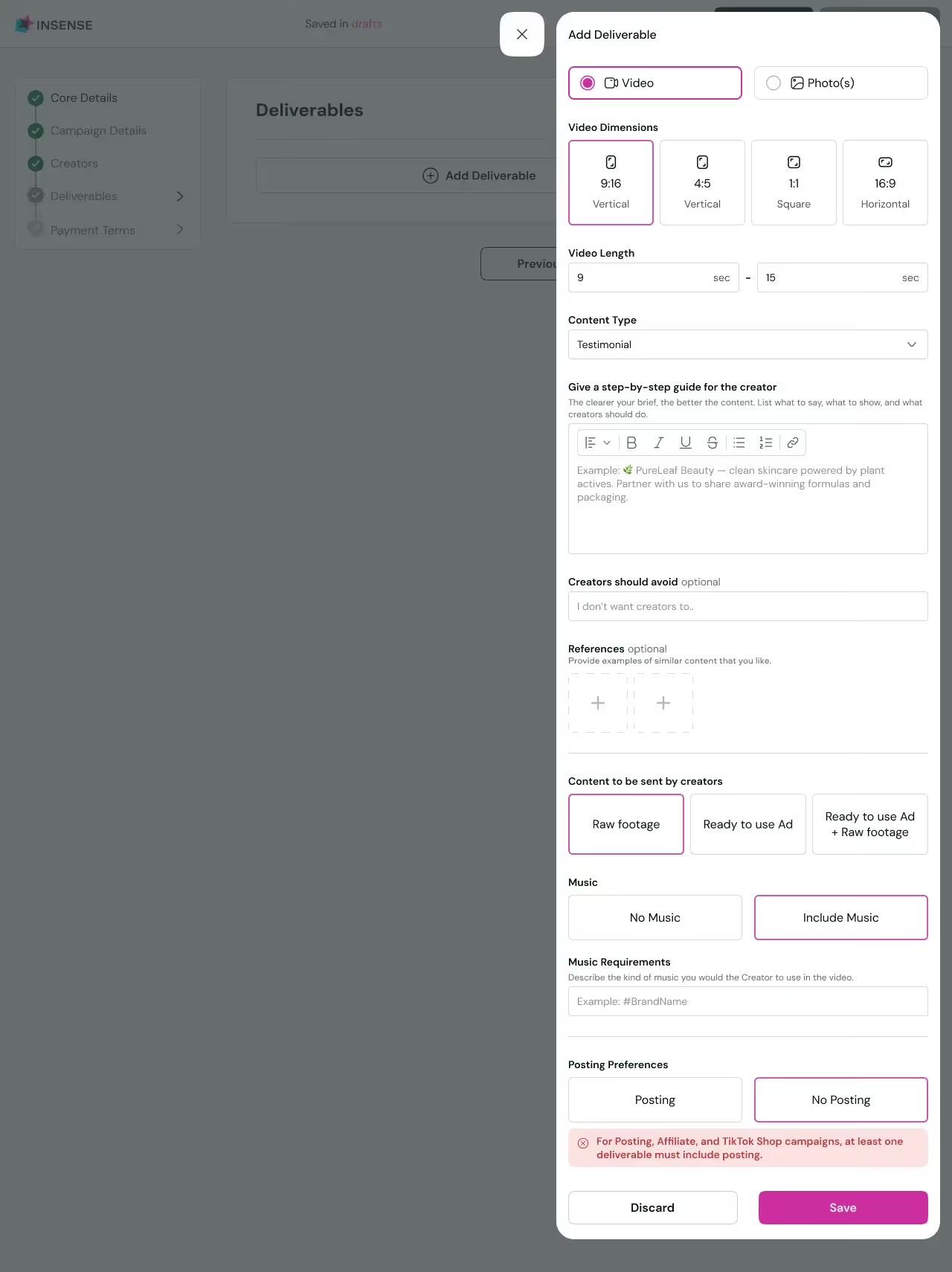
At a bare minimum, your brief should clearly answer these questions:
- Who are we talking to? What do they care about, fear, or want more of?
- What are we trying to achieve? Brand awareness, conversions, engagement?
- What are the guardrails? Non-negotiable brand elements, tone, budget, timing.
- What are the deliverables? Include formats, raw files, modular assets, captions.
- What’s the content approach? Mention hooks, formats, talking points, and pace.
💡Tip: If building a creative brief from scratch isn’t something you fancy doing every time, Insense’s Managed Services team can create concepts and scripts for you. They’ll turn your goals into potential storylines, shot lists, hook variations, and CTAs, then handle talent sourcing and end-to-end production.
Ideation Workshop
Now comes the fun part: actually coming up with the ideas.
Assemble your team (this is not a drill!) and hunker down with a pad of paper and a pen (or, better yet, use Insense’s collaboration tools to bring more brains into the mix).
Here’s a simple flow to keep the session productive:
- Warm up. Kick things off with a light exercise to loosen people up. Prompts like “What’s the worst idea you can think of?” or “How would a 5-year-old solve this?” are bound to get everyone talking.
- Go wide. Encourage people to throw out every idea, no matter how weird or wonderful. Write everything down on sticky notes or in a shared doc.
- Switch perspectives. If you get stuck, try prompts like:
- “What would this look like if it was a TikTok trend?”
- “How would a competitor NOT do this?”
- “If money and time were unlimited, what would we create?”
- Spot patterns. Once you’ve got a wall of ideas, start clustering them into themes. You’ll quickly see overlap and maybe three or four directions that feel promising.
- Pick contenders. End the session by voting on a few concepts to carry forward.
💡Tip: throw all judgement out the window. The wild, half-baked suggestions often spark the breakthrough you might otherwise never have got to.
Concept Sketching
The aim of the game at this stage is to give your shapeless ideas some kind of form.
Firstly, give it a name (can be as rough and ready as “The Time Hacker Campaign”). Then, jot down the key message. Keep it to one sentence only. It’s a challenge, but it needs to be short and convey what you want it to.
Then, define the emotional hook and sketch out some sample executions.
Keep it scrappy here: a doodle on a piece of paper, a rough script, or a moodboard is enough for now.
Finally, add some quick notes about the audience, the platforms it best fits with, and any extra context that feels relevant.
💡Tip: Aim for 2-3 solid concept sketches rather than 10 half-formed ones. Depth beats volume at this stage.
Prototype & Test
Your shapeless, fluffy ideas should be taking on more of a solid shape by now. At this point, you want to turn your sketches into lightweight prototypes you can test quickly and cheaply. Rough draft 1.0 (and we mean rough).
Here’s how to prototype:
- Use Canva, Figma, or Keynote to drop your message into ad formats.
- Pull real creator content from Insense’s Creator Marketplace or reuse clips from past campaigns.
- Create a quick slideshow with stock footage to show the flow of a video idea.
Once you’ve got your quick and dirty prototype teed up, test it out:
- Share it with colleagues and ask them what one thing they remember from it.
- Put $50-$100 behind 2-3 variations as social and see which one gets higher watch-throughs or clicks.
- Share the concept with content creators and ask them how they’d bring it to life.
- Run a quick poll with loyal customers to see which idea resonates most.
💡Tip: We’re not crowning any winners here. Instead, aim to get enough feedback so you know which UGC concept ideas for ecommerce are worth investing more time and money in.
Refine and Finalize
Once you’ve tested and seen what resonates, it’s time to tighten everything up.
Here are some ways you can do that:
- If an execution, tagline, or visual doesn’t connect directly to your key message, drop it.
- Check whether the feeling you want the audience to have is clear and consistent. If your hook is humor, is it actually funny? If it’s inspiration, does it give people goosebumps?
- Map out how the concept will flex across TikTok, Instagram Stories, YouTube, or email. The core idea should stay the same, but the execution will change.
- Go back to your creative brief and see whether the refined concept still meets the audience insight, campaign goals, and guardrails.
Has your concept made it this far?
Great! Time to immortalize it in a polished concept doc.
This doc should include:
- The core idea in one clear sentence.
- The key message your audience should walk away with.
- The emotional angle (how people should feel).
- Visual examples or mock-ups.
- Channel execution notes showing how the concept flexes across platforms.
Tips for Effective Influencer Campaign Concepting
- Keep it simple. Don’t overload your concept with too many messages or clever angles. A single, clear idea is always better than three competing ones.
- Build for scale. Think beyond one hero ad and design your concept so it can flex across platforms, formats, and creators without losing its core message.
- Involve creators early. Bring in creators or partners while you’re still shaping the concept. They’ll highlight what feels authentic, what fits each platform, and how to make the idea resonate in real life.
- Document everything. Capture your insights, sketches, and final concept in one place.
Creative Concepting Examples
Sometimes the best way to understand a concept is to see it in action.
Here are 3 creative concept examples that started with a sharp idea and turned into memorable, scalable executions:
Dove’s “Real Beauty” Campaign
Dove tapped into a powerful audience insight for its world-famous campaign: women are tired of unrealistic beauty standards.
The key message (you’re more beautiful than you think) became the backbone of a decade-long campaign. The emotional hook was empowerment and authenticity, and it showed up everywhere from viral videos to billboards.
The concept was simple but elastic, so it fitted perfectly in a variety of different ad concepts, both online and offline.
Spotify’s “Wrapped” Campaign
Spotify noticed people love to see themselves in the data. It used the insight that music is personal identity to create one of the most loved campaigns of all time. The key message (your year, your soundtrack) tied into the emotional hook of delight, surprise, and of course a touch of FOMO.
The format fit was perfect for social sharing, with personalized graphics built for Instagram Stories and X. It’s now become a bit of an annual cultural event.
Nike’s “Dream Crazy” Campaign
Nike’s long-standing insight that athletes (professional and everyday) push limits when they believe in themselves fueled its popular Dream Crazy campaign fronted by Colin Kaepernick.
The emotional hook was inspiration with a bold edge of controversy, and the concept easily translated across TV, social, and user-generated content.
From Concept to Campaign with Insense
Insense makes it easy to take your big ideas and turn them into campaigns that actually ship.
- Custom UGC concepts. Instead of starting from scratch, you’ll get three unique concepts built around your goals, audience insights, and brand personality.
- Ready-made briefs. Every concept comes with a production-ready brief, including shot specs, creative hooks, CTAs, B-roll guidance, and visual references.
- Instant scale/ Once you’ve locked in the winning direction, those concepts quickly expand into 12 polished UGC ads plus a library of raw assets. You’ll have the building blocks to test, iterate, and stretch your campaign across multiple channels in no time at all.
Ready to turn your big ideas into campaigns that actually deliver? Try Insense for free and get custom concepts, ready-made briefs, and UGC ads at scale, all in one place.