Beauty fans don’t just find brands via ads.
Instead, they find new products through late-night scrolling sessions and watching their fave influencer’s latest Reel.
Researches found 61% of consumers have found a new brand or product on social media in the last year, and 71% said their most recent social purchase was a good or excellent experience. Proof that social isn’t just for inspo anymore, it’s a place people genuinely trust to buy.
Beauty is top of the pile for this kind of shopping behavior.
TikTok says it’s 2.5x more likely to be used for beauty searches from buy-ready shoppers than other social platforms.
And yes, this turns into revenue. Euromonitor reported that beauty product sales through social media rose 22% in 2024, with TikTok helping drive that growth.
Basically, beauty influencer marketing is perfectly suited to how shoppers actually discover and buy beauty products.
Why Beauty Influencer Marketing Still Works
The beauty industry is basically built for influencer marketing because the product experience is very visual and the whole shopping process needs a lot of trust.
Here’s why it still very much works:
Visual storytelling acts as a product demo
Most beauty products are hard to evaluate from a static product page. The shade, finish, texture, coverage, wear-time… you need to see them.
Beauty creators can bring a bit of that to life with before and afters, showing how a product “wears” after 8 hours, and giving a preview of the texture in natural light.
Because the visual “proof” is baked into the content, you’re letting the audience see the results in a real-life context (like bathroom lighting or, you know, on real skin texture).
Tutorials are hot in 2026
People don’t usually shop by category when it comes to beauty products. They tend to shop by outcome (e.g. covering redness or getting heatless curls that last a whole night).
Influencers are great at creating tutorials. In fact, TikTok’s own beauty insights show a lot of people search for tutorial phrasing, like “best mascara” or “contour tutorial”, which is a very strong signal that audiences are using creator content to educate themselves before they buy.
Creators are trusted more than traditional ads
Beauty purchases are usually quite personal. People don’t want to buy into a hype, they want to find products that are a good fit for them – which is kind of tricky when everyone is so unique.
This is where creators earn their keep.
They’ve already built trust through a track record of sharing honest content, answering questions, and maybe even showing failures.
Ipsos’ research with TikTok basically confirms what most of us already feel as users: people are discovering products through creators they trust, not polished ads.
Deloitte backs this up too, calling out creators as a key source of credibility at a time when traditional ads are easy to scroll past.
Community compounds ROI
Routines and repeat purchases are a core part of the beauty industry.
Shoppers are very loyal to brands they love, which is why creator partnerships can quickly compound.
Comment sections become mini-consultations, which can lower friction for the next buyer. And when people ask follow-up questions and the creator responds, the product stays in the conversation that little bit longer.
Creators produce tutorials which build trust and create community, which keeps people talking about your products and buying more. It’s a continuous cycle.
Beauty Trends for Influencer Marketing in 2026
The strategies dominating influencer marketing for beauty brands look very different from the hyper-polished playbooks of the past.
- The right fit matters more than broad reach. If a beauty influencer wouldn’t realistically use your product, audiences will clock it instantly. For a foundation launch, think about shade. For skincare, think about skin type and the routine the creator already shares.
- Real product journeys take time. Mascara shows results in seconds. A serum doesn’t. If creators post before a product has had time to work, the content feels empty, and audiences can tell.
- Creator content can work beyond the first post. Tutorials and honest reviews help shoppers understand a product. The same content can also give a brand useful assets for its website, emails, and ads, when the campaign and usage rights are set up for that.
How to Work with Beauty Influencers
Start with the product and the person who would actually use it.
If a beauty influencer wouldn’t realistically use your product, audiences will clock it instantly and no amount of creative polish will save you.
Choose the Right Type of Beauty Creator
A big following isn’t always the best starting point. Think about what you need the creator to do.
Micro- and nano-influencers are big right now. Trust and relatability matter way more than reach in beauty.
Micro-influencers consistently outperform larger creators on engagement rates. Maybe this is because they feel more like a knowledgeable friend. Larger influencers can make sense when you need broader reach for a launch.
UGC creators can make product demos and testimonials for your own channels and ads, even when reach from their personal account isn’t the goal.
For a foundation launch, look for creators who can show shades on the skin tones you need to represent. For a curl product, look for people with the hair textures it’s actually made for. That fit will tell you more than follower count alone.
Vet Creators for Product Fit
Filters help you narrow down age, location, and category. They won’t always tell you whether someone has the skin type, hair texture, or product experience your campaign needs.
That’s where screening questions help. Examples to choose from:
- “Do you have sensitive or eczema-prone skin?”
- “Does your hair have a type 3 or 4 curl pattern?”
- “Are you over 40?”
- “Do you deal with acne?”
- “Are fine lines a concern for you?”
Pick questions that match this product; don’t put every question in every campaign. Insense currently allows up to four mandatory screening questions, with yes/no and open-text options.
Split Campaigns by Angle
One product can answer different questions for different shoppers. If you’re promoting a collagen product for skin and general wellness, run separate campaigns for each angle. The skincare brief can attract creators who talk about their routines; the wellness brief can attract a different group.
That gives you a clearer way to compare applications, content, and results than asking every creator to cover both angles in one video.
Seeding or Paid Campaigns for Beauty Brands
Product seeding, or gifting products for free, sounds like the obvious move for beauty.
Sometimes it is. But gifted creators aren’t obliged to post, and skincare can be harder to seed when someone needs time to test a formula or finds it isn’t a fit.
A simple rule: use seeding when you can live with uneven post volume. If you need a fixed set of videos by a deadline, pay creators and specify the deliverables in the brief.
Set Your Budget and Write the Brief
Budget for the result you need: a gifted product, a creator post, or content you can use in ads.
A creator’s fee, the product and shipping, and any paid media spend belong in different lines of that budget. Use the influencer pricing guide for broader rate ranges rather than treating one skincare quote as a beauty-wide price.
Then make the brief specific. Include the product, the shopper question each video should answer, the format, the posting or delivery date, and the claims creators can actually make.
If you need raw footage or several hooks for ads, ask for them upfront. Leave room for creators to show the product in their own way.
Skincare needs time in that schedule, too. A mascara can be demonstrated straight away; a serum may need repeated use before a creator can give an honest account.
State how the product should be used and agree on a testing period before filming.
Then, use specific goals to drive your collaborations. Use UTM links, affiliate codes, and repeat content (like routines, updates, etc) so you can actually see what’s driving clicks and sales beyond the likes.
Platform-Specific Campaign Tactics for Beauty Brands
No two social media platforms are the same, so it’s important to understand what works on each and how to use them to your advantage.
TikTok and Instagram are the most popular social stages for beauty, so Instagram, TikTok, and YouTube Shorts each give beauty brands a different way to show a product in action.
Treat Reels like a beauty storefront, a.k.a. short, snackable videos that show how a product works.
Reels are Instagram’s fast-growing format and they have higher reach and engagement than traditional posts, so make them a go-to for transformations and quick tutorials.
Here are some tips:
- Use product tags on Reels and feed posts so followers can tap to buy products they like the look of.
- Use carousels to share step-by-step visuals and multiple use-case shots that people can save and share.
TikTok
TikTok is a much more trend-driven beast. Here, it’s all about speed and native creativity.
TikTok’s algorithm loves content that feels authentic, so here are some tips to do it justice with your campaigns:
- Let creators use duets and stitch features to react to your products or remix trending sounds.
- Hook viewers in the first second with a trend reference or a visual surprise.
- Layer in how-to’s and quick tips that are both entertaining and useful (e.g. “heatless curl hack”).
- Share simple, conversational explainers about why a formula works or who’s best for.
YouTube Shorts
YouTube Shorts gives beauty brands another place to show a product in action.
- Keep each video focused on one thing a shopper wants to see: a shade in daylight, curls after styling, or where a product fits in a routine.
- If you’re using creator footage for a Shorts ad, show the product early, add captions, and test more than one hook or creator.
- Brief vertical footage and raw clips so you can make different cuts. Insense can help source the creator-made assets; the ad campaign itself runs through Google Ads.
For the setup and measurement details, link to How to Run YouTube Shorts Ads. For the creative checklist, link to YouTube Shorts Ads Best Practices.
Examples of Influencer Marketing for Beauty Brands
goPure: product seeding for reviews. goPure worked with more than 160 influencers and received 147 product reviews in two months. This shows what a seeding campaign can produce when the goal is to get more people trying and talking about the product.
The case study’s larger revenue and ROI figures also involved shoppable videos on product pages, so they shouldn’t be attributed to gifting alone.
Kulin Co: a specific creator fit for paid ads. Kulin Co looked for beauty creators aged 40+, received content within two weeks, and turned the footage into six ads.
One ad performed well enough for the team to increase its spend, and the case study reports 2x ROAS. The useful lesson is the selection: the creators looked like the audience the ads needed to reach.
Digital Beauty Group: one campaign, more places for the content. Digital Beauty Group worked with creators on Instagram Stories over six months and sourced more than 100 assets. It also used the content on its website, in email, and on Amazon.
A creator collaboration doesn’t have to end when the Story disappears.
Run Beauty Influencer Campaigns With Insense
Running beauty influencer campaigns is a lot easier when everything (from finding creators to launching content) lives in one place, which is exactly where Insense comes in.
- Start with the creator marketplace. Use the search tool to browse more than 115,000 creators. Filter by platform, audience, gender, category, follower count, engagement rate, and more.
- Find the right creators. Click into a creator profile to see engagement metrics (likes, comments, and saves), a breakdown of their audience, and some sample posts.
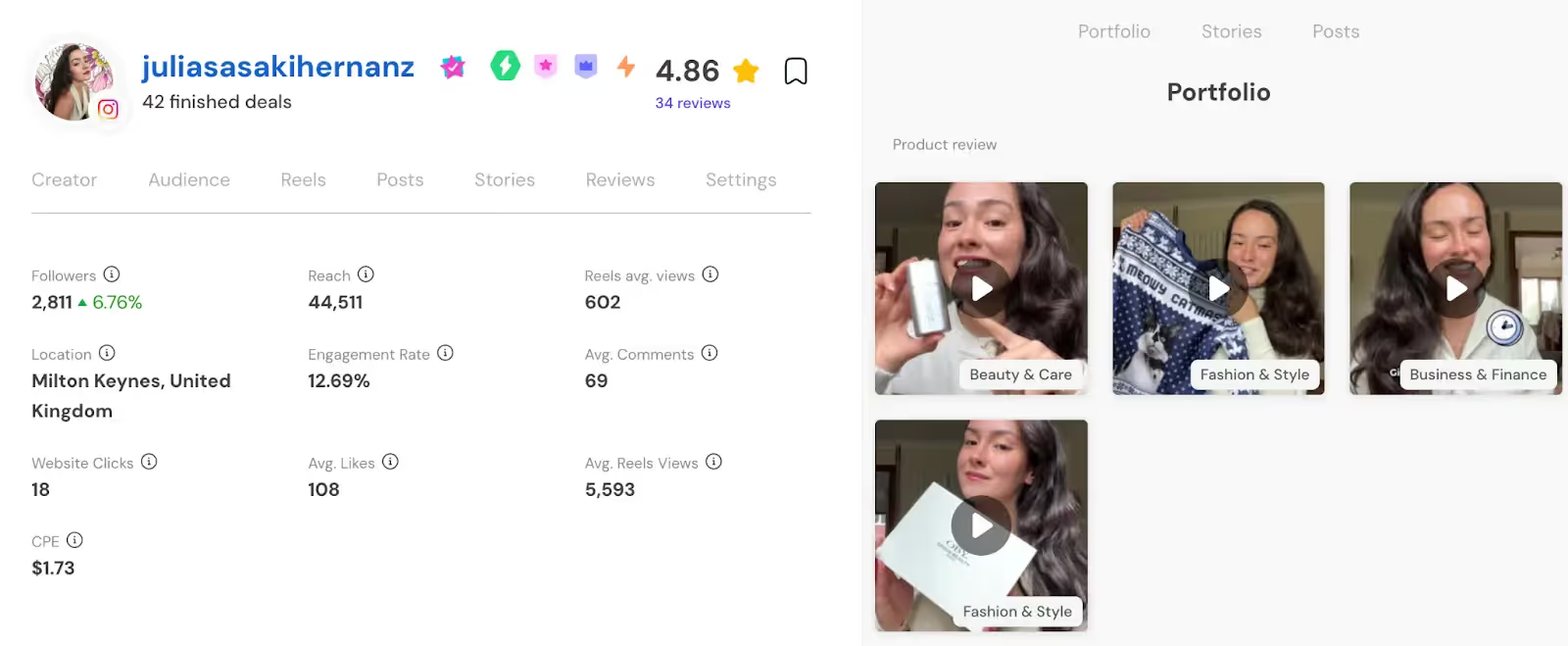
- Build and compare pitch lists. Once you’ve found a handful of creators you like, you can save them to a list for each campaign. You can then compare engagement and audience metrics side-by-side, add notes, and see how much they charge before you reach out.

- Create a detailed brief. Use Insense’s creative brief builder to share campaign goals, any mandatory details (like key claims), do’s and don’ts, and deliverables.
- Invite and collaborate. Once your brief is live, your selected creators can then submit content proposals, ask any questions, and share draft content with you to review. You get a central inbox for all this so you can see it all in one place.
- Approve, track, and optimize. After creators submit a post, you can review them against your brief, approve or request changes, and track performance all within the same dashboard.
Try Insense for free to explore the creator marketplace and start building your first campaign, or book a demo to see exactly how top beauty brands use it.
.avif)

.avif)