The average social media user sees over 1,500 ads per day. Their scroll speed has increased 41% since 2020, meaning you have exactly 0.5 seconds to capture attention before they move on.
For growth leads and creative directors running paid social for DTC brands, this is the central challenge: how do you build high-performing ad creative that consistently stops the scroll, earn trust, and convert?
The answer lies in understanding which creative formats work, why they work psychologically, and how to produce them at scale.
This article breaks down seven of the highest-converting ad creative types we're seeing across Meta and TikTok in 2025-2026. Plus, we’ll provide you with an actionable guide to producing high-converting creative assets.
TL;DR:
The key takeaways from this article:
- The biggest creative failure isn't a bad hook, it's brands talking to an imagined customer. Mine your reviews, competitor comments, and forums for real language before you write a single line of copy.
- Seven high-converting ad creative formats: Future Pacing with Identity Shift, "This is NOT" positioning, Unscripted Street Interviews, Testimonials, Platform Native Content, the Fake Bad Review, and the Casual Podcast Setup. All seven work because they earn trust.
- Utilize modular briefs, vetted UGC creators, and testing one variable at a time to find winning creative and minimize wasting ad budget.
- Track three metrics at the creative level: Hook Rate, Hold Rate, and Outbound CTR. Each one tells you exactly where your creative is losing people.
Anatomy of a High-Converting Ad Creative
High-converting creatives are built on a foundation of rigorous market research, with scroll-stopping hooks, rapid pacing, and clear text overlays.
Know Your Buyer Before You Brief
Know who you are talking to. The HOOK → PROBLEM → SOLUTION → PROOF → CTA structure is a vessel. What fills it (the specific language, the pain points, the life moments you reference) only works if it's built around an accurate picture of the person watching.
We’ve found that many brands have a gap between who they think is buying and who is actually buying. When that gap exists, even technically well-constructed ads miss, because they're speaking to an imagined customer, not a real one.
Mine your Trust Pilot or Google reviews, search forum threads and social media comments sections for the exact language real customers use. This works great for product review videos.
The First 3 Seconds (The Hook)
The hook is everything. If a viewer doesn't stay past second three, the rest of your creative might as well not exist.
Meta's data shows that nearly half of viewers who stay for three seconds will watch for thirty. The hook's job is to answer one question for the viewer: "Is this for me?"
Consumers want to know how your product helps them with their pain points. How your product fits or relates to them in that exact life moment, and how it speaks directly to them.
What makes a scroll-stopping hook? In a nutshell, 2 things: you either are very specific and the person stops because they immediately relate (e.g.: "If you're 30 and suffer from back pain..."), or your ad creative is visually interesting. Preferably you do both!
The Pacing
Pacing is how quickly your creative moves through information.
High-converting creative assets move fast, but purposefully. Each scene earns its place. B-roll carries narrative weight. Transitions happen before the viewer gets comfortable.
This is also why scripting visual actions, not just dialogue, is essential. The creator doesn't know what your audience will be resonating with. They're just like actors. You need to give them what to do, shot by shot.
The Reading Level (Text Overlays and Copywriting)
A significant portion of social feeds are watched on mute. Your text overlays are doing half the selling.
High-converting ad creatives use text overlays that are short, punchy, and paced to reinforce what's being said on-screen.
Treat each overlay as a scroll-stopper in its own right. Use sentence case, avoid jargon, and write at a reading level that lands instantly. If someone has to re-read a line, you've lost them.
The goal is content that works with sound off and with sound on. Both audiences should follow the same narrative arc.
7 High-Converting Ad Creative Examples
Check out these real examples of high-converting UGC and why they work:
1. Future Pacing With Identity Shift
This format sells transformation. The viewer sees the ideal future version of themselves, and the product becomes the bridge.
The creative frames the product as a simple hack to achieve that exact identity shift. This lowers consumer resistance by making the transformation look completely effortless.
Open with the creator struggling with something the target audience recognises (a skincare issue, a morning routine that's not working, a fitness plateau). Cut immediately to the after - they're glowing, confident, at peace. The transition is the hook. The text overlay does the heavy lifting: "The lazy girl hack to [Desired Outcome]" or "How I fixed [Problem] in two weeks."
2. This is "NOT" [Popular Solution]
‘This is not’ ads lead with a direct competitor reference or a category-level alternative which generates immediate pattern interruption.
The formula: open with "This is NOT [Competitor Name]" or "This is NOT your average [Product Category]". Then deliver the key differentiator.
This format works because it hijacks comparison behaviour. Consumers are already comparing options before they buy. You're simply entering that comparison frame first, on your own terms.
3. Unscripted Street Interviews
A creator approaches real people in public and captures unscripted reactions to a product or problem. The power of this format is involuntary authenticity.
When a stranger on the street says "This is great" or "I've been looking for something that does this" it reads as a genuine testimonial.
The creator needs to know what questions to ask and what product moments to highlight, but can't be so scripted that the interactions feel staged. The brief should define: the hook they open with, the core problem they're exploring, and the product reveal moment, whilst leaving room for real human reaction.
4. Testimonial Ads
Video testimonials on product pages boost conversion rates by up to 80% , and UGC-style testimonial ads generate 4x the click-through rate of traditional branded creative.
The brief for a testimonial video should identify: the before state (the specific frustration or failure), the turning point (why they tried this product), and the after state (the concrete, measurable change). Specificity is everything. "It worked great" converts no one. "I'd tried everything for my rosacea for three years and this was the first thing that actually reduced redness" converts.
The testimonial format benefits from allowing creators to say the message in their own words, not read a script verbatim.
5. Platform Native Content
High-converting creatives on TikTok and Meta share one characteristic: they don't look like ads. They use platform-native fonts, default caption stickers, phone footage, and editing rhythms that mirror organic content. Therefore the viewer's brain doesn't register them as paid placements.
Practically, platform-native briefing looks like:
- Requesting footage shot on phone.
- Specifying default platform fonts for text overlays rather than brand fonts.
- Matching the pacing and cut rhythm of organic content in that category.
6. The Fake "Bad Review" Trap
Lead with a one-star review. Make it ironic. Make it funny. Then let the product speak for itself.
The opening is the hook: a close-up of a comically self-defeating negative review: "1 star. I can't stop buying this" or "1 star. Ruined my routine because now nothing else compares" followed by a creator's amused reaction and pivot to genuine product demonstration.
This format works on three levels. First, it exploits negativity bias - humans are wired to pay attention to bad reviews. Second, it signals confidence - a brand willing to surface criticism (even ironic criticism) reads as secure and trustworthy. Third, the subverted expectation creates a pattern interrupt that earns extra seconds of watch time.
The copywriting in the fake review matters. The best versions name a specific strength framed as a frustration: "I genuinely cannot travel light anymore because I have to bring this serum everywhere." That's a product endorsement dressed as a complaint.
7. The Casual Podcast Setup
Two people. Relaxed setting. Chairs positioned at a slight angle to each other. The conversation is about a problem - the kind of problem your product solves - and the product emerges naturally from that conversation.
The key to briefing this format: the conversation should feel like an editorial discussion, not a sales pitch. The product introduction should come mid-conversation, not at the top. Both participants should be able to speak authentically about the problem space, not just read scripted lines about the product.
A well-executed podcast-style ad can run 45-90 seconds and hold retention in a way that no talking-to-camera format can, because viewers are psychologically primed to consume content in this format for 30-60 minutes. A minute feels short by comparison.
How to Create High-Converting Ad Creatives at Scale
Produce high-converting UGC at scale with these expert tips:
Write Modular Briefs
Instead of briefing one complete ad per creative, you brief a set of interchangeable components: multiple hooks, a shared body, multiple CTA variants. This gives you 6-12 testable ad variations from a single creator session.
With Meta's Andromeda system now matching different ads to different people based on predicted response, the algorithm needs meaningfully different options to work with. That means hooks that address different pain points, shoot in different locations or angles, and use different visual approaches, not just different opening lines.
A modular brief should specify: number of hooks required, how each hook should differ (by pain point, by audience, by visual approach), body content (typically shared across all hooks), B-roll requirements, and file delivery structure so you get organised, editor-ready content back.
Source Vetted UGC Creators, Not Over-Polished Actors
There's a meaningful distinction between a UGC creator, and a commercial actor delivering brand lines to camera. The first converts. The second looks like an ad.
What to look for in a creator: content that feels natural on-camera (not "performing"), an existing posting style that matches your target platform and audience, and a track record of delivering to brief. The ability to say the message in their own words rather than read a script verbatim is a significant signal of creator quality.
Script Visual Actions, Not Dialogue
One of the most common brief failures is over-scripting spoken lines and under-scripting what should actually happen on screen.
A creator can find their own way to say "this product transformed my routine." They can't guess that they should be holding the product at a specific angle, showing the texture in close-up, or filming the before-state in natural light.
A strong brief describes each scene visually, not just verbally. For example, rather than scripting: "Say that the product helped your skin," write: "Close-up of skin. Creator touches their cheek and looks at camera. Voice tone: genuinely surprised. Message: this is the first thing that's worked."
Secure Commercial Usage Rights
Any creator content you intend to run in paid placement needs explicit commercial usage rights (CUR), separate from the usage rights that cover organic posting. This should be built into your creator agreements before content is produced, not negotiated after the fact.
CUR also enables whitelisting or Partnership Ads: running ads from the creator's handle rather than your brand handle, which can significantly reduce CPMs by making the ad feel more organic.
Isolate and Test Variables
Creative testing means finding out what your audience responds to. This works best if you're testing one variable at a time.
The right sequence: test hooks first (keeping body and CTA identical), then test body variations (keeping winning hooks), then test CTAs. This gives you a clean signal on what's actually driving performance at each stage of the video.
Set kill criteria in advance: pull a creative when CTR drops 20-30% from peak or frequency exceeds 3-4. Don't wait for the algorithm to tell you it's over.
3 Core Metrics of a High-Converting Creative Asset
Use these metrics to track the performance of your creative assets:
Hook Rate
Hook rate measures the percentage of impressions that result in a 3-second video view (Meta) or 2-second video view (TikTok). It's the thumb-stop score for your creative assets, which is the single most important indicator of whether your opening is working.
Benchmarks:
- TikTok: 30%+ healthy, 40%+ elite
- Meta: 25%+ table-stakes, 30%+ best-in-class
- Below 25% on either platform: prioritise hook testing before anything else
In Meta Ads Manager, calculate as: 3-second video views ÷ impressions. In TikTok Ads Manager, use 2-second video views ÷ impressions.
Hold Rate
Hold rate measures the percentage of 3-second viewers who continue watching through to a meaningful threshold. Typically calculated as ThruPlays ÷ 3-second views. It tells you whether your narrative earns attention after the hook lands.
Target 25%+ as a baseline, 45%+ for best-in-class performance. A video with a strong hook rate but low hold rate is a pacing problem. Viewers stop the scroll but lose interest once the narrative stalls.
Outbound CTR
Outbound CTR measures the percentage of viewers who click through to your destination. Either your product page, landing page, or wherever the conversion happens. It closes the loop between creative performance and business outcomes.
Track Outbound CTR separately from Link CTR (which includes in-feed interactions that don't result in landing page visits).
A strong hook-hold combination that produces low outbound CTR usually signals a CTA problem. The ad earns attention but doesn't translate it into action. Test CTA language, timing, and on-screen direction before writing off the concept entirely.
How to Scale Authentic UGC Content with Insense
Knowing which creative formats convert is one challenge. Building a consistent pipeline of high-converting UGC that you can test, iterate, and scale is another.
Insense solves the three core bottlenecks in UGC production: finding the right creators, briefing them effectively, and receiving content you can run in paid ads.
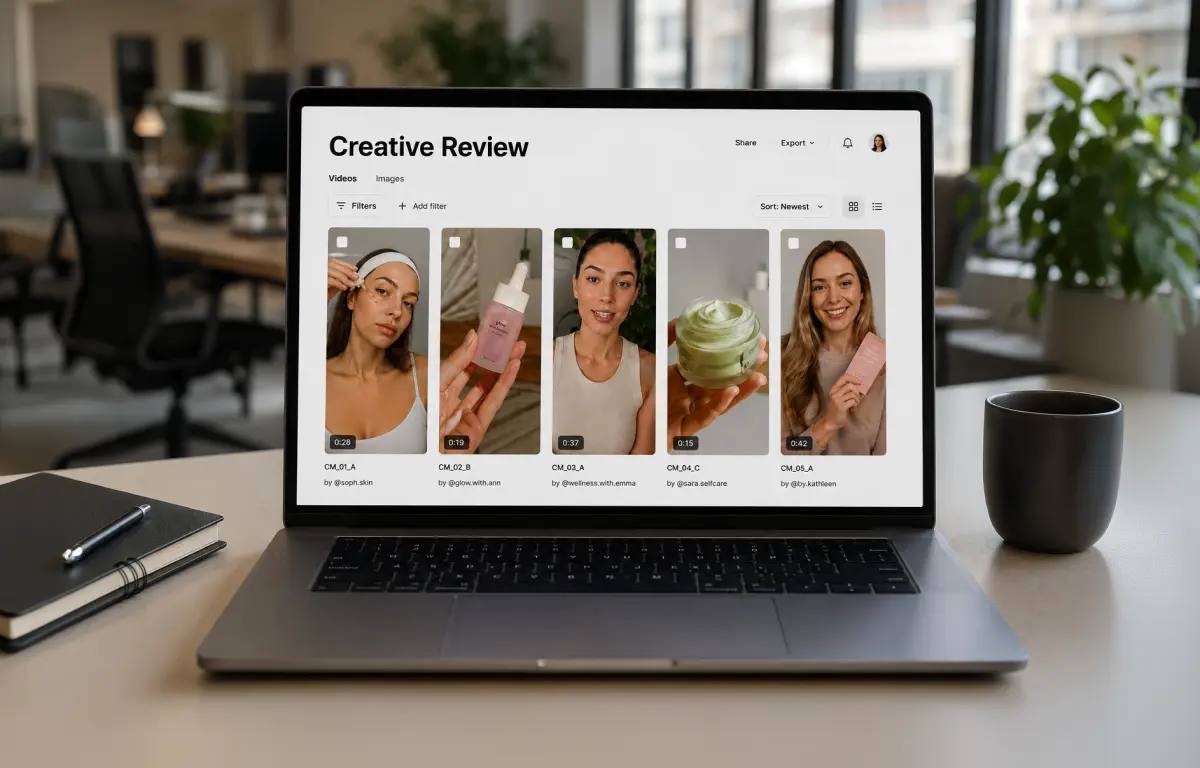
The Insense marketplace gives DTC brands access to 115,000+ vetted creators whose content quality, on-camera style, and audience demographics have already been assessed. Filtering tools allow brands to target creators by category, platform, and audience match, reducing the back-and-forth that slows most creator sourcing.
.webp)
The platform is built around modular UGC. Our briefing structure is designed to produce multiple hooks, a shared body, and B-roll in a single creator session. This gives performance teams the creative volume they need to test properly without a proportional increase in creator spend.
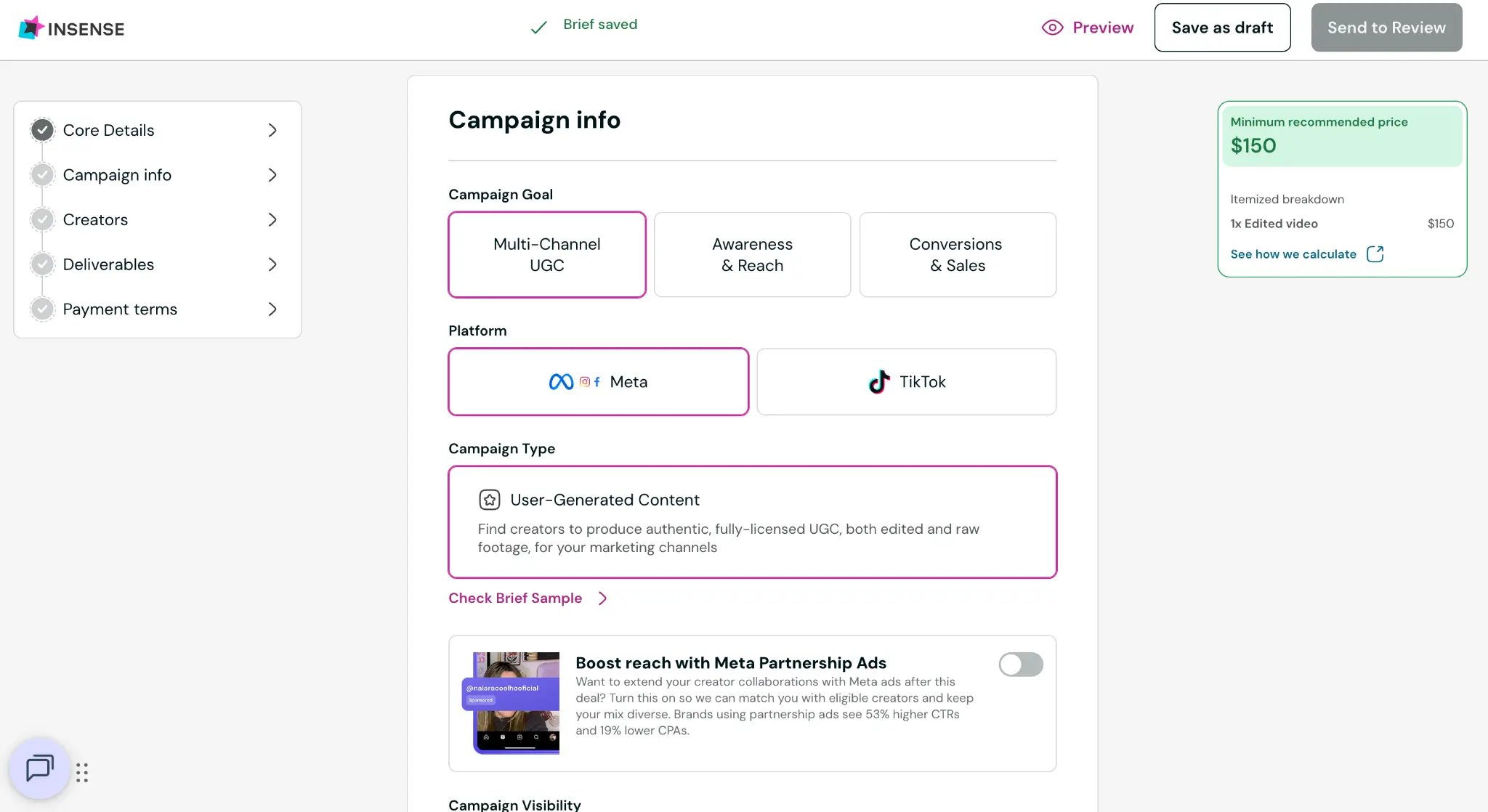
For brands looking to run Partnership Ads or secure commercial usage rights at scale, Insense handles rights management as part of the workflow, meaning your creative assets are paid-media-ready from the moment they land in your drive.
Book a demo with our team or get started with your next campaign today.
FAQs
Questions we most often hear when it comes to producing high-converting ads creative:
What makes an ad creative high-converting?
A high-converting ad creative stops the scroll in the first 0.5 seconds, establishes relevance within the first three, and maintains narrative momentum through to a clear CTA.
Structurally, it opens with a hook that speaks directly to a specific pain point or aspiration, uses authentic delivery (UGC-style almost always outperforms polished production for DTC), and matches the visual language of the platform it's running on.
How often should you refresh ad creatives?
On Meta: every 2-4 weeks, or when CTR drops 20-30% from its peak or frequency exceeds 3-4.
On TikTok: weekly.brands that refresh weekly see up to 37% lower CPMs over 30 days.
During peak periods like BFCM, refresh 2-3x faster than your usual cadence. The leading indicator to watch isn't CTR, it's hook rate. When your hook rate starts declining, creative fatigue is already costing you conversions, even before CTR shows it.
What is the best platform to source high-converting UGC assets?
Insense is built specifically for DTC brands that need high-converting UGC at scale. Unlike general creator marketplaces, Insense vets creators for content quality and on-camera performance, supports modular briefing (multiple hooks + shared body in one session), and includes commercial usage rights as part of the workflow.
For brands running paid social on Meta and TikTok, it covers both sourcing and the rights management needed to run content in paid placements, including running Partnership Ads from creator handles.
.avif)