Most brands already know which influencer posts are working, the next question is how to turn those posts into paid ads that scale.
Meta reports that Partnership Ads (ads built from existing creator content) deliver 19% lower CPA and 13% higher CTR than standard brand-made ads, and on TikTok, brands using Spark Ads have seen results like a 251% increase in sales compared with non-Spark ads.
This guide covers the bridge from organic influencer content to paid ads: what repurposing actually means, why organic and paid work better together, a practical process for turning creator posts into scalable ad creative, and the mistakes that cap performance.
TL;DR
A quick rundown:
- Turning influencer content into paid ads means running creator posts or creator-made assets through Meta Partnership Ads or TikTok Spark Ads, and not producing a separate, brand-made ad from scratch.
- The strongest post to boost isn't the prettiest one, it's the one with the best buying signal: saves, shares, comments, and click-throughs.
- Getting the bridge from influencer content to paid ads running in a scalable format depends on groundwork done before the campaign launches, locking down usage rights, and raw UGC files.
- The same piece of content rarely works unedited across every funnel stage; the version a cold audience sees should look different from the version shown to a warm retargeting audience.
What Does It Mean to Repurpose Influencer Content Into Paid Ads?
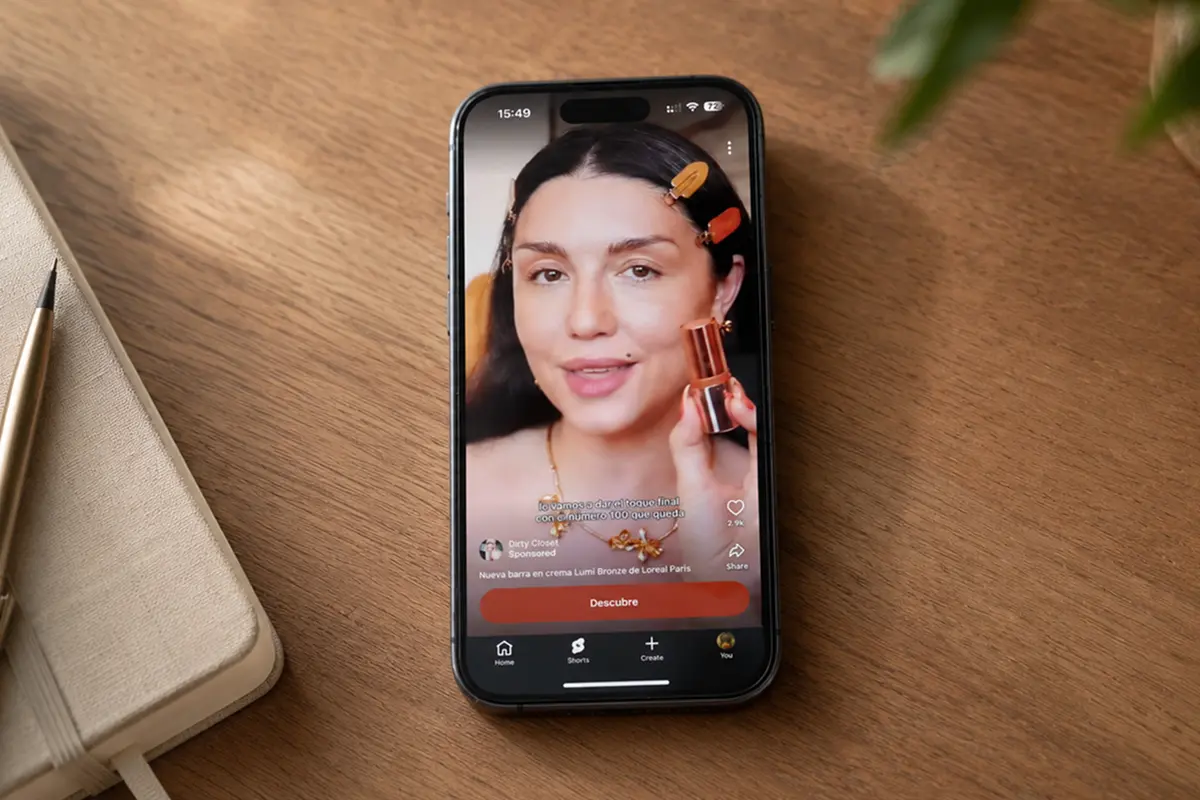
Repurposing influencer content into paid ads means taking creator posts, raw footage, or other influencer-generated assets and running them through a paid social campaign. Such as via Meta Partnership Ads (formerly Branded Content Ads) or TikTok Spark Ads, rather than building a separate, brand-produced ad from scratch.
On Meta, this works through a creator tagging the brand as a business partner, which lets the brand run that post as an ad from the creator's own handle.
On TikTok, a creator generates a Spark Ads authorization code from an existing video, which lets the brand boost it as an ad while keeping all the likes, comments, and shares attached to the original post.
Why Organic Influencer Content and Paid Social Work Better Together
On their own, organic posts prove a piece of content resonates but cap out at the creator's existing audience. Paid social can reach anyone, however, a brand-made ad starts from zero trust.
Turning influencer content to paid ads combines both: the content already carries social proof (likes, comments, and shares that keep accumulating even after it's boosted), paid targeting puts it in front of the audience most likely to convert, and because the content already exists, it's cheap to test multiple hooks, angles, and CTAs against each other rather than commissioning a new ad for every test.
The data backs this up. Meta reports that ads run through Partnership Ads see meaningfully better results than standard brand-made ads - around 19% lower cost per acquisition and 13% higher click-through rate, and that a majority of consumers (71%, by Meta's own figure) say they've purchased within a couple of days of seeing creator content on Meta's apps.
On TikTok, brands using Spark Ads have reported results like a 251% increase in sales and a 25% lift in click-through rate compared with standard, non-Spark ads for the same brand.
How to Repurpose Influencer Content for Paid Ads
Step by step guide to repurposing influencer content for paid ads:
1. Secure Paid Usage Rights Before the Campaign Starts
Paid UGC usage rights need to be part of the original agreement. Standard practice is to negotiate usage rights as a separate line item from the content fee, for a set window (commonly 30, 60, or 90 days, sometimes longer for evergreen or always-on programs) rather than an open-ended or perpetual grant.
2. Choose Content Based on Organic Signals
Don't default to the post that looks the best. Look at what actually performed: saves, shares, comments, watch time, and click-throughs if there's a link. The post with the strongest buying signal, not the prettiest one, is the one worth paying to scale.
3. Get the Raw Files, Not Only the Posted Link
A link to the live post only gives you one fixed edit. Raw UGC footage lets your team recut the content into different lengths, aspect ratios, and versions, with different hooks, body and CTA options. Build getting raw files into your standard creator brief.
4. Recut the Content for the Paid Placement
A post built for an organic feed doesn't automatically fit a paid placement's specs, pacing, or attention span. Recutting: trimming, reordering, adjusting captions and framing, is normal and expected, as long as the creator's natural tone stays intact.
5. Match the Ad Version to the Funnel Stage
The ad version should look different depending on where the viewer is in the funnel:
- A cold, top-of-funnel audience needs a short, broad hook that earns attention.
- A warmer, consideration-stage audience can handle a longer demo or a more detailed testimonial.
- A retargeting audience close to purchase responds better to a direct offer or a stronger, more specific CTA.
6. Test Hooks and CTAs Separately
Treat the hook and the CTA as two different variables. Testing several different opening seconds against a single CTA (or vice versa) tells you which lever is actually driving the result.
Common Mistakes When Turning Influencer Content Into Paid Ads
Avoid these common mistakes when turning influencer content into paid ads:
Asking for paid rights after the post performs. By the time a post is already working, the creator knows it, and has far less reason to grant cheap or open-ended usage rights. Rights should be settled at the point of the original agreement.
Not getting raw files. Working from a link or a downloaded copy of the live post limits you to one edit, with someone else's UI, watermark, and compression baked in. Without raw footage, there's no way to recut, resize, or build real variations.
Boosting the prettiest post instead of the strongest buying signal. High-polish content doesn't always convert; content with strong saves, shares, or comments often does.
Editing out the creator's natural tone. The entire reason repurposed creator content outperforms brand-made ads is that it doesn't feel like an ad. Over-editing it into brand-approved language and pacing removes the energy that made it work in the first place. Creating authentic UGC for paid ads is key.
Turning creator content into a polished brand ad. Adding heavy motion graphics, a branded outro, or a corporate voiceover on top of creator footage undoes the native feel that earned the original engagement.
Using one CTA for every funnel stage. A single, generic CTA might work for a cold audience and completely underperform with a retargeting audience who's already familiar with the product, and vice versa. The CTA needs to match the viewer's distance from a decision..
Running creator ads without UTM links or codes. Without proper tracking at the ad level, there's no way to separate this specific piece of paid, creator-sourced performance from organic traffic on the same post, or from any other ad in the campaign, which makes it impossible to know which creator, which content, or which version is actually driving results.
How Insense Helps Brands Turn Creator Content Into Paid Ads
Turning influencer content into paid ads that scale is almost always a rights and production problem. Here's how Insense solves that as a creator engine that scales:
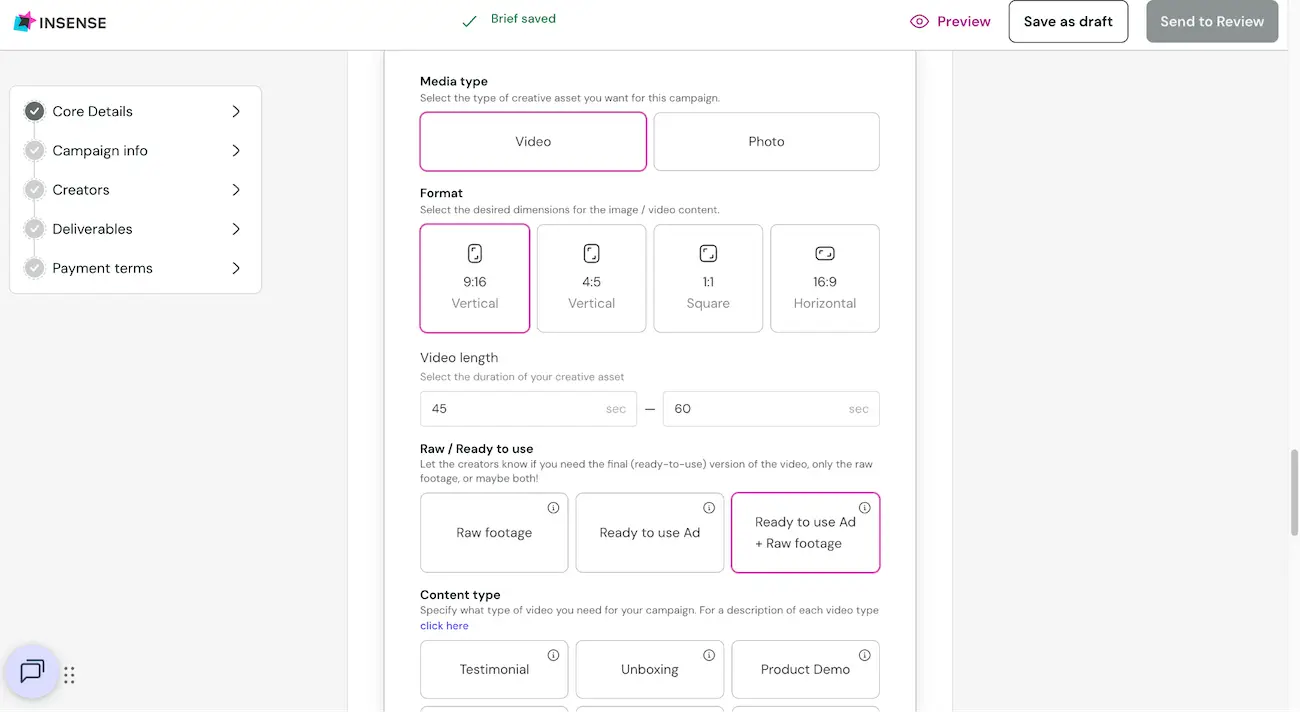
- Usage rights and content ownership are set as part of the brief before a creator ever posts, so you never have to go back and ask for paid rights after a post is already working.
- Raw files can be requested alongside every ready made ad, so your paid team always has what it needs to recut for different placements and funnel stages.
- A global creator marketplace of 115,000+ vetted creators in 57+ countries, with no commission taken from creators themselves, makes it easier to build repeat relationships with the creators whose content keeps earning a spot in paid.
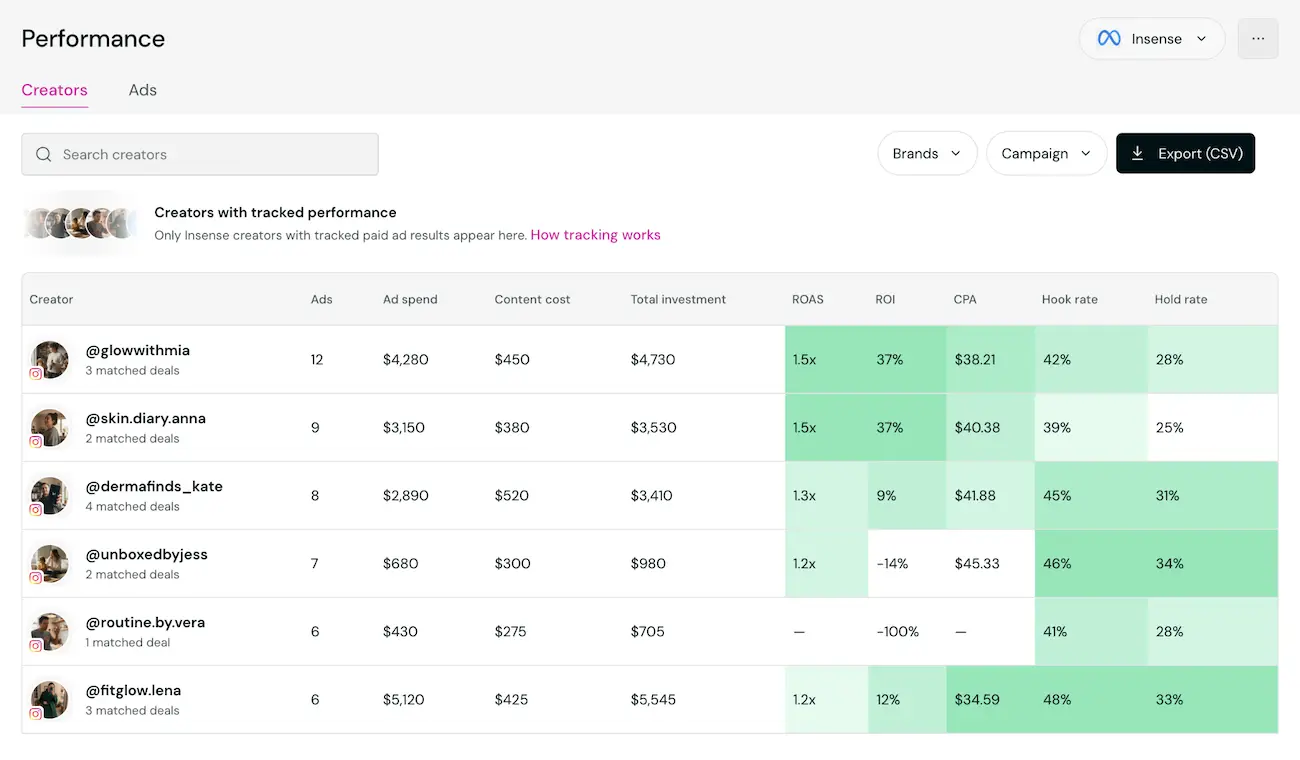
- Insense's creator-performance view shows which creators and which content are driving paid results, so the next brief and the next paid ad decision are based on evidence.
Over 5,000 DTC brands and agencies already use Insense to run UGC at scale. Book a demo or try it free today.
FAQs
Common questions we receive from brands about turning influencer content into paid ads:
Can you use influencer content in paid ads?
Yes, as long as you have the creator's permission to do so. On Meta, that happens through Partnership Ads (the creator tags the brand as a partner); on TikTok, through a Spark Ads authorization code the creator generates and shares.
How long should paid usage rights last?
It depends on the campaign, but common terms run 30, 60, or 90 days for a defined campaign window, with longer or evergreen rights reserved for always-on programs, usually negotiated at a premium over a short-term grant.