Some of the best-performing ads on Instagram and TikTok are not run from a brand's own account. They come from the creator's own profile, using their handle, and their usual posting style, even though they are paid ads. That is influencer whitelisting in action.
Whitelisting is a tactic worth taking seriously for performance, not just authenticity. Meta reports that Partnership Ads (its name for whitelisted creator ads) deliver 13% higher click-through rates and 19% lower cost per acquisition than standard ad formats, and TikTok has found creator-led ads drive 70% higher click-through rates and 159% higher engagement than non-creator ads at the same CPM.
An influencer whitelisting agency is the team that sets this up: getting a creator's permission, connecting their account for paid use, and running ads through it.
This guide walks through what these agencies actually do, when hiring one makes sense, how to pick a good one, and what it typically costs.
TL;DR
Key takeaways from this article:
- An influencer whitelisting agency secures creator permissions and runs paid ads from creator-owned accounts (commonly called Meta Partnership Ads or TikTok Spark Ads).
- Hire an influencer whitelisting agency when you have paid media budget and buying expertise, but not the creator relationships or access-setup workflow to run creator-handle ads.
- If your real bottleneck is a lack of creator content in the first place, a platform or managed creator-content service is usually a better fit than a traditional whitelisting agency.
- Strong influencer whitelisting agencies to consider include Insense, Top Growth Marketing, HireInfluence, ATTN:Labs, inBeat, Ubiquitous, Take Flight Marketing, and Disrupt.
- Before hiring any whitelisting agency, confirm how usage rights, access duration, and creator-level reporting work.
What Is an Influencer Whitelisting Agency?
An influencer whitelisting agency helps brands secure creator permissions and run paid ads from creator-owned social accounts.
In practice, that means the agency:
- negotiates access with a creator (often through a formal Partnership Ads or Spark Ads connection on Meta or TikTok)
- sets up that access correctly
- manages the paid campaign that runs through the creator’s handle instead of the brand’s own account.
Whitelisting ads that appear to come from a real person tend to earn more trust, blend into the feed more naturally, and often outperform brand-account ads on click-through rate and cost per result, while still letting the brand control targeting, budget, and optimization like any other paid ad.
When Should You Hire an Influencer Whitelisting Agency?
The key sign that your brand should hire a whitelisting agency is that your team possesses a paid media budget, but lacks the creator partnerships, permission protocols, or account-access systems required to execute creator-handle ads effectively.
If your main pain point is a lack of creator content: you don’t have enough UGC or influencer relationships to even consider whitelisting, then a platform or managed creator content service is usually a better fit than a traditional whitelisting agency. You need content produced before you have anything to whitelist.
If your main pain point is media buying: you already have creator content or relationships, and the gap is running paid ads through creator accounts correctly and efficiently, then an agency is more useful. That’s the specific problem whitelisting agencies are built to solve.
Some providers (such as Insense) cover both sides - content production and whitelisting setup - so it’s worth being clear about which problem you have before you start evaluating options.
How to Choose an Influencer Whitelisting Agency
Our expert advice on choosing influencer whitelisting services:
Check Creator Sourcing Quality
Ask how creators are vetted and matched to your brand. A good agency can show you a sample creator profile with real engagement rates and audience data (age, location, interests), and can confirm whether that creator has run whitelisted ads before.
Ask How Usage Rights Are Handled
Get in writing which platforms the UGC usage rights cover, whether they're exclusive to your brand, how long they last, and what happens if you switch agencies or the creator relationship ends. Whitelisting rights commonly run in 30, 60, or 90-day windows, and letting one lapse unnoticed means your ads just stop running.
Review the Access Setup Process
The creator has to personally accept a partnership invitation through Meta Business Suite or TikTok's creator tools, so ask how long that usually takes and what the backup plan is if a creator doesn't respond. A well-run agency can tell you their typical "creator selected" to "ads live" turnaround, and may have a standard process for swapping in a replacement.
Look at Creative Direction
Some agencies only handle access and paid media and expect a finished ad from you; others help build multiple hooks and CTAs to test. Ask for an example of how many variations they typically produce per creator, and whether refreshing a fatigued ad is included or billed separately.
Ask for Creator-Level Reporting
Ask whether reporting breaks down cost per result, CTR, and ROAS by individual creator and ad, or only shows one combined campaign number. Creator-level detail is what lets you decide who to re-sign next round.
Check Platform Coverage
Confirm whether they support Meta Partnership Ads, TikTok Spark Ads, or both, and ask for a real example campaign on each platform.
Best Influencer Whitelisting Agencies
Here are the best influencer whitelisting agencies in 2026:
Insense offers influencer whitelisting as part of our broader platform and managed-service offering. Brands can source creators, produce UGC, and set up Meta Partnership Ads or TikTok Spark Ads connections in one workflow, without needing a separate agency for content and a separate one for whitelisting.
Top Growth Marketing runs a dedicated influencer whitelisting agency service line: creator identification, negotiating platform access, creative briefs, and managing the resulting Partnership Ads and Spark Ads campaigns. It’s a solid fit for established e-commerce brands with meaningful existing ad spend.
HireInfluence is a full-service influencer marketing agency that includes whitelisting as one piece of a larger, more customized process covering strategy, creator sourcing, rights and permissions, creative direction, and attribution. It tends to suit larger brands with bigger budgets and more complex campaigns.
ATTN:Labs is a growth marketing agency with a dedicated whitelisting service covering both “boosted” whitelisting (ads run from a creator’s existing post) and dark posting (ads run from a creator’s account without appearing on their own feed). It’s a useful option for DTC and wellness brands focused on lowering acquisition costs.
inBeat is a performance-creative and influencer agency that produces UGC and manages paid social campaigns across platforms. Whitelisting isn’t listed as a distinctly named, standalone service on its public pages, so it’s worth confirming directly whether, and how, this fits into their broader campaign work before assuming it’s included.
Ubiquitous is a full-service influencer marketing agency that references “paid amplification” as part of its performance tracking, which points toward whitelisting-style capability, though it isn’t broken out as its own named service publicly. Confirm the specifics on a call rather than assuming.
Take Flight Marketing is a boutique growth agency whose broader paid-social and influencer work touches on whitelisting as a tactic, but it isn’t a dedicated, productized whitelisting offering. It’s a reasonable option if you want a smaller, founder-involved team and are comfortable scoping whitelisting work directly with them.
Disrupt is a full-funnel influencer marketing agency focused mainly on organic creator campaigns, seeding, and cultural relevance across platforms. Whitelisting doesn’t appear to be a core, named part of its service, so if that’s specifically what you need, it’s worth confirming upfront or looking elsewhere on this list first.
Getting Started with Influencer Whitelisting
Influencer whitelisting works best once you already have the right creator relationships and content. If you’re still building that creator pipeline, it’s worth knowing that platforms like Insense can cover creator sourcing, UGC production with interactive creative briefs, and the whitelisting setup all in one place.
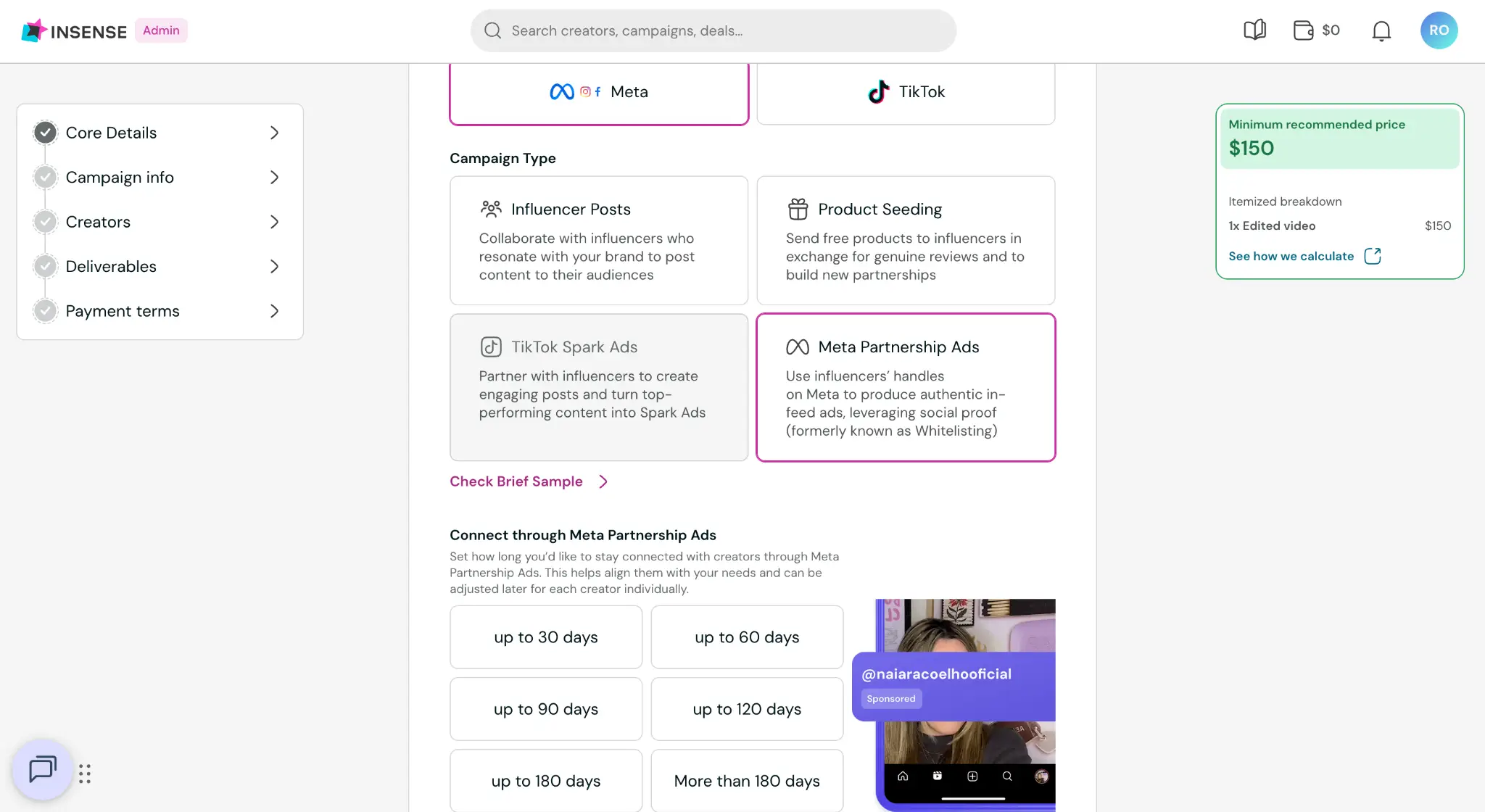
Insense works with 115,000+ vetted creators across 57+ countries, and has been used by 5,000+ DTC brands and agencies to run creator campaigns.
Brands typically receive their first creator applications within 48 hours and full content delivery within 14 days, saving teams 40+ hours a month on creator outreach, usage rights, contracts, and payments.
Insense is also a Meta Business Partner and TikTok Marketing Partner, making setting up Partnership Ads and Spark Ads through the platform straightforward.
Book a demo or try it free today.
FAQs
Common questions we receive about influencer whitelisting services:
What is an influencer whitelisting agency?
An influencer whitelisting agency secures creator permissions and manages paid ads run from creator-owned social accounts, typically through Meta Partnership Ads or TikTok Spark Ads, rather than from the brand’s own account.
What should I ask before hiring an influencer whitelisting agency?
Ask about their creator sourcing process, exactly how usage rights and access duration work, how they handle the technical account-access setup, whether creative direction is included, whether you’ll get creator-level performance reporting, and which platforms they actually support.
How long should whitelisting rights last?
This varies by agreement, but most whitelisting connections run anywhere from 30 to 180 days before needing renewal or renegotiation. Confirm the exact term and renewal process with any agency or creator before a campaign launches, since running ads past an expired agreement can create real legal and platform-policy problems.