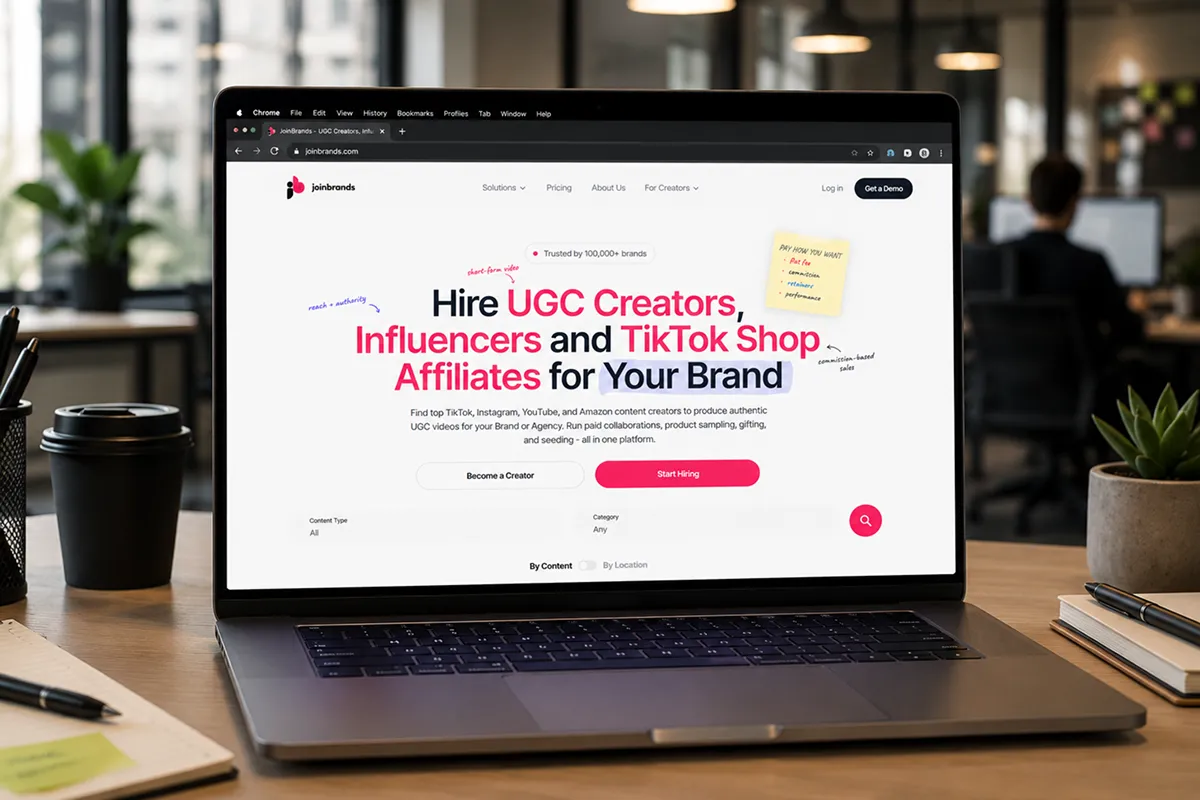
JoinBrands is a solid pick if your main goal is low-priced UGC at volume, especially when you’re working with newer creators and you don’t need a ton of influencer-marketing infrastructure.
But if you’re a DTC brand running performance ads or you’re ready to move beyond cheap UGC to content that actually drives results, you’ll outgrow it pretty quickly.
At that point, it might be time to look for an alternative.
Why Marketers Are Looking for JoinBands Alternatives
To put it simply, JoinBrands is built more like a UGC marketplace than a full influencer marketing platform.
It works if you just need to order one-off videos.
But as soon as you need a bit more structure or more support around bigger campaigns, it can start to feel pretty limited.
Most brands hit this point when they want to reach out to creators at scale rather than passively wait for submissions.
JoinBrands also doesn’t have workflows that other platforms have.
It can also be a bit tricky to manage long-term creator relationships with the platform because it can feel a bit throwaway.
Plus, briefing is basically non-existent (or flimsy at the very least).
For UGC campaigns to really take off, you need clear, structured briefs that spell out exactly what you want. JoinBrands simply doesn’t have this option.
But the cracks really start showing when it comes to paid media.
If you’re running (or planning to run) Spark Ads, you’ll quickly see that JoinBrands doesn’t have the capabilities of doing it. At all. Same goes for Meta whitelisting.
Yes, JoinBrands can be good for low-cost UGC and simple campaigns (fine if you’re just starting out and dipping your toes in the world of creator campaigns). But other than that, it’s pretty light on features.
Hence why brands start to look elsewhere.
Top JoinBrands Alternatives
- Insense: all-in-one solution for UGC and influencer marketing.
- Julius: strong for influencer discovery and workflow/CRM-style campaign management.
- Fiverr & Upwork: flexible if you want to hire creators directly and manage everything yourself.
- Bazaarvoice: ideal for brands focused on reviews, sampling, and shopper UGC.
- Billo: creator marketplace with a heavy emphasis on data-led creative and fast production workflows.
- Later: broader social suite with influencer marketing and management tools.
- Upfluence: classic influencer platform with discovery, outreach, and relationship management.
- Modash: great for discovery, audience analysis, and tracking across social channels.
- MOGL: athlete focused and especially useful for NIL and athlete partnerships.
Let’s break down these JoinBrands alternatives in more detail.
1. Insense
Insense is an all-in-one solution that lets you build out creative strategies, find and collab with creators, and run paid campaigns.
One of its biggest strengths is its detailed creative briefs. You can build clear briefs that spell out hooks, talking points, examples, do’s and don’ts, and potential angles.
You can find the perfect creators for your campaigns through the platform’s marketplace of vetted influencers, then work together with them in one place.
Insense handles it all from start to finish, including a direct chat feature, quick feedback, revisions, and approvals built into the workflow.
One of its standout features is that it supports whitelisting and paid campaigns so you can turn your best performing creator content into ads on Meta and TikTok (we’re actually an official TikTok partner).
You can manage it all yourself, but if you’d rather not there’s a Managed Service option where our team can do it all for you. This includes designing your strategy, finding the right creators, setting up your campaigns, and monitoring them.
Best for: DTC brands that want high-performing creator content, strong briefs, real collaboration, and paid-social-ready workflows all in one place.
Key features
- Structured, performance-focused creative briefs
- Creator discovery and matching for DTC campaigns
- Built-in messaging, feedback, revisions, and approvals
- Whitelisting and paid amplification support (Meta and TikTok)
- Vetted creator network with performance mindset
- Campaign management and creator collaboration tools
- Optional hands-on support for creative strategy and setup
2. Julius
Julius brings together all the moving parts of an influencer campaign in one place.
Instead of simply being a place to order UGC, you can actually run campaigns end-to-end with the platform.
There’s also a good mix of features that help you nurture ongoing relationships with creators.
Best for: brands with repeat creator campaigns who want structure and reporting.
Key features
- Influencer campaign management in one workspace
- Lists, tags, notes, and workflow tools for staying organized
- CRM, influencer relationship management, and analytics/ROI tracking
3. Fiverr and Upwork
Fiverr and Upwork aren’t really influencer platforms in the obvious sense.
But you can use them as a marketplace to hire freelancers (including UGC creators).
This gives you loads of flexibility, but you also inherit all the ops work that goes into creating and managing UGC campaigns.
Best for: brands that want to hand-pick talent and don’t mind managing briefs, tracking, contracts, and revisions manually.
Key features
- Hire creators directly (video, editing, voiceover, scripts, etc.)
- Custom contracting and ongoing retainers (if you build the relationship)
- You control briefs, timelines, and quality standards
4. Bazaarvoice
Bazaarvoice is best known for helping brands get ratings and reviews.
It’s a particularly good option if you care about retail distribution. The platform helps you collect, manage, and syndicate reviews, ratings, photos, and videos across your own site and a huge network of retail partners.
You can also connect with real shoppers and send them products to try and review.
Best for: brands where reviews, sampling, and retail syndication are important.
Key features
- Ratings and reviews collection, display, and distribution
- Sampling programs designed to generate reviews and social content
- Large-scale UGC management across the shopper journey
5. Billo
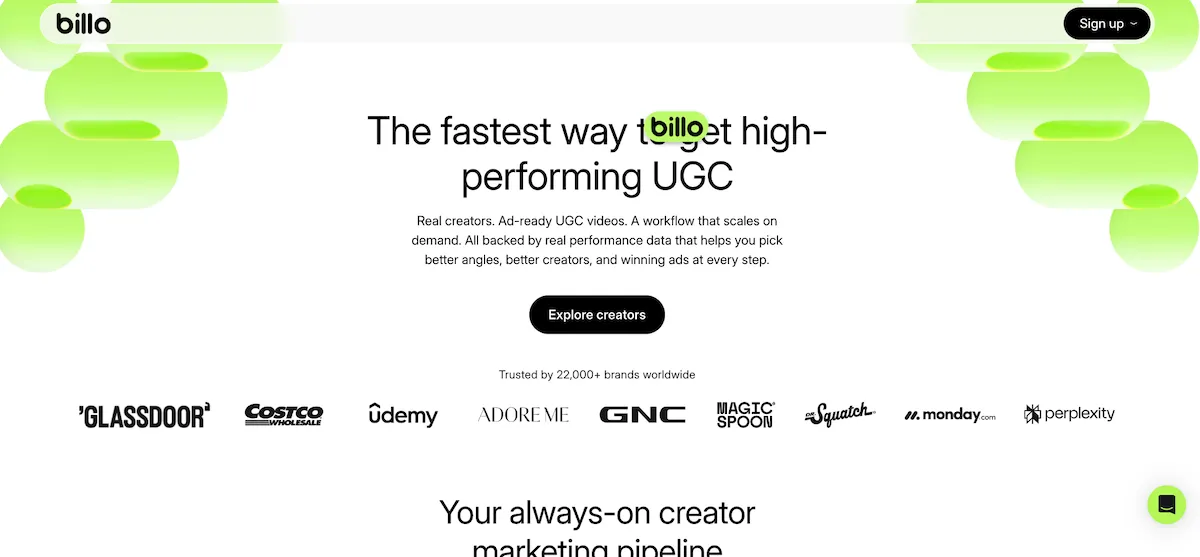
With Billo, you can choose creators based on past campaign results, ratings, and performance history. The whole platform is designed to be quick.
You drop in a brief, pick creators, and get videos that are ready to go ASAP without having to deal with outreach or contracts.
It’s a particularly good pick if you’re constantly testing new ads and need a reliable flow of fresh creative.
Best for: DTC teams that want fast UGC production and care about performance signals.
Key features
- Creator selection with performance proof and data
- Instant briefs and a unified workflow
- Options geared toward specific use cases for ads
6. Later
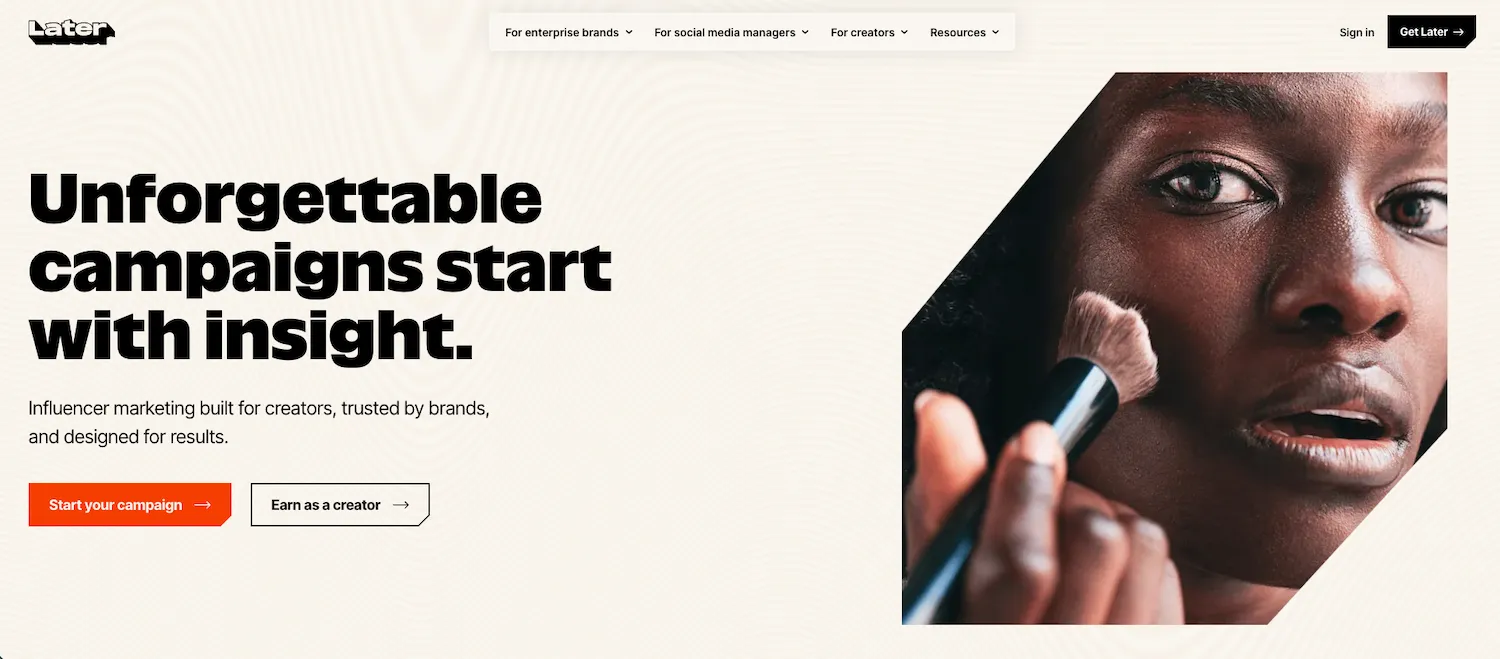
Later is a full social suite where you can manage creators, content, and social publishing all from one place.
As well as influencer marketing, Later also covers social scheduling, analytics, social listening, and link-in-bio tools. Great if you don’t want to juggle five different platforms.
Later’s influencer tools tend to work a bit better when creators are part of a wider social strategy rather than a standalone UGC pipeline.
Best for: teams that want influencer marketing and broader social workflows in one place.
Key features
- Influencer marketing platform and services positioning
- Social media management and analytics tools
- Investing in the creator economy by bringing more tools in-house
7. Upfluence
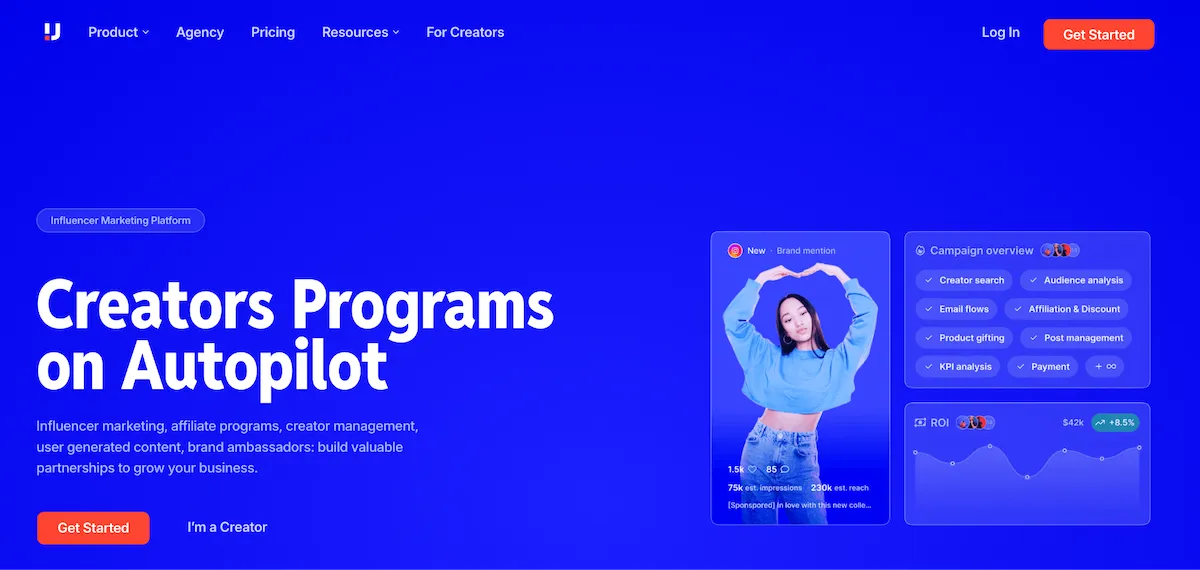
Upfluence is one of the more classic, full-scale influencer marketing platforms.
One of its biggest strengths is outreach. You can find creators, contact them directly, and manage conversations from one place with handy templates and workflows.
It’s also big on relationship management.
You can track past collabs, tag creators, store notes, and build out a long-term creator roster rather than starting from scratch for each campaign.
Best for: brands looking to build influencer programs they can run again and again.
Key features
- Outreach via Gmail/Outlook with automation and templates
- Hiring workflows and templates for influencer operations
- Strong emphasis on whitelisting education and paid ads
- Ai-powered influencer marketing with Jaice AI
8. Modash
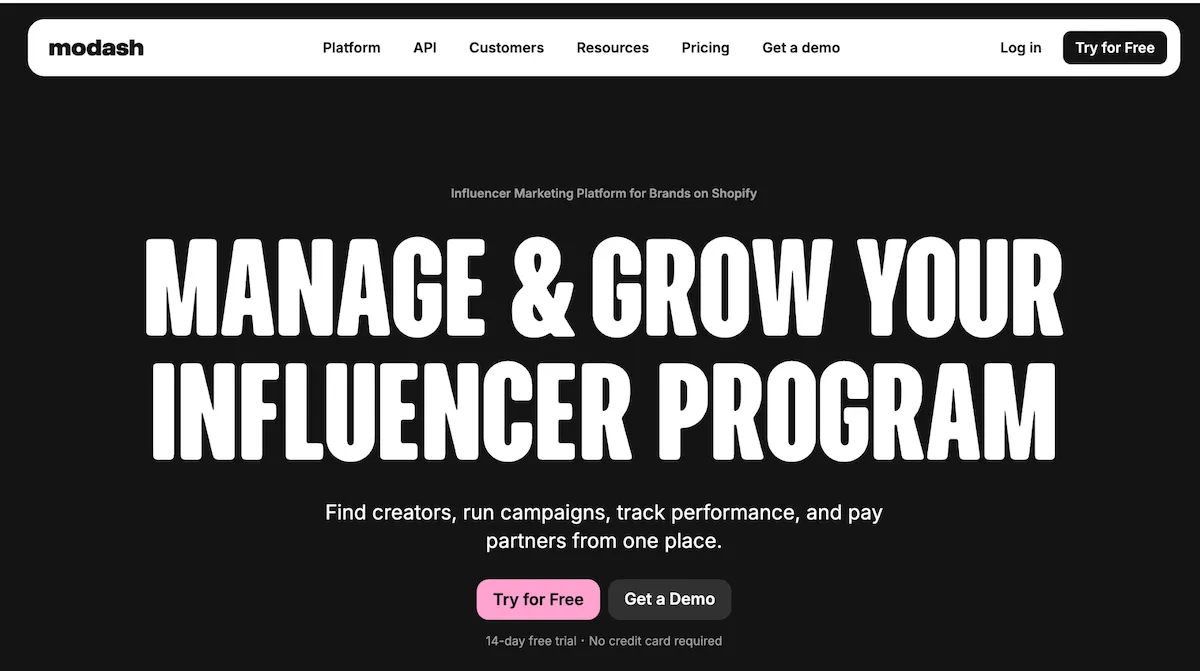
Modash helps you find the right creators rather than lots of them.
It’s built to help you discover new creators across all the big channels and analyze their audiences so you can figure out if they’re worth it.
It’s particularly good at checking engagement quality and uncovering fake followers. You can also track creators over time, save shortlists, and monitor the performance of your live campaigns.
Best for: teams that want to find and validate creators using data.
Key features
- Discovery and analysis (engagement, fake followers, audience breakdowns)
- Monitoring and tracking capabilities
- Shopify integration for ecommerce workflows
9. Mogl
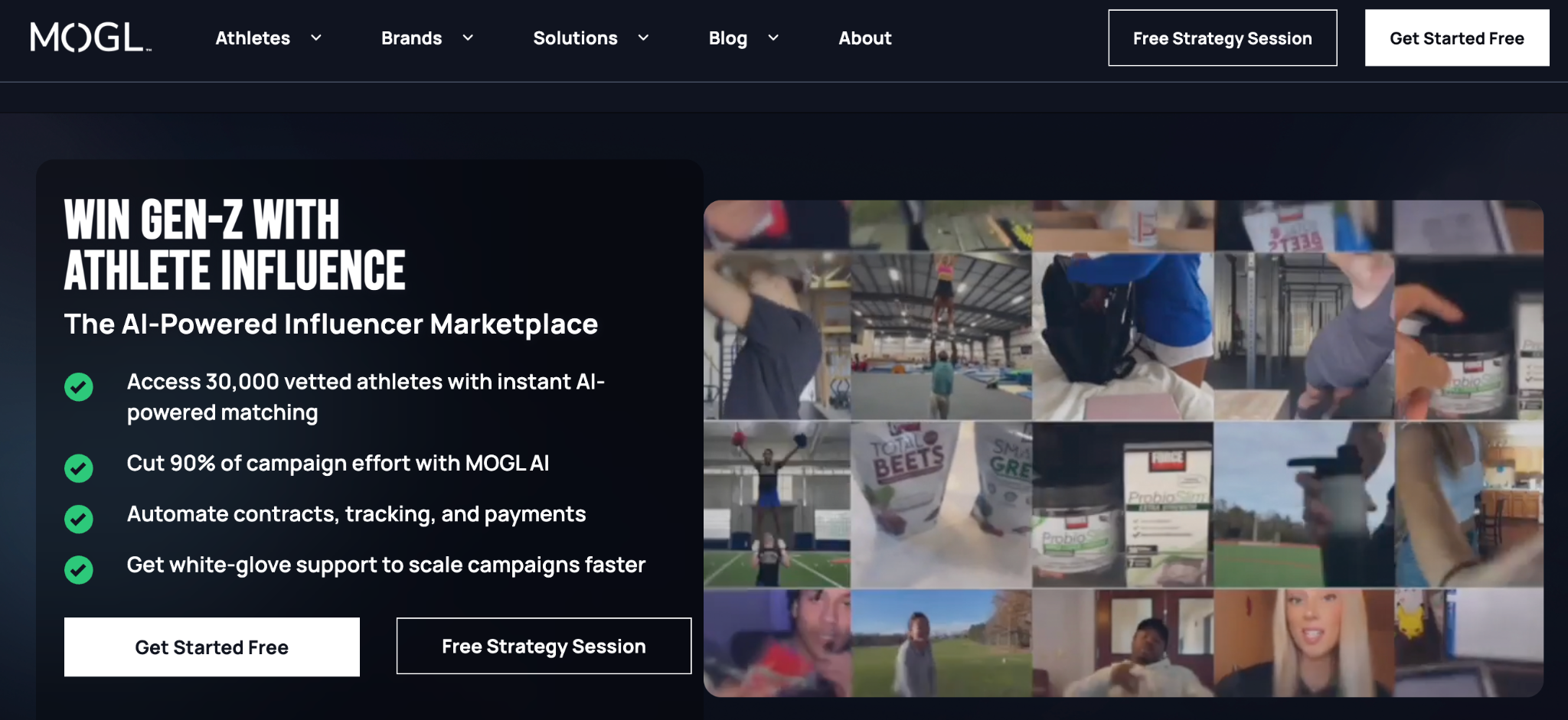
Mogl takes a different approach to UGC. It’s very specifically focused on athlete influencers and NIL partnerships.
So, if your brand sells into Gen Z, sports, or campus culture, it can be a great alternative to the more generic creator marketplaces.
Best for: athlete-led creator campaigns.
Key features
- Smart matching that pairs brands with athletes based on real data
- Contracts, payments, deliverable management
- Detailed audience insights
Final Thoughts on JoinBrands Alternatives
If you’re only using JoinBrands for cheap UGC, it can work.
But most brands dipping their toes into the UGC world don’t just need more content. For everything to work together, they need a system that supports:
- Real briefs
- Real creator relationships
- Tools for turning creator content into ads
- Creative strategy that’s based on concrete data
That’s why Insense is often the better “next step” for DTC brands.
It’s built for creator content that’s meant to perform, with proper briefs, real collaboration, and campaign structure that actually holds up once you put ad spend behind it.
If you’re tired of buying random videos and hoping one works, Insense helps you build a repeatable creative pipeline instead.
Try it for free or book a demo.
FAQ
What is the best JoinBrands alternative for brands?
We might be a bit biased here, but for most DTC brands, Insense is the best overall alternative.
It gives you more than just access to creators. You get structured briefs, real collaboration, and workflows built for content that’s actually made to perform well.
That said, other tools can make sense depending on your priorities:
- For a structured influencer program with heavy CRM and outreach features, try Julius or Upfluence.
- If your main focus is vetting and choosing authentic creators, try Modash.
- If your priority is reviews and getting into retail networks, Bazaarvoice might be better.
What is the best JoinBrands alternative for creators?
For creators who want consistent work with brands, Insense is also the top choice.
It connects creators with brands running real campaigns complete with clear briefs and repeat work rather than one-off UGC orders.
If you’re a creator who wants quick gigs and doesn’t mind pitching yourself, Fiverr or Upwork can be the fastest route. You’re in control, but you’re also doing all the selling.
Why are brands switching from JoinBrands to other platforms?
JoinBrands is a good platform for scrappy campaigns and one-off UGC buys. But many brands outgrow it at a certain point.
As soon as brands start running paid ads, testing creatives, or scaling campaigns, they need more structure, so they look for platforms that offer end-to-end influencer marketing tools.
.png)