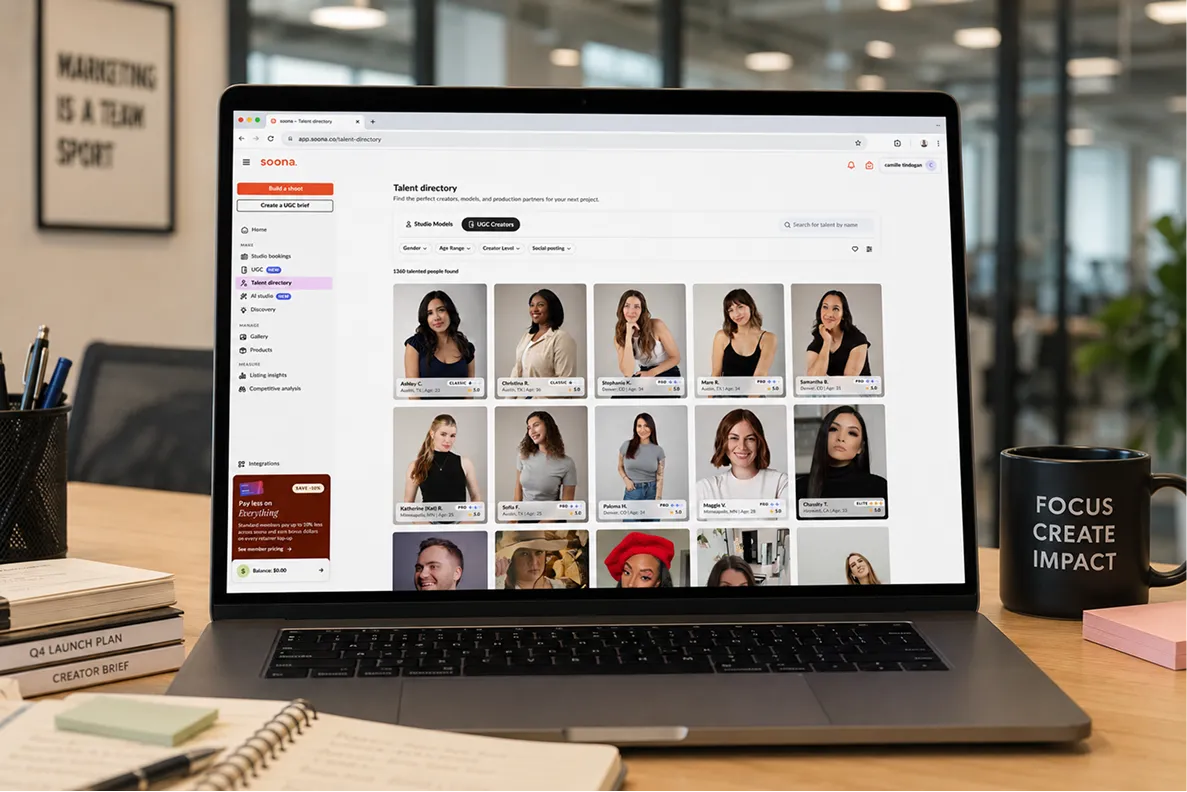
Some of the best micro-influencer marketing platforms are Insense, Upfluence, Collabstr, GRIN and a lot more.
These platforms help you to seamlessly navigate the hassle of negotiations, collaboration, and other elements of influencer marketing.
But with so many of these tools in the brand world, how can you identify the right fit for your brand?
In this guide, you’ll find a full comparison between these platforms. Their ratings, pricing, most loved features as well as some downsides to consider.
We have the full package for you and we can’t wait for you to get started!
Disclaimer: The information below is accurate as of 2026 Q4.
Best Micro-Influencer Marketing Platforms by Use Case
These influencer marketing platforms are designed for specific use cases.
Below is a list of all 16 software options and their use cases.
- Insense: Best in upscaling paid socials with creators with an all-in-one centralized dashboard for influencer discovery, user-generated content, creator relationship management.
- Upfluence: Influencer marketing, affiliate programs, creator management, user-generated content, and brand ambassadors.
- Flowbox: Influencer team building, with in-platform creator discovery and outreach, campaign management and a flexible reward system.
- Klear: Influencer discovery for maximum return on investment (ROI).
- GRIN: Customer relationship management (CRM) and influencer relationship management (IRM).
- NeoReach: Fraud detection and API integration.
- IZEA: Influencer discovery.
- TRIBE: Creator management and campaign performance measurement.
- CreatorIQ: Reporting and insights.
- Mavrck: Built-in digital creator identification and authentication, content management, and ROI measurement.
- Aspire: Overall campaign management.
- Impact: Discover, recruit, and scale digital creators.
- Traackr: Data-driven influencer marketing.
- Creator.co: Influencer discovery.
- stack influence: Campaign management with proprietary AI technology.
- Collabstr: TikTok, YouTube, UGC, and Instagram influencer discovery.
Each of these marketing platforms is created to meet the needs and objectives of various brands and business owners.
Keep reading to explore the features of each of these platforms.
Platform #1: Insense
Insense is the all-in-one solution for scaling UGC production and running end-to-end influencer marketing campaigns including the ones with micro-influencers.

Insense can help you upscale your influencer marketing efforts, and enable your brand to handle all aspects of influencer marketing in one centralized dashboard.
G2 Rating
4.5 / 5
What we love
What’s great about Insense is that it offers a wide range of influencers and creators from various niches.
Insense’s marketplace has 115K+ vetted creators and influencers across 57+ countries. You can search for a creator persona in plain language and check audience details before inviting creators to your campaign.
Additionally, users have praised Insense for its creative and high quality content creation. This can be attributed to the great support and customer service offered by the platform.
Downsides to consider
For a few users, the pricing package of the brand isn’t as competitive as it should be.
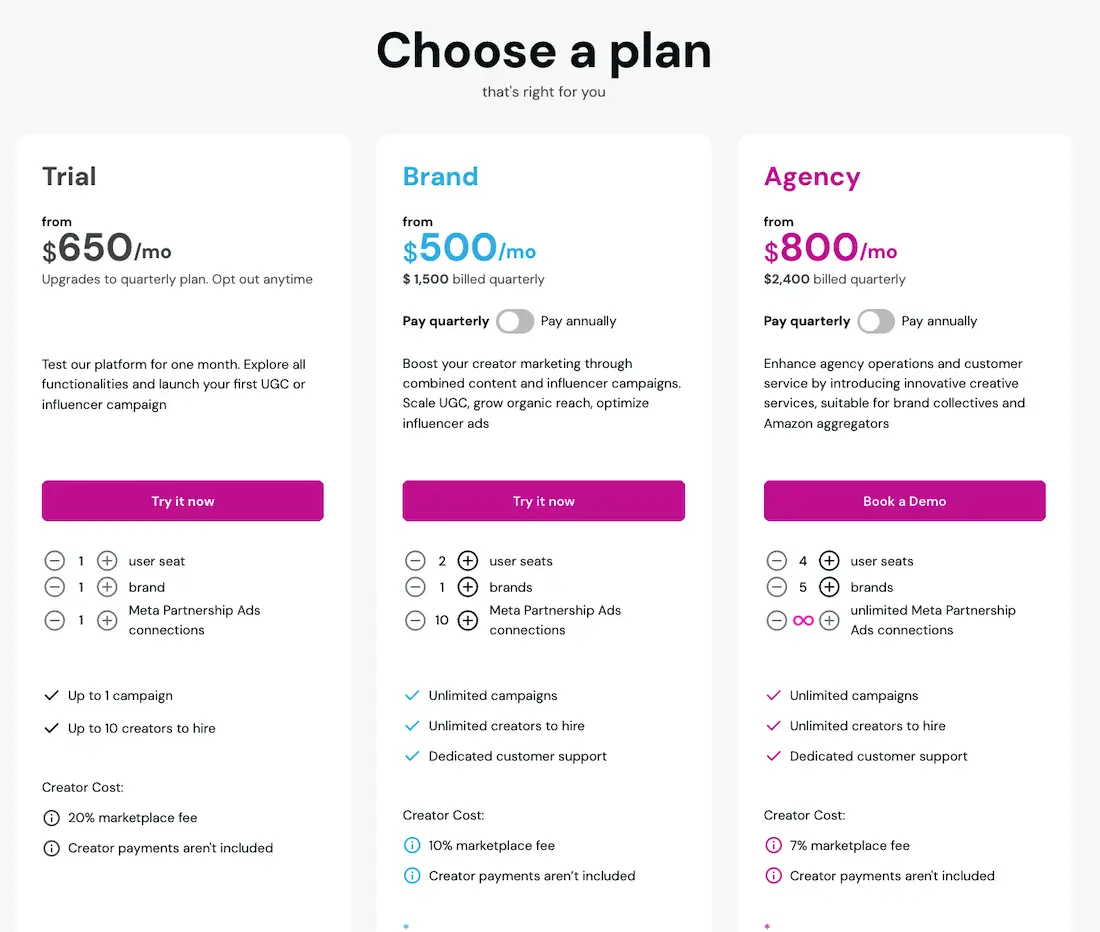
Creator payments are separate from the subscription. Marketplace fees also apply: 20% on Trial, 10% on Brand and 7% on Agency, so include them when comparing the total cost.
Best for
The platform is best for eCommerce brands and business to consumer (B2C) brands.
Some examples of brands who have worked with Insense include: Wonderskin, Hollywood Hair Bar, and BabyQuip, amongst others.
Top Features
- Creator Marketplace: find vetted creators using persona search and filters for platform, follower count, audience, location and engagement.
- Creative brief: set the deliverables, talking points, references, usage and deadlines before work starts.
- Campaign management: for payments, copyrights, uploads, and performance measurement.
- Influencer outreach: build creator lists from your brief and contact Instagram and TikTok creators beyond the vetted marketplace.
- Product seeding and commerce: coordinate product collaborations, TikTok Shop and affiliate campaigns.
- Slack: receive campaign updates, creator questions and submitted content in your selected channels.
- Insense MCP: use a compatible assistant, including Claude or ChatGPT, to review campaign information and take supported actions with your permission.
- Whitelisting (Creator ads): set up Meta Partnership Ads, TikTok Spark Ads and supported YouTube Partnership Ads collaborations. Check content usage rights and creator ad permissions separately.
Pricing
Insense offers three self-service plans—Trial, Brand, and Agency—plus a managed option.
The one-month Trial starts at $650. Brand starts at $500 per month, billed quarterly at $1,500. Agency starts at $800 per month, billed quarterly at $2,400. Annual billing options are also available.
Managed services have separate pricing. A dedicated platform manager starts at $2,500 per month, excluding creator costs. Ready-to-go UGC starts at $3,500 for eight videos, including creator costs. These are example packages; the final proposal depends on the work involved.
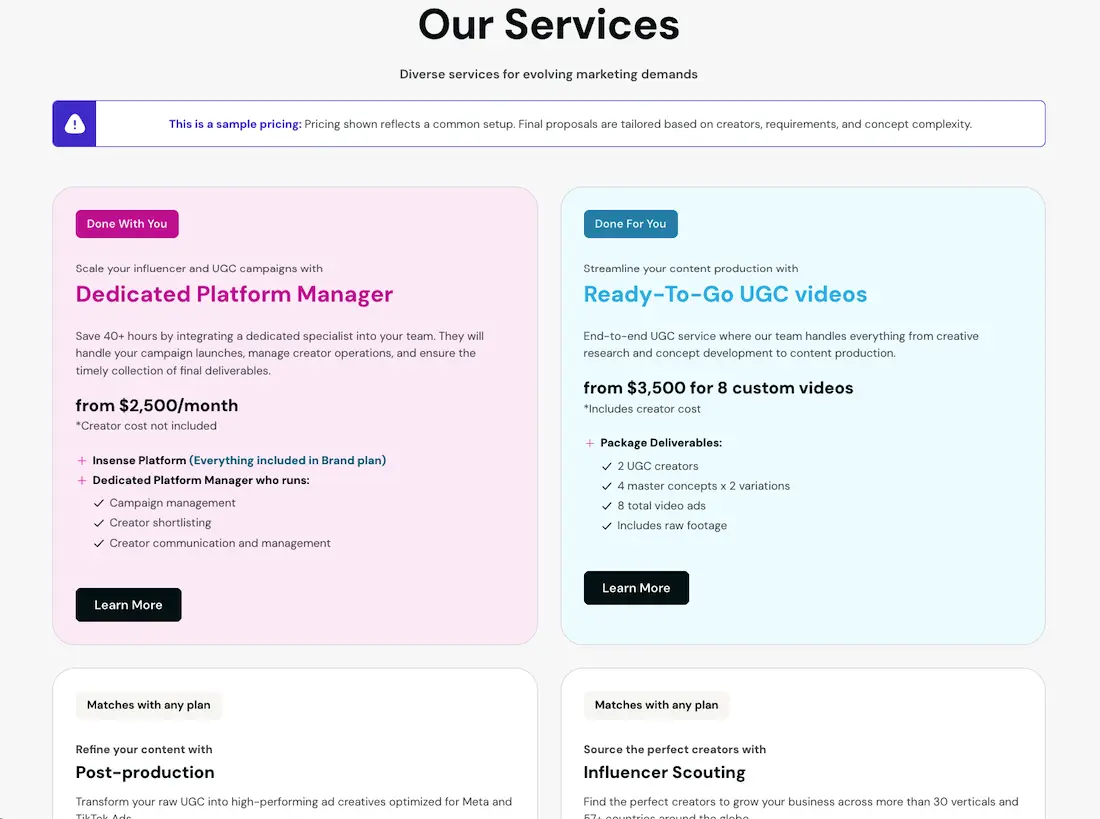
We launch micro-influencer campaigns, shortlist creators, manage communication, and deliver final assets you can reuse. Add focused help anytime with post-production, creative concepts, and influencer scouting that work with any plan.
Platform #2: Upfluence
Upfluence is best known for their expertise in boosting influencer marketing ROI.

The platform focuses on influencer marketing, affiliate programs, creator management, user-generated content, and brand ambassadors.
G2 Rating
4.6 / 5
What we love
One of the outstanding offerings of Upfluence is that the platform allows seamless communication and feedback exchange between a business’s team and their influencers.
Plus, the platform is integrated with Shopify, Hootsuite, Zapier, and other software tools.
Downsides to consider
The pricing package isn’t available on the website. However, user reviews show that the price is considered to be too expensive.
Furthermore, the monthly package isn’t month to month, but rather a billed package which runs for 12 months, which makes it less flexible.
Best for
Upfluence caters to the needs of B2B and B2C brands of all sizes.
Some examples of brands who have worked with Upfluence include: Keen, Verizon, Amazon, and others.
Top Features
- Find relevant influencers: offers an extensive filtering search feature that lets you easily find the right influencers.
- Jaice AI: Find creators, prepare outreach and build campaigns with Upfluence’s AI tools.
- Analyze influencers: helps you assess an influencer’s portfolio with in-depth influencer analytics.
- Workflow and outreach with ChatGPT: boosts your communication and influencer collaborations with ChatGPT integration.
- Influencer gifting: helps you send gifts to your influencers and execute product seeding initiatives.
Pricing
Price is available upon request.
Platform #3: Flowbox
Flowbox is a European UGC and influencer marketing platform built for running micro-influencer collaborations at scale.
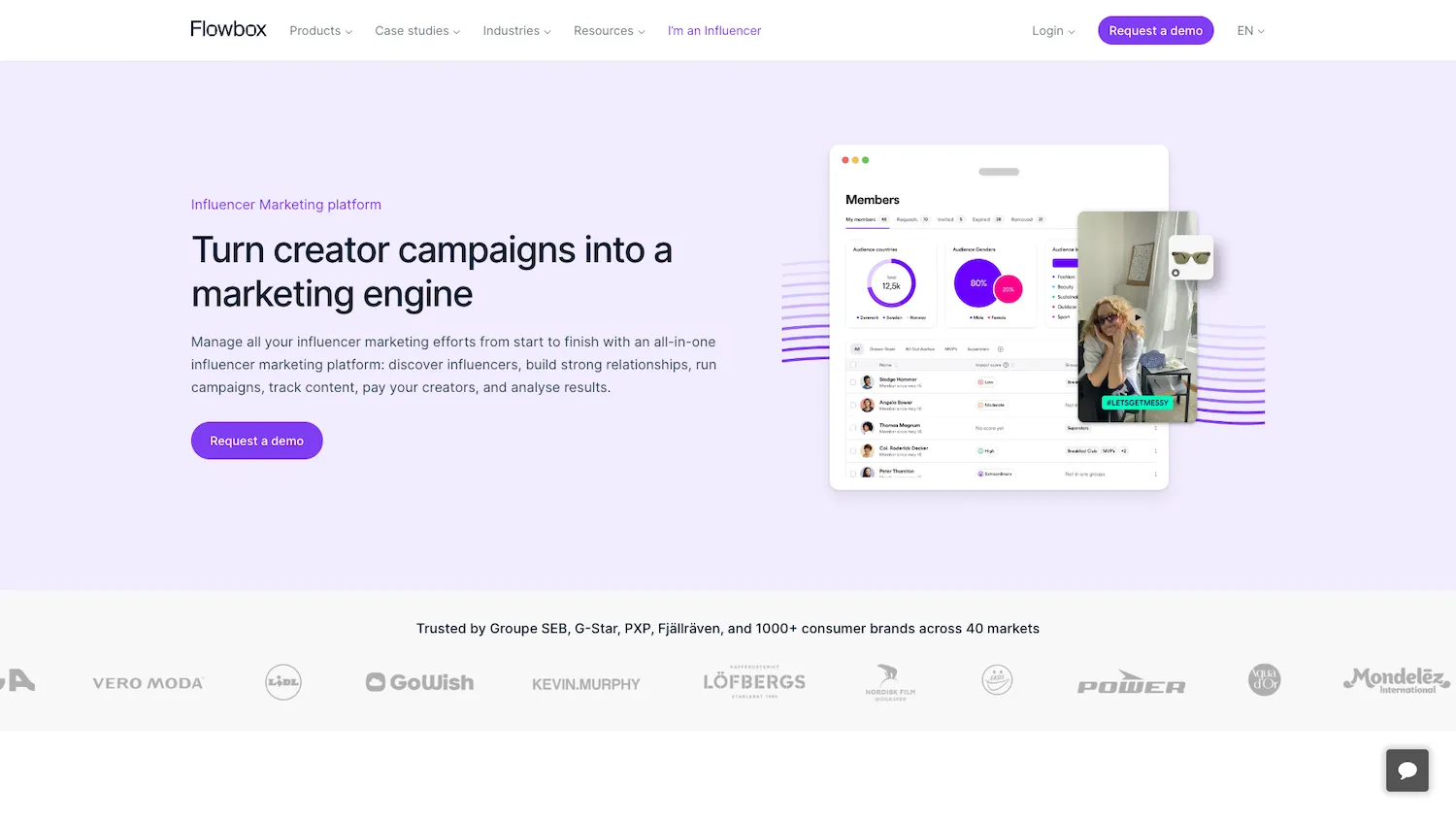
It combines creator discovery, recruitment, and full campaign management in one place and is designed to build an ongoing team of creators and brand ambassadors.
G2 Rating
4.7 / 5
What we love
Flowbox allows you to assemble a team of creators that can apply through a shareable recruitment page, or you can directly invite them to join. Activate the teams with specific campaigns, instead of negotiating each collaboration one by one.
Discovery happens without leaving the tool, through Verified Influencers or Global Search. Gifting and product seeding are native, which fits how most micro-influencer programs run.
Downsides to consider
Contacting creators found via Global Search runs on a token/unlock model, and pricing isn’t published publicly, so the true cost of scaling cold outreach isn’t clear until you talk to sales.
Best for
European eCommerce and DTC brands that want to scale their influencer collaborations with a brand ambassador program and flexible campaigns that can be repurposed into other marketing channels.
Some examples of brands who have worked with Flowbox include: Groupe SEB, Create, Fjällräven, Table du Sud, Icon Hair, among others.
Top Features
- Influencer discovery: browse and filter vetted creator profiles with Instagram and TikTok metrics via Verified Influencers, or use Global Search to find creators outside the platform, unlock their contact details, and invite them to your team.
- Recruitment pages & brand teams: let creators apply through a shareable recruitment page, set Target Group preferences to attract the right profiles, and organise your community into groups for targeted campaigns.
- End-to-end campaign management: build briefs with set deliverables, run deadline or always-on campaigns, and approve content before it goes live.
- Compensation & tracking: reward creators with cash, product, or automated gift-card vouchers, and measure results with campaign hashtags, UTM links, shareable discount codes, and advanced analytics.
Pricing
Not published publicly. Pricing is available on request or after a demo.
Platform #4: Meltwater (Klear)
Klear is part of Meltwater’s influencer marketing offering. You can find creators, check their audiences, manage collaborations and report on campaign results.
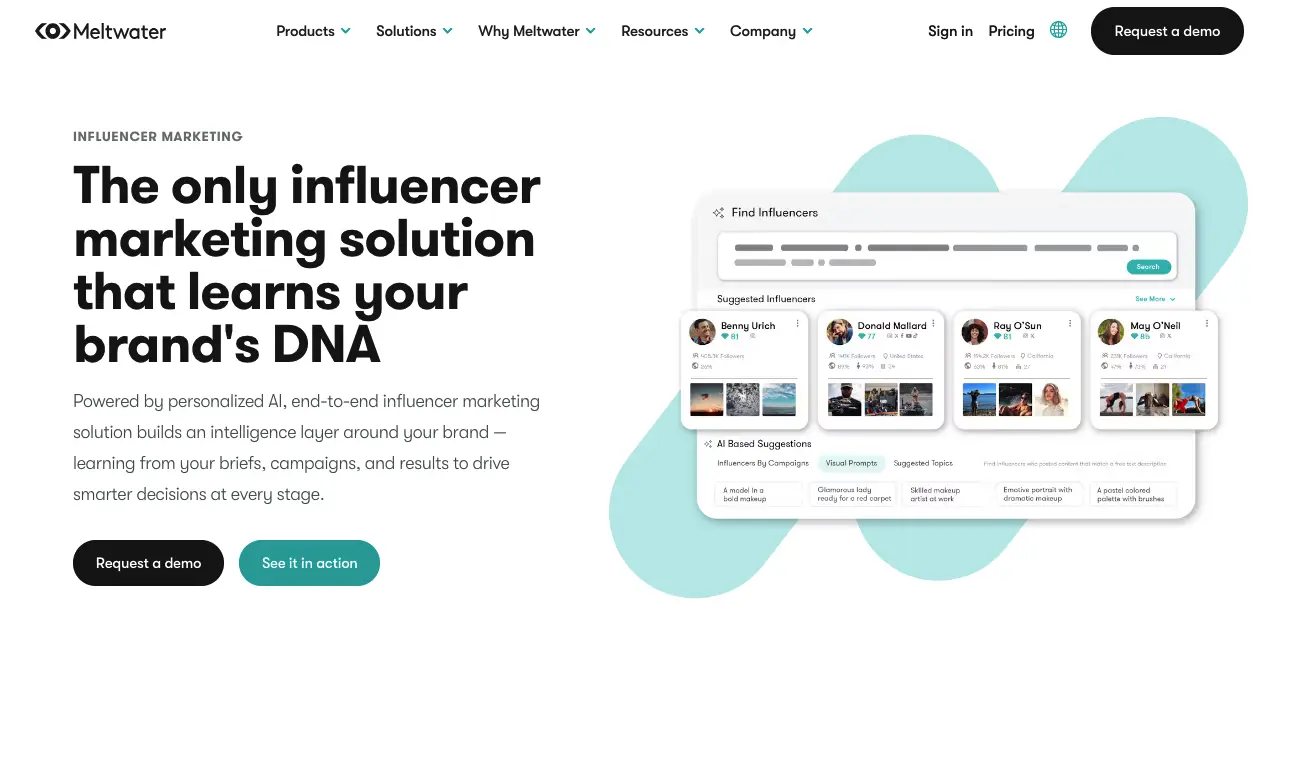
The platform supports agencies managing several clients as well as brands running campaigns across markets. Its discovery database includes 30M+ creator profiles.
G2 Rating
4.2 / 5
What we love
The platform simplifies the process of measuring and tracking important metrics and KPIs.
Rather than pulling information from various social media platforms, brands can measure the success of their campaigns in one place.
Downsides to consider
The platform is not entirely suitable for large-scale agencies.
Additionally, some users have expressed displeasure in the platform’s inaccurate influencer profiles.
Best for
Klear is designed for entry-mid level businesses, and enterprises.
Top Features
- Find influencers: gain access to over 30 million influencer profiles and influencer databases.
- Influencer analytics: research influencer insights, audience demographics, and influencer profiles.
- Influencer relationship management: control your campaigns with messaging and content approval tools.
- Measure campaigns: strategize your influencer campaigns by analyzing influencer reach and conversion.
Pricing
Pricing is available upon request
Platform #5: GRIN
GRIN is influencer marketing software which specializes in providing tools for influencer marketing, affiliate marketing, customer advocacy, and branded content.
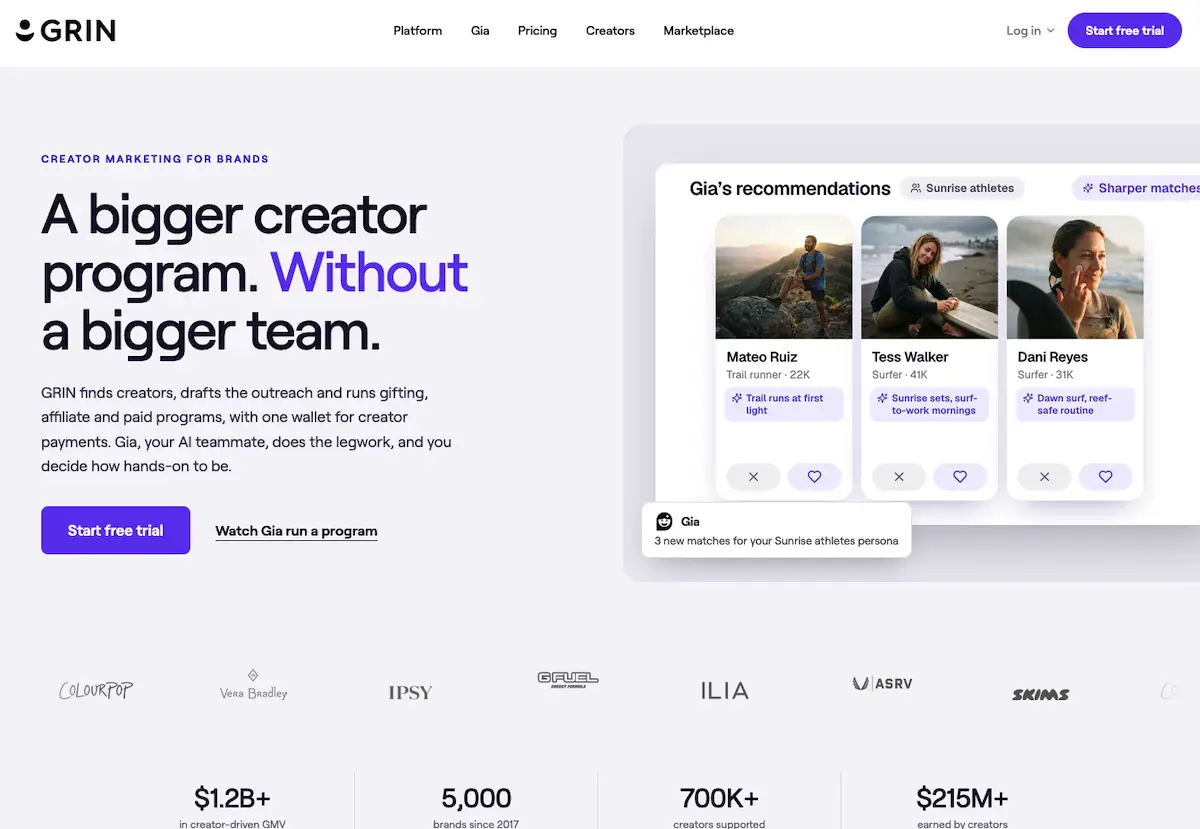
These tools are created with the aim to foster authentic content creator relationships between brands and influencers and digital creators.
G2 Rating
4.5 / 5
What we love
The organized and intuitive user interface is one reason why we love GRIN.
Furthermore, the contact tags used to distinguish creator profiles helps in organizing and simplifying influencer discovery.
Downsides to consider
Despite its upsides, GRIN has its limitations.
One such limitation is the platform’s lack of integration with some CMS platforms.
Best for
Ecommerce and fast growing brands. GRIN has worked with various brands such as; Osmo, Everlane, Ipsy and Cuts.
Top Features
- Influencer comparisons: compare different influencers to find the perfect match for your brand.
- Engagement Rate Calculator: calculate engagement rates based on likes, comments, and shares.
- Creator Relationship Management: Keep creator contacts, outreach and campaign progress together in the CRM.
- Influencer content management: keep track of all influencer marketing content and user-generated content (UGC), in a single place.
Pricing
GRIN offers a Free plan, Starter at $200 per month, Growth at $500 per month and Scale at $1,500 per month. Enterprise pricing is custom.
Management fees apply when you add money to the creator-payment wallet: 20% on Free, 10% on Starter, 7% on Growth and 5% on Scale. Starter includes a 30-day trial.
Platform #6: NeoReach
NeoReach is an influencer marketing tool that can help streamline influencer marketing campaigns.

NeoReach provides its users with exclusive features designed to streamline and optimize their influencer marketing campaigns.
G2 Rating
4.5 / 5
What we love
The website contains accurate information that simplifies the process of analyzing influencers in terms of their follower count, audience demographics, and specific niche.
Downsides to consider
The platform contains mainly macro influencers, and not as many micro-influencers who are great for cost-effective campaigns.
Best for
The platform is most suitable for data-driven marketers.
Some examples of brands that have collaborated with NeoReach include: Airbnb, New York Times, and Walmart.
Top Features
- Campaign strategy and direction: use data-driven insights to understand marketing trends.
- Creative brief development: create comprehensive briefs that clearly outline your brand objectives, and desired outcomes.
- Influencer payments: pay influencers directly from the platforms and manage negotiations successfully.
- Content licensing & compliance: secure your usage rights and ensure compliance to the rules of all social media channels.
Pricing
NeoReach’s full-service influencer campaigns have a published minimum engagement of $100,000. UGC content programs start at $25,000. API and data requirements should be priced separately with the team.
Platform #7: IZEA
IZEA offers several creator-marketing products and services. The Creator Marketplace supports creator discovery and pitches; ZED supports campaign operations and reporting; managed services add execution support.

G2 Rating
3.9 / 5 from 32 reviews.
What we love
One of the platform’s outstanding features is its open bidding, which enables brands to invite influencers and content creators to bid on campaign collaborations.
Additionally, brands can track the performance metrics of various influencers and then choose the best fit for them.
Downsides to consider
Free Marketplace access does not include creator collaborations or a managed campaign. Budget for creator fees separately and request a proposal if you want IZEA to manage the work.
Best for
It’s a top choice for large-scale brands and agencies, providing comprehensive influencer digital marketing techniques to expand your efforts.
Top Features
- Creator discovery: search for creators, review their listings and invite relevant creators to discuss a collaboration.
- Data and insights: get data points on content creation, influencer’s audience, KPIs (key performance indicators), and engagement metrics.
- Direct offers and negotiations: openly discuss and negotiate your campaign budget with potential influencers.
- Scheduling and tracking: schedule branded content posts for publishing and track the performance of these posts.
Pricing
The Creator Marketplace is free to access, with Pro plans starting at $6 per month. This is an access subscription, not the price of hiring a creator.
Platform #8: TRIBE
TRIBE is a platform that combines technology and an expert support team to empower brands and agencies to run their micro-influencer marketing campaigns.
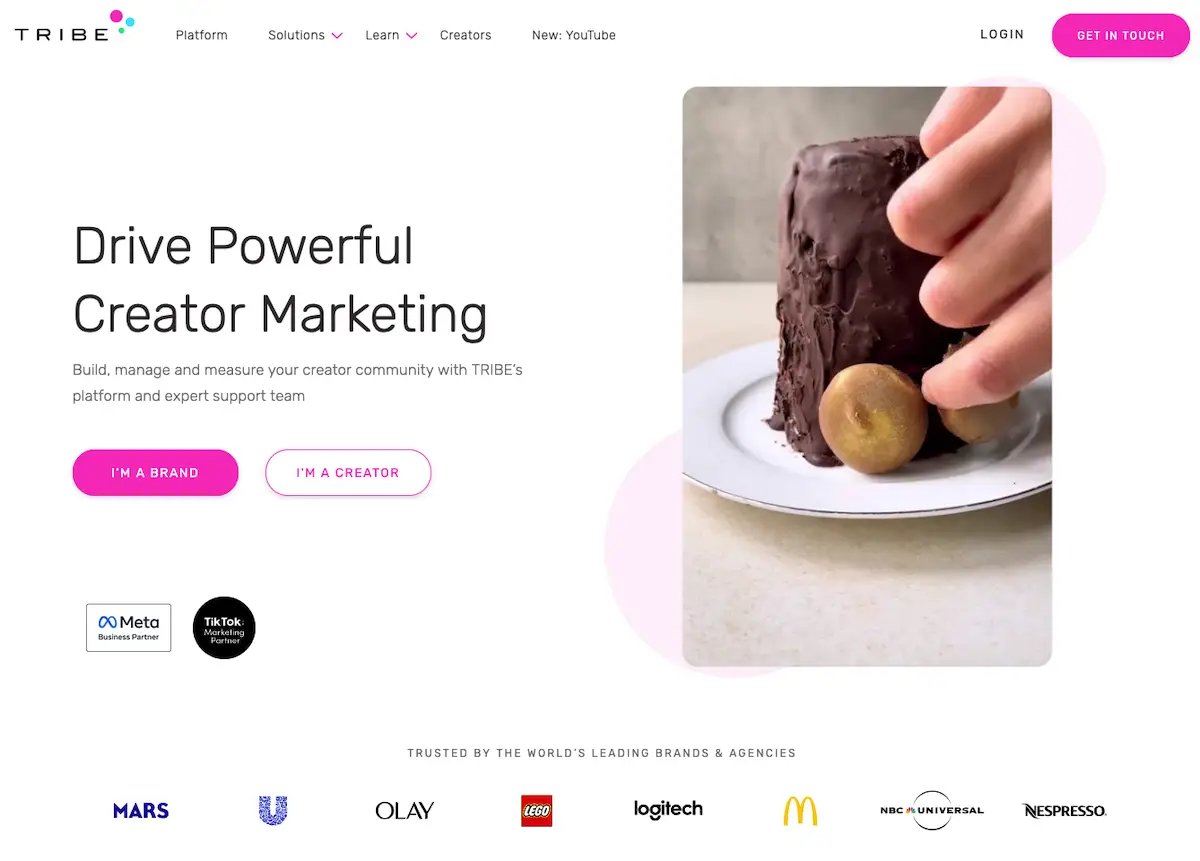
The platform provides users with campaign and creator management, onboarding and training settings, and campaign performance and tracking.
G2 Rating
4.3 / 5
What we love
The platform’s onboarding process is seamless. Additionally, their customer support team responds to all queries within a short time frame.
Downsides to consider
It can be quite tiring having to go back and forth responding to personalized influencer messages.
Best for
The platform is ideal for brands and agencies.
Top Features
- Performance data: measure your ROI by tracking your performance data directly from TikTok, Instagram, and Pinterest.
- Customer success team: receive help from experts when setting up your campaign.
- Automated technology: Rather than spending hours, use the platform’s automated feature to sort out product sampling, payment, approvals, and legal work.
Pricing
TRIBE offers pay-per-use campaigns and annual agreements. Pay-per-use includes an activation fee and platform margins; annual agreements include an annual fee and platform margins.
TRIBE Plus adds a tailored managed service.
Platform #9: CreatorIQ
CreatorIQ is a creator marketing platform that focuses on helping brands increase their reach, improve customer loyalty and retention, scale content production, and boost revenue.
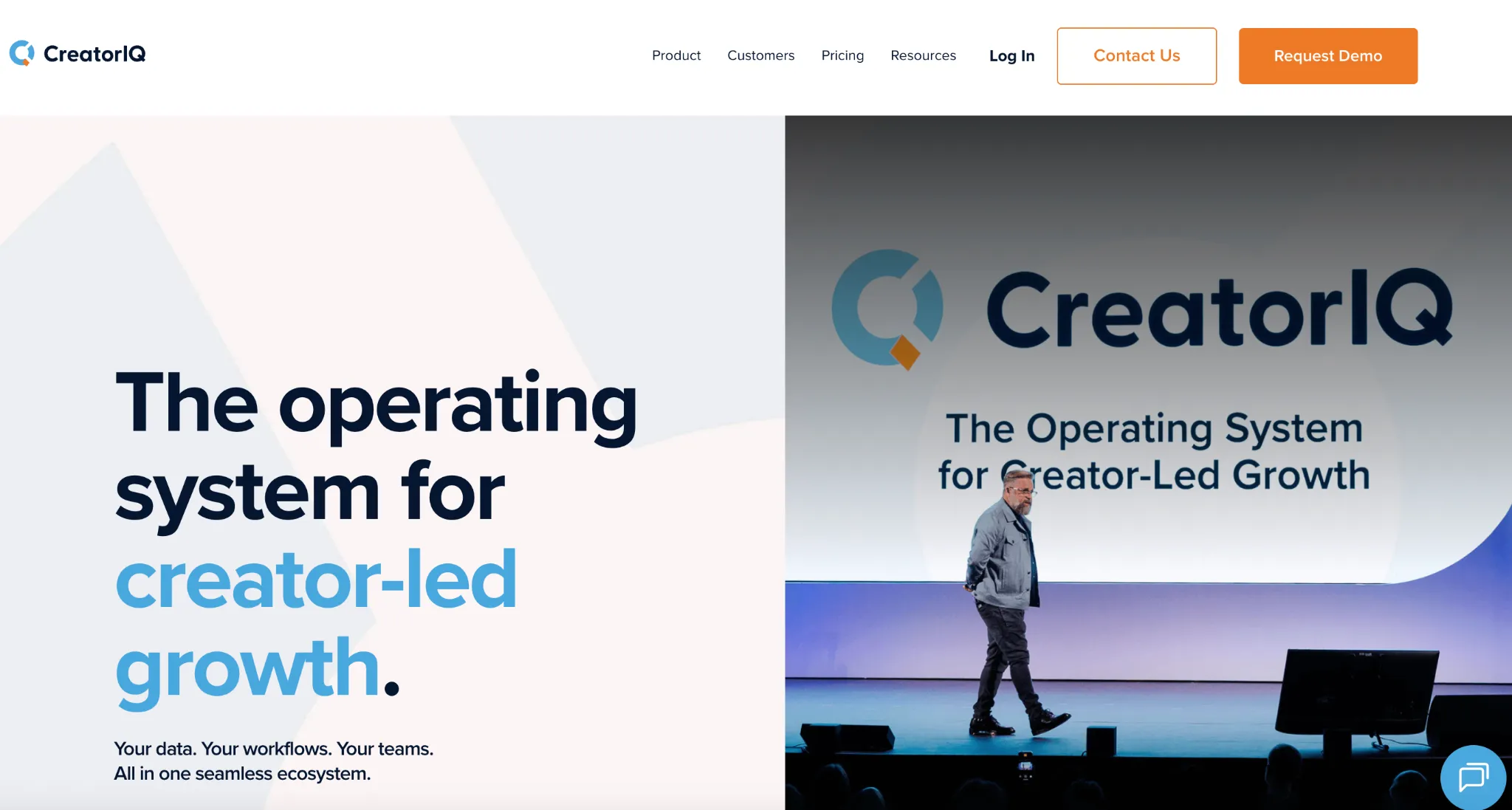
Through the platform, business owners can integrate APIs into their businesses, and monitor competitors.
G2 Rating
4.6 / 5
What we love
It’s good for tracking and influencer discovery.
The platform’s interface simplifies the entire campaign process, from discovery to planning, and execution.
Downsides to consider
CreatorIQ’s pricing page asks you to schedule a call instead of showing plan prices. You’ll need a quote before you can compare costs.
Best for
It’s mostly recommended for businesses with abundant financial resources.
Examples of their clients are: H&M, Sephora, Yeti, and Disney.
Top Features
- Reporting and insights: use the platform’s data insights to create custom monthly performance reports.
- Competitor benchmarking: compare your performance with that of your competitors.
- Paid social and ad permissions: efficiently monitor your paid assets and grant permissions.
- API integrations: integrates CreatorIQ with other systems to fully optimize your digital marketing strategy.
Pricing
Pricing is available upon request.
Platform #10: Later (formerly Mavrck)
Mavrck is an influencer marketing platform for retail, Consumer Packaged Goods (CPG), fashion and apparel, food and beverage, and eCommerce.

With Mavrck, brands can discover and grow with creators, manage campaigns, and measure ROI.
G2 Rating
4.5 / 5
What we love
The referral program is one of the platform’s key features.
Also, you can run multiple campaigns at the same time.
Downsides to consider
You can sometimes experience technical bugs and inaccurate reporting on the platform.
Best for
It’s best suited for agencies and large-scale companies.
Some examples of customers who trust Mavrck include: Oreo and Netflix.
Top Features
- Influencer marketing: discover, activate, manage, and measure your influencer collaborations.
- Rating and reviews: launch new products with star ratings and reviews.
- Full stack content creation: simplify your content creation journey with customizable tools and collaborative features.
- Referral programs: use promo codes & referral codes to track online and in-store conversions.
Pricing
Pricing is available upon request. However, users can request a demo.
Platform #11: Aspire
Aspire is an influencer marketing platform that helps brands generate more sales through affiliates.

You can use the platform to find content creators, manage campaigns, create ads & drive revenue.
G2 Rating
4.6 / 5
What we love
The platform’s user-friendly interface makes tracking and monitoring really easy.
Additionally, the influencer relationship management feature helps promote effective communication between brands and influencers, thus fostering better marketing campaigns.
Downsides to consider
For accurate influencer discovery, you might need to have an exact influencer account name.
Best for
It’s best suited for eCommerce brands.
The platform is trusted by brands such as: Truff, Monos and Sunday Riley.
Top Features
- Influencer search: search for Instagram influencers, Facebook, YouTube, Pinterest, and TikTok influencers.
- Relationship management: invite creators to apply to your campaign, edit your workflow stages, organize your contacts, and respond to all communications.
- Affiliate workflows: Manage creator incentives, commissions and payouts.
- Measurement and reporting: Review campaign results and compare creator performance in the reporting tools.
Pricing
Pricing is available upon request.
Platform #12: Impact
For discovery, recruitment, and scaling, Impact is the right platform to use.

impact.com brings affiliate, creator and customer-referral programs into one platform. You can recruit partners, manage agreements and payments, and track what each partnership contributes.
G2 Rating
4.4 / 5
What we love
Impact’s reporting, tracking, and data-insights are quite accurate.
Furthermore, they offer the opportunity to connect with various creators and share links to different types of content forms.
Downsides to consider
Although the platform’s customer service is really good, their user interface can be a bit complicated, as it’s not so intuitive.
Best for
Best for brands and agencies.
Top Features
- Find influencers: brands can join the marketplace and directly receive proposals from the right influencers and creators in real time.
- Flexible campaign management: automate your deliverables and amplify your content.
- Payments: negotiate with influencers and set payment terms.
- Maximize creator impact: track and easily report the performance of your influencer partnerships.
Pricing
Published plans include Starter at $30 per month plus 2.5% of revenue, Essentials at $500 per month, Pro at $2,500 per month and Enterprise at $10,000 per month. Creator management is listed from Essentials upward. Payout allowances, commitments and optional support affect the final package.
Platform #13: Traackr
Traackr is influencer software designed to assist data-driven marketers who aim to gain visibility, build awareness, and drive sales.

The platform’s key features are perfect for enhancing marketing campaigns, optimizing ROI, and streamlining influencer partnerships.
G2 Rating
4.3 / 5
What we love
The ease-of-use, simplified user experience, and great customer service is why Traackr is considered amongst the best influencer marketing platforms.
Downsides to consider
Users might experience glitches or slow loading time when using the platform.
Best for
It’s suitable for midsize enterprises and agencies. Some examples of brands who have worked with Traackr are: Michelin, Coty, and L’Oréal.
Top Features
- Influencer gifting and product seeding: you can use the Shopify integration to track the amount of products you give to influencers.
- Governance and compliance: protect your brand’s reputation with the platform’s automated monitoring.
- Paid campaigns: allocate budgets, negotiate terms, and track ROI.
- Commerce tracking: Connect supported ecommerce tools to track creator-driven activity and sales. Check the integration available for your store before choosing a plan.
Pricing
Pricing is available upon request.
Platform #14: Creator.co
Creator.co is considered to be one of the best influencer marketing platforms. It focuses on partnerships, growth, connection, and earning.

Brands can explore different collaboration opportunities, and track the progress of each one.
G2 Rating
4.6 / 5
What we love
Creator.co provides a variety of content creators and micro-influencers to suit different creative styles, niches, and objectives such as brand awareness.
Additionally, the support provided by the marketing team helps in easing workflow and campaign management.
Downsides to consider
The creator pool is mostly based in America. Therefore boosting international awareness with this tool can be a bit challenging.
Best for
For small and medium scale businesses.
Top Features
- Controlled access: create social media metrics for prospective influencers, to help filter your influencer search.
- Product seeding: promote authenticity by enhancing the content created by your influencers through product seeding.
- Technology: commission your payments, review and approve content, and create briefs.
- Support: grow your influencer marketing programs using the platform’s dedicated marketing team.
When evaluating tools and campaigns, aligning your influencer content with current creative trends can help you break through social feed noise, as highlighted in Superside’s top ad creative trends for 2026.
Pricing
- Self Serve: $299 per month, or a displayed $199 monthly rate with annual billing.
- Managed: $2,199 per month, or a displayed $1,499 monthly rate with annual billing.
- Enterprise: custom pricing.
Platform #15: stack influence
If you’re looking for micro-influencers, stack influence may be a good place to start.
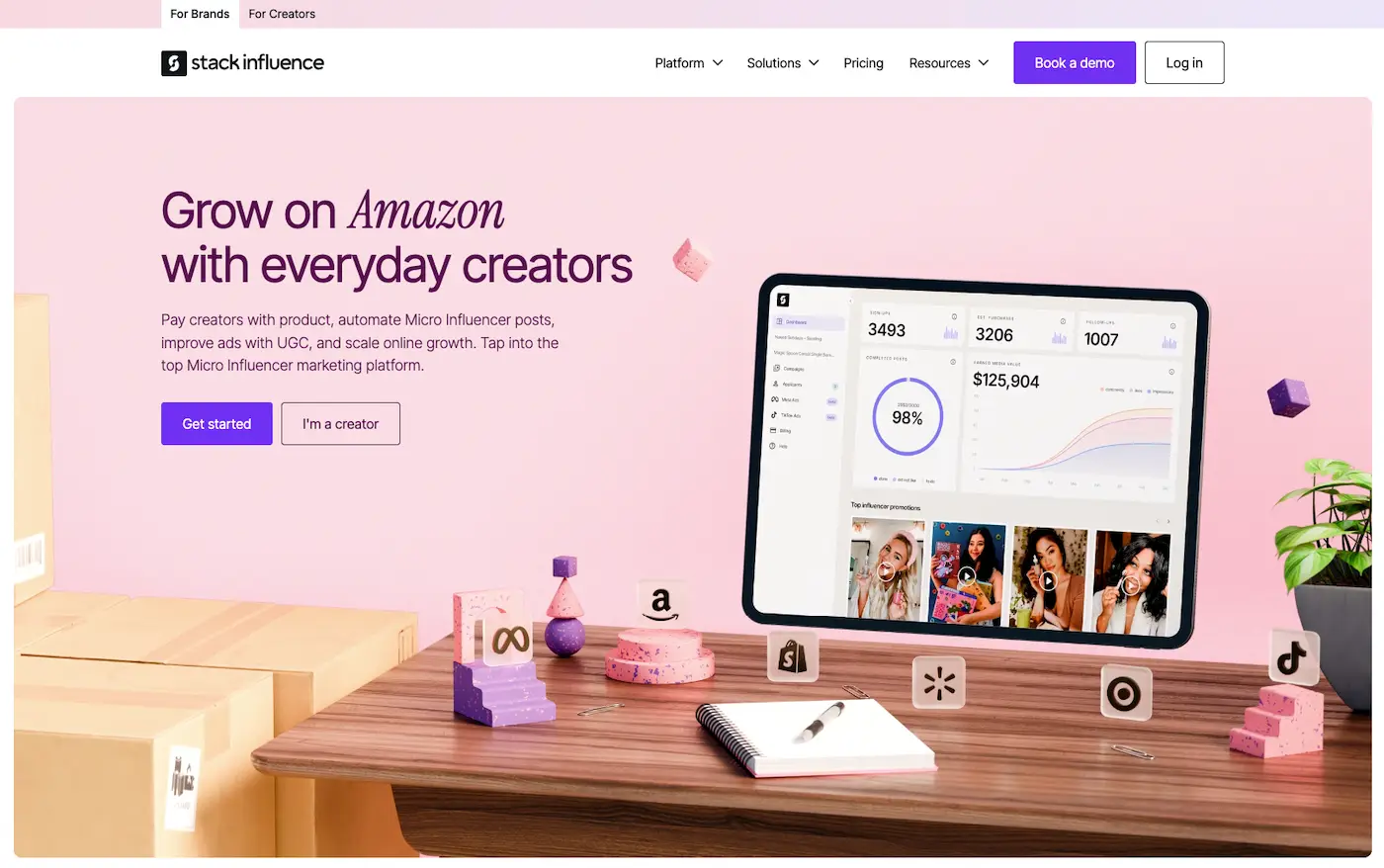
From landing page creation to influencer accumulation and campaign management, this platform does it all for eCommerce business owners.
G2 Rating
4.5 / 5
What we love
The platform is effective when searching specifically for micro-influencers to create UGC.
Downsides to consider
Managing long-term campaigns can be a bit challenging especially if you’re unfamiliar with distributing influencer posts evenly.
Best for
Merchants and E-commerce businesses.
Top Features
- AI-driven micro-influencer validation: this feature helps you evaluate a micro influencer’s demographic and geographic data.
- Social and campaign analytics: get insights on your daily impressions, likes, comments and other engagement metrics.
- Social promotions: trade your products with micro-influencers for social media promotions.
- Product collaborations: ensure 100% guaranteed influencer collaborations and avoid losing any inventories on your campaigns.
Pricing
Stack Influence advertises an average fee of $30 when a creator completes a social post. Campaigns are managed by its team. Confirm the full campaign budget and any product costs separately.
Platform #16: Collabstr
Collabstr is an influencer marketing platform that helps you find UGC influencers on Instagram, TikTok, and YouTube.

From fashion content creators to comedy writers and lifestyle influencers, Collabstr helps you explore your campaign goals.
G2 Rating
3.5/5 (one review)
What we love
The engagement rate calculator simplifies the tracking process.
Rather than using different analytics of various social channels, you can simply check engagement rate using the search filter.
Downsides to consider
The Free plan does not include campaigns or live-post analytics. Pro includes one campaign per month and tracking for five live posts at a time; higher plans raise those limits.
Best for
Mid-scale and large-scale brands.
Some examples of brands that they have worked with are: Hopper, Wealthsimple, and Clickup.
Top Features
- Influencer marketplace: find your influencers according to platform and category.
- Engagement-rate tools: assess a creator’s account before hiring. Use campaign and live-post analytics to track the content you commission.
- Influencer campaign brief: create and customize your campaign brief using the platform’s templates.
- Influencer contract: draft a free influencer contract using Collabstr’s template.
Pricing
Collabstr offers Free at $0. With annual billing, Pro is $249 per month, Premium is $333 per month and Enterprise/Agency starts at $1,000 per month. Creator payments and hiring fees are separate. Free lists a 10% hiring fee; Premium lists 5%.
Looking for a Micro-Influencer Marketing Platform?
In this post we gave you an overview of the best sixteen micro-influencer marketing platforms for successful social media campaigns with micro-influencers.
To choose the most suitable platform, consider your business goals, needs, and objectives.
Wanna know more and make sure you’re taking the right steps?
Frequently Asked Questions (FAQs)
Below are answers to some of your most common questions around micro-influencer marketing.
What is a micro-influencer platform?
This is a platform that matches you with micro-influencers with a follower base ranging between 10k - 100k followers.
What is micro-influencer marketing?
It’s a form of digital marketing where social media users with followers between the range of 10k - 100k, promote products and services, making it easier to reach a more specific target market.
What are the benefits of micro-influencer marketing?
Some of the benefits of working with micro-influencers include:
- High ROI.
- Genuine and authentic content creation.
- Improved trustworthiness.
- Increase in leads and conversions.
Are platforms and agencies the same thing?
No. Platforms are software for in‑house teams. Agencies are services that run strategy and execution for you. Choose based on internal bandwidth and timeline.
Nano vs micro: which should I pick?
Nano profiles (<10k) can deliver very high engagement in ultra‑niche communities. Micro (10k–100k) balance scale with authenticity. Many brands use both, with different KPIs.