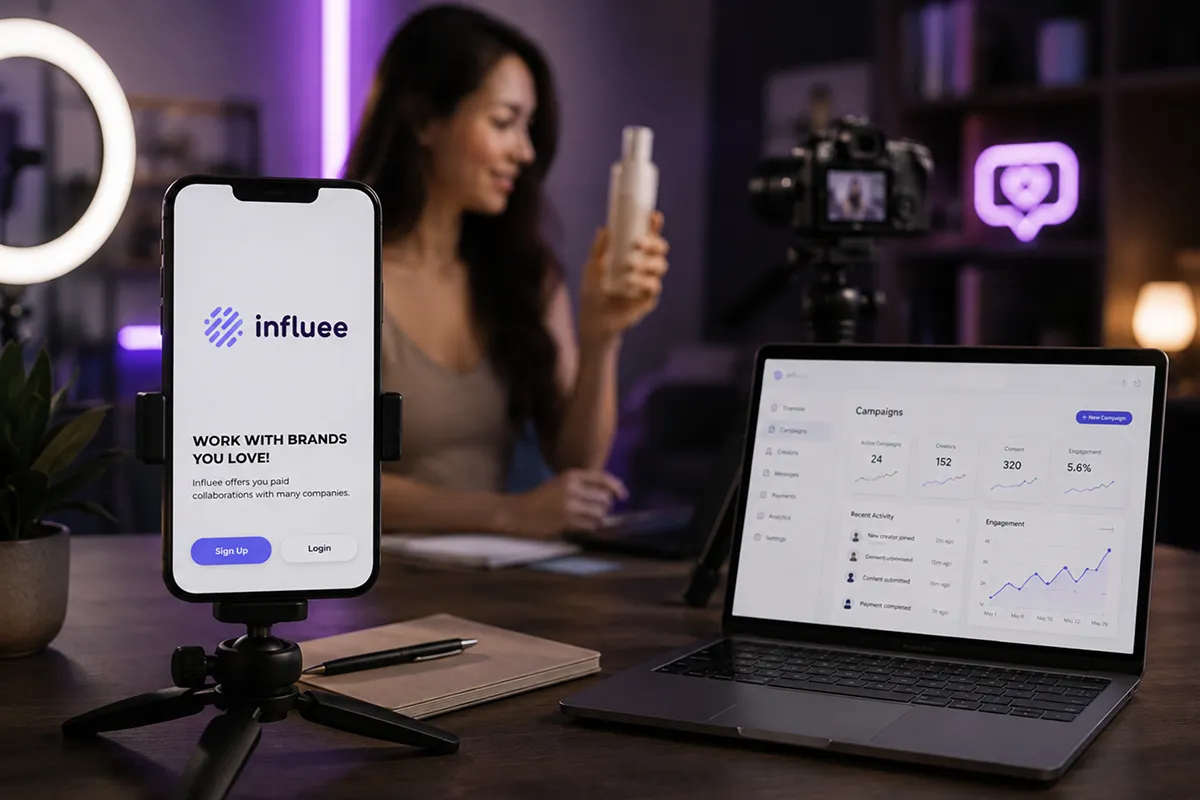
Influee is a solid starting point for influencer marketing.
But… starting points aren’t always where brands want to stay.
As your campaigns get bigger, you’ll probably want to look around for more flexibility and more control.
Enter our selection of Influee alternatives.
Below, we break down the influencer marketing platforms brands turn to when they’re ready to go beyond basic collaborations and build creator programs that scale.
Why Marketers Are Looking for Influee Alternatives
Influee is solid if you just want basic creator collaborations without too much complexity.
But as brands mature, those limitations start to show pretty quickly.
There’s no dedicated product seeding workflow, which makes gifting feel more manual than it should.
There’s also no built-in TikTok Shop or affiliate-style collaboration support, which is increasingly where creator partnerships are heading.
And if you’re running performance-driven campaigns, the lack of deeper paid social tooling can feel… well, a bit restrictive.
This is where many brands start exploring Influee alternatives that offer more flexibility, better creator discovery, and stronger performance features.
Especially if you care about scaling, testing creatives, or turning influencer content into ads that actually convert.
Top Influee Alternatives
Here’s a quick look at some of the most popular Influee alternatives to consider if you want more control, scale, or performance from creator marketing.
- Insense: best for brands scaling UGC that want creator-level performance, a vetted creator marketplace, and Slack and MCP integration
- Julius: best for enterprise teams that need deep influencer data and long-term relationship tracking.
- Flowbox: best for ecom brands that want to turn existing UGC into shoppable website content.
- Skeepers: best for brands that want reviews, UGC, and influencer content to work together.
- Bazaarvoice: best for enterprise brands that need reviews and UGC syndicated across large retail networks.
- Billo: best for performance teams that need fast, affordable UGC videos for ads at scale.
- Speekly: best for brands that want authentic, testimonial-style UGC from everyday creators who look like real customers.
- Upfluence: best for in-house influencer teams managing large creator programs with strong CRM and revenue tracking.
- Modash: best for brands that care deeply about the authenticity of their creators and want to avoid inflated metrics.
- Mogl: best for brands that want to work with athlete creators through structured NIL partnerships..
Let’s breakdown what sets each one apart.
Alternative #1: Insense
We’re starting the list of alternatives with… you guessed it, Insense.
We might be biased, but there are many reasons why Insense beats Influee for influencer marketing.
For starters, Insense is an all-in-one solution for both influencer and UGC marketing. It gives you far more control over who you work with and why.
You can filter creators by platform, niche, usage rights, paid ad readiness, and geography.
That makes it much easier to find creators who actually fit your campaign goals.
The creator marketplace is also vetted.
There are fewer low-quality applications and far less time spent sorting through creators who don’t understand briefs or timelines.
Campaign execution is where Insense really pulls ahead, though.
The platform has a dedicated Meta Partnership Ads workflow and you can handle approvals, permissions, and whitelisting all from one place.
Perhaps most importantly (and unlike Influee), Insense lets you build out TikTok Shop and affiliate collabs right inside the platform.
You can do this all yourself or you can lean on the managed services option.
This is where our dedicated team handles creator sourcing, campaign setup, and execution for you
Yes, Influee works well for European campaigns and simpler influencer collaborations.
But it’s not a badged Meta partner like Insense.
Nor does it have a dedicated focus on TikTok Shop, or affiliate models.
Insense’s key features:
- Advanced creator discovery with flexible, practical filters, and AI search
- Integrations with Slack, Claude, Chat GPT, and Insense MCP
- Vetted creator marketplace across multiple categories and platforms
- Dedicated Meta Partnership Ads setup and whitelisting workflows
- Campaign tracking designed for paid and organic use cases
- Support for TikTok Shop and affiliate-style creator partnerships
- UGC creation for ads, social, and ecommerce pages
- Usage rights and licensing controls for paid media
- End-to-end campaign management from brief to delivery
- Managed services for brands that want hands-off execution
Alternative #2: Julius
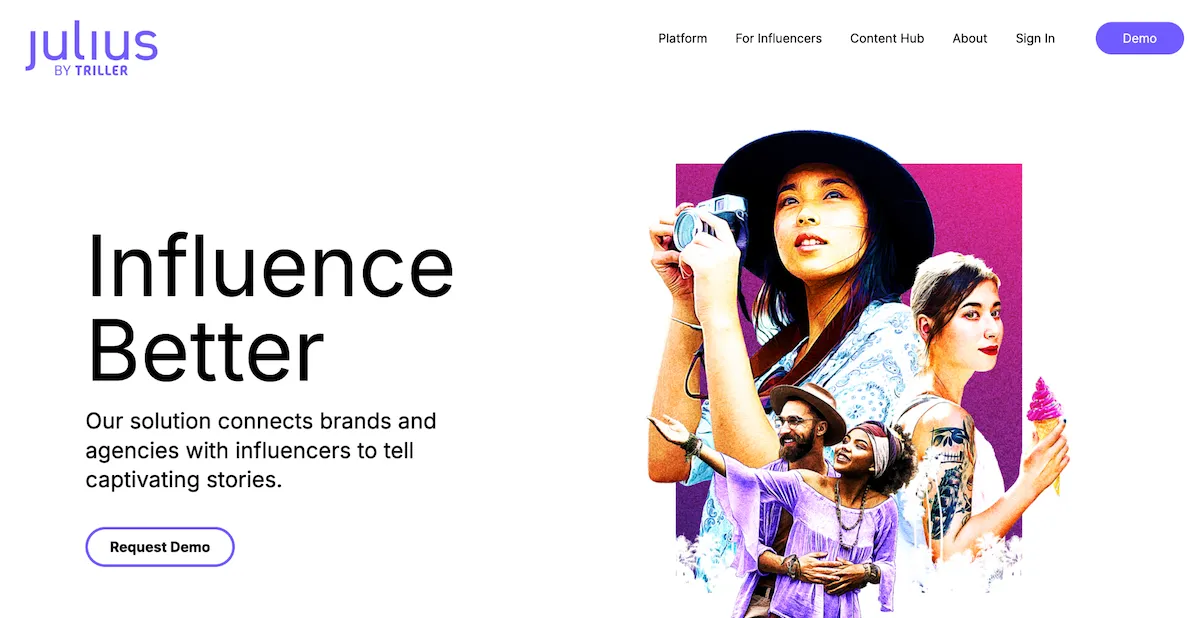
Julius positions itself as a data-first influencer marketing platform built for brands that need complex dashboards.
It’s especially popular with larger teams that want audience demographics, performance metrics, and reporting baked into everything they do.
If your internal stakeholders want charts, filters, and benchmarks before approving a creator, Julius delivers that experience.
Julius’ Key Features
- Influencer discovery with deep audience analytics
- Campaign reporting and performance tracking
- Brand safety and compliance tools
- CRM-style creator management
Alternative #3: Flowbox
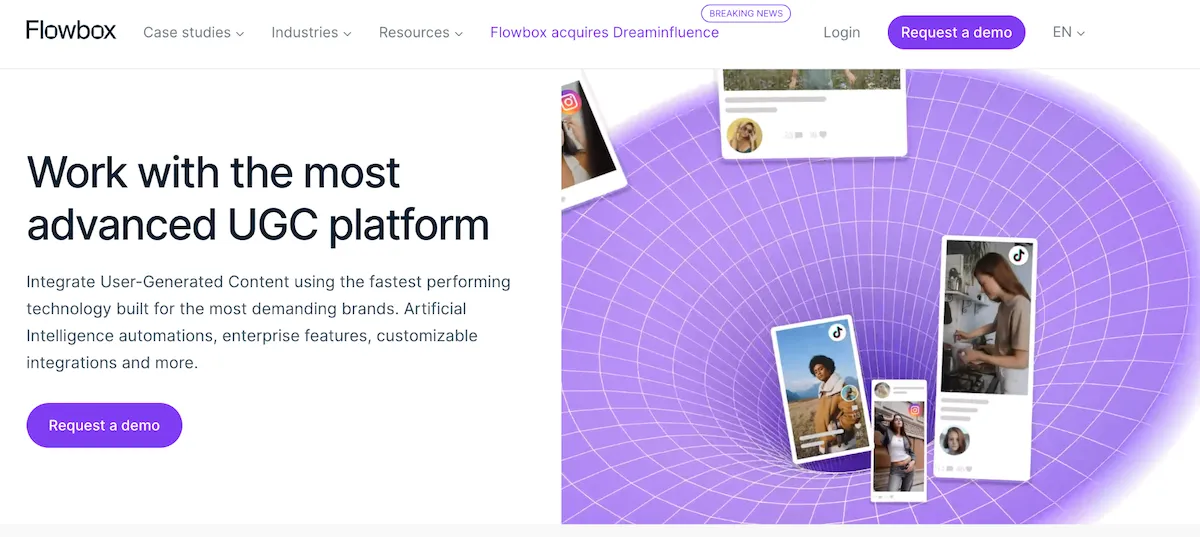
Flowbox helps you make the most of the content your customers and creators are already posting.
The platform focuses on collecting UGC from social platforms and turning it into polished, on-brand experiences across your website and marketing channels.
This makes it especially popular with ecommerce teams that care about conversion rate, social proof, and visual storytelling.
Instead of managing creators end-to-end, Flowbox helps you surface real photos and videos at key buying moments… like product pages that show real customers instead of random stock images.
Flowbox really comes into its own once you have a steady stream of UGC and want to reuse it everywhere without a ton of manual work.
Flowbox’s key features:
- Aggregates UGC from social platforms
- Built-in rights management so you can request, approve, and track usage permissions easily
- Moderation tools to keep everything on-brand and conversion-ready
- Shoppable UGC galleries designed to boost engagement and ecommerce conversions
- Easy integrations for websites, landing pages, and product detail pages
Alternative #4: Skeepers
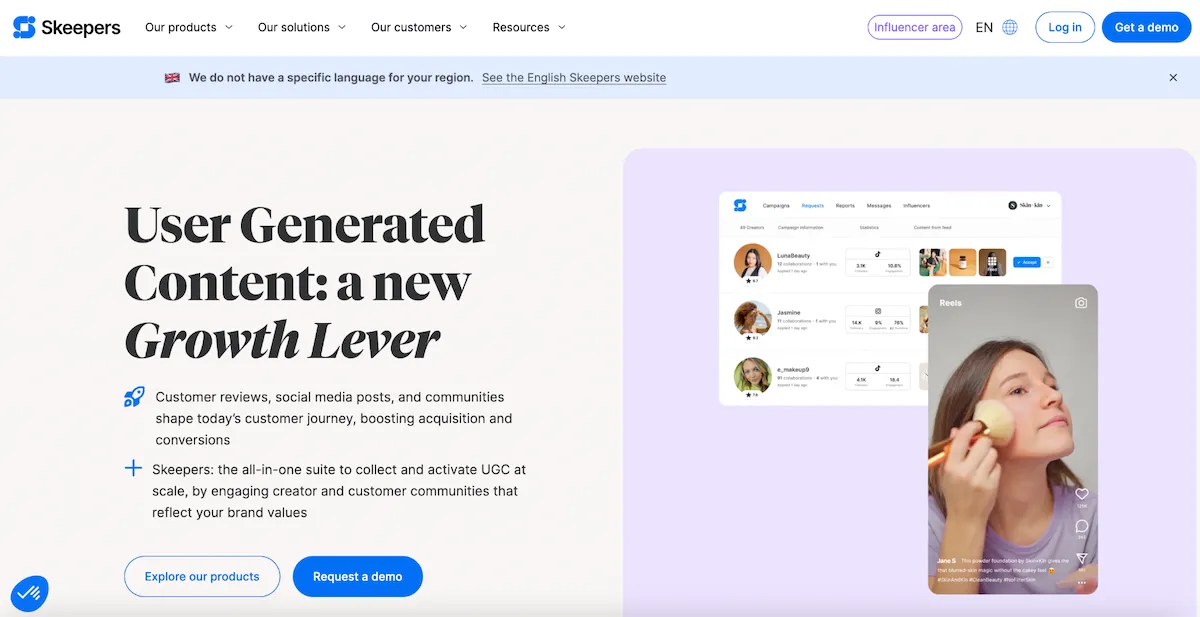
Skeepers brings together reviews, UGC, and influencer campaigns into one connected ecosystem.
You can collect creator content for social, but you can also feed UGC into your product pages, ads, and emails.
Skeepers is especially popular with ecommerce brands because it predominantly concentrates on gathering social proof (which we know fuels conversions).
You can seed products to creators, generate reviews at scale, and reuse that content across your storefront.
Skeepers’ key features:
- Influencer and UGC campaigns that generate reusable, rights-cleared content
- Ratings and reviews collection designed specifically to increase trust
- Product seeding workflows to get products into creators’ hands at scale
- Ecommerce integrations that connect social proof directly to product pages
Alternative #5: Bazaarvoice
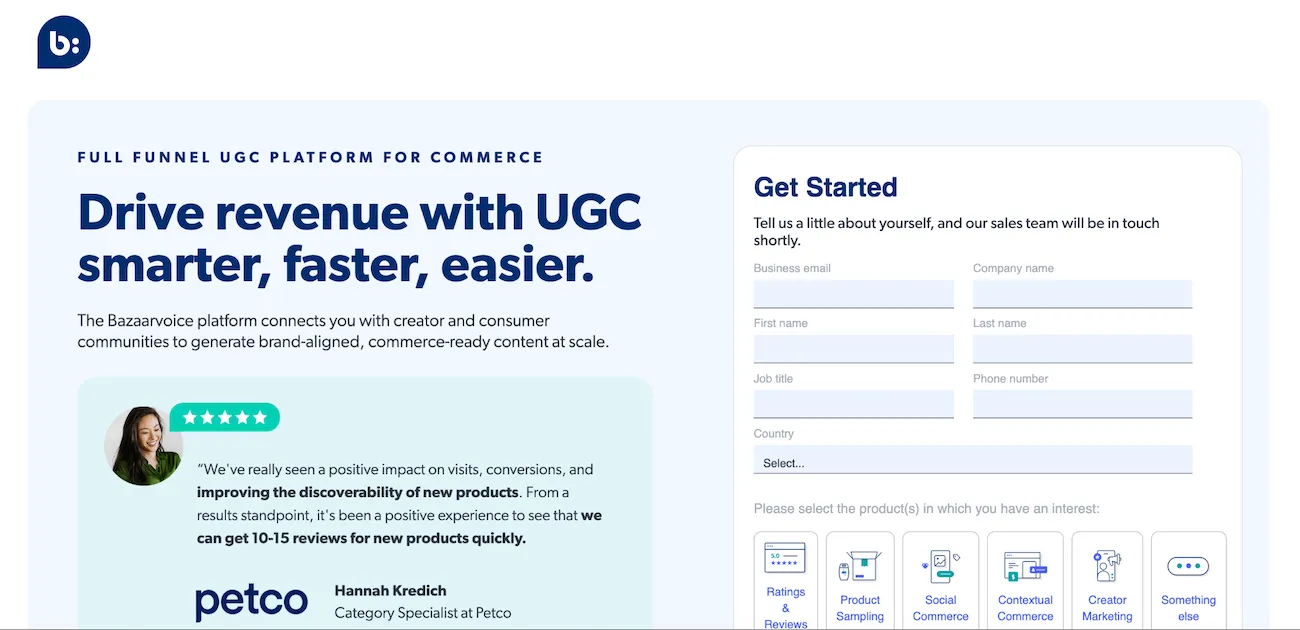
Bazaarvoice is built for brands that operate at serious scale. Particularly those who aren’t starting influencer marketing from scratch.
Its real strength is helping large brands collect, control, and distribute reviews and UGC across massive retail networks.
If you sell through major retailers, marketplaces, or multiple ecommerce partners, this is where Bazaarvoice stands out.
The platform syndicates ratings, reviews, and UGC directly to retail partner sites, so social proof follows your product wherever it’s sold.
That means a review left on one site can build trust across dozens of retail touchpoints.
Bazaarvoice is also built with strict moderation, compliance, and brand governance in mind.
That makes it very attractive to enterprise teams that have to be consistent and stay legal in multiple different markets.
Influencer marketing does exist within Bazaarvoice, but it’s very much secondary.
Note that it’s mostly a platform for distribution and credibility rather than a place to get creative and experiment with UGC.
Bazaarvoice’s key features:
- Ratings and reviews syndication across major retailer and marketplace networks
- UGC collection with enterprise-level moderation and compliance controls
- Retailer network distribution that spreads social proof beyond owned channels
- Enterprise-grade analytics for performance and coverage
Alternative #6: Billo
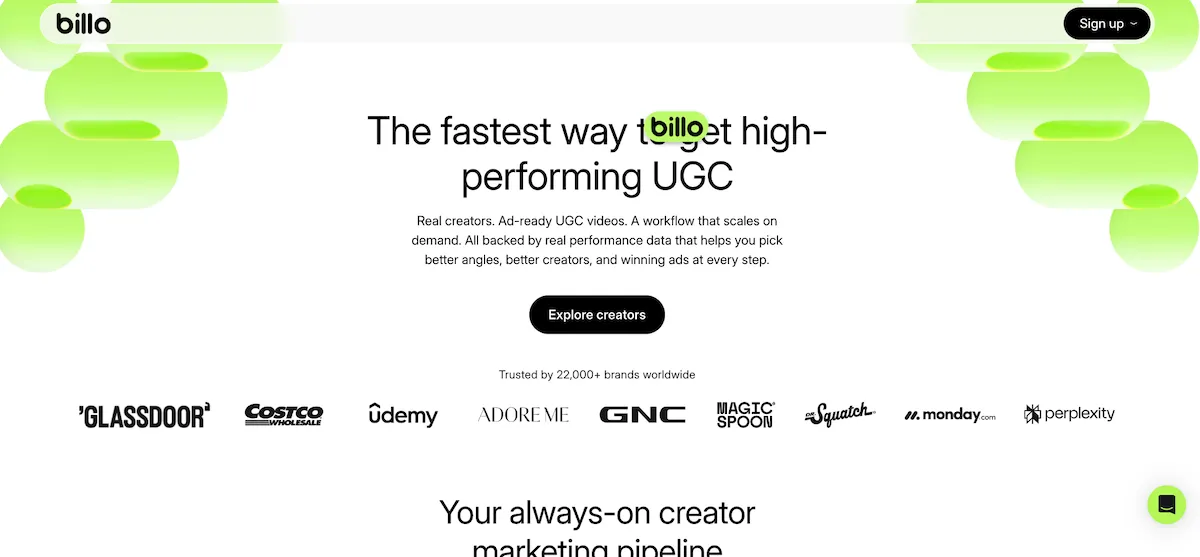
Billo is designed for brands that need a lot of UGC videos quickly, usually for paid ads and landing pages. Or if you want to test things quickly.
You post a brief with clear talking points, creators apply, and Billo handles the logistics.
There’s no long onboarding, no influencer management layer, and no expectation of an ongoing partnership. So, it’s great for one-off campaigns.
Billo works well when you want multiple creators producing similar videos so you can test hooks, formats, and messaging at scale.
It’s popular with performance marketing teams that are more focused on getting a ton of creative at once rather than creator identity. It works on a pay-as-you go model where you pay per video.
Billo’s key features:
- UGC video creation focused on short-form, ad-ready content
- Simple creator marketplace with quick application and selection
- Fast turnaround times that are ideal for quick creative testing
- Clear, fixed pricing per video with no long-term commitment
Alternative #7: Speekly
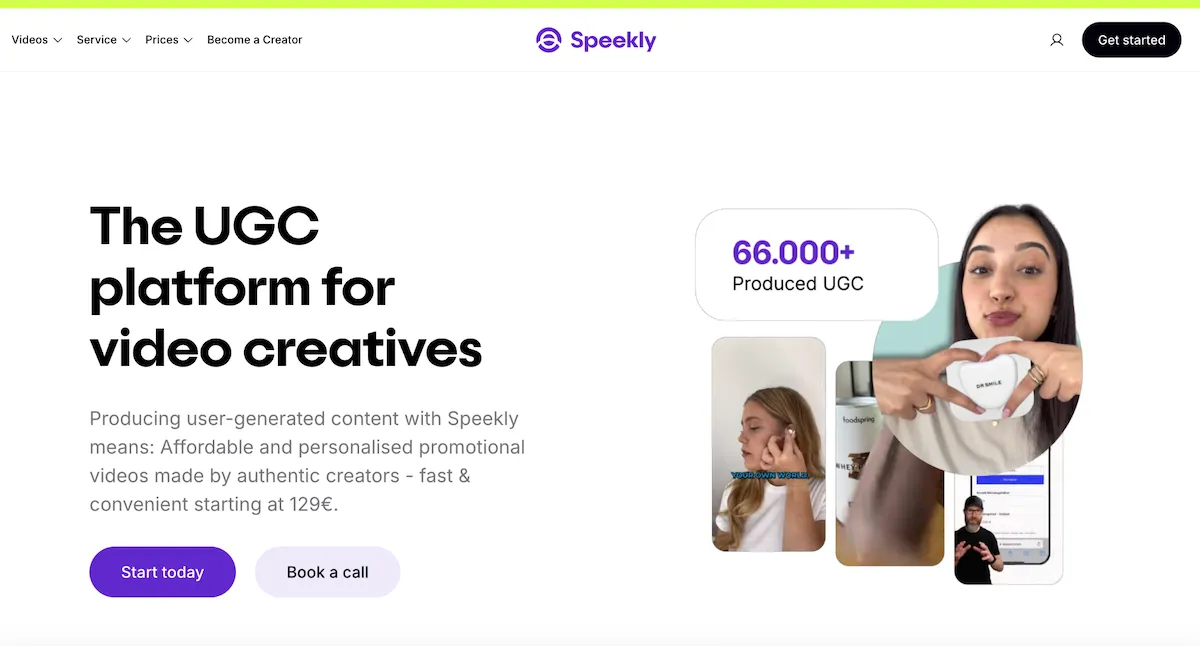
Speekly specializes in testimonial-style UGC from everyday creators who look and sound like your actual customers.
That makes the content feel natural, credible, and easy to trust, especially for conversion-focused pages like landing pages, ads, and PDPs.
Instead of chasing follower counts, Speekly focuses on matching creators based on things like demographics, use cases, and how well they match your target audience.
You can ask for simple talking points, full scripts, or something in between, depending on how much structure you want (you can choose whatever works best).
Speekly also has clearly defined usage rights for content.
Speekly’s key features:
- UGC video testimonials designed to feel natural and customer-led
- Creator casting based on demographics, lifestyle, and audience fit
- Scripted, semi-scripted, or fully unscripted content options
- Usage rights management for ads, websites, and social channels
- Managed services from creator sourcing to strategy development, and creator management
Alternative #8: Upfluence
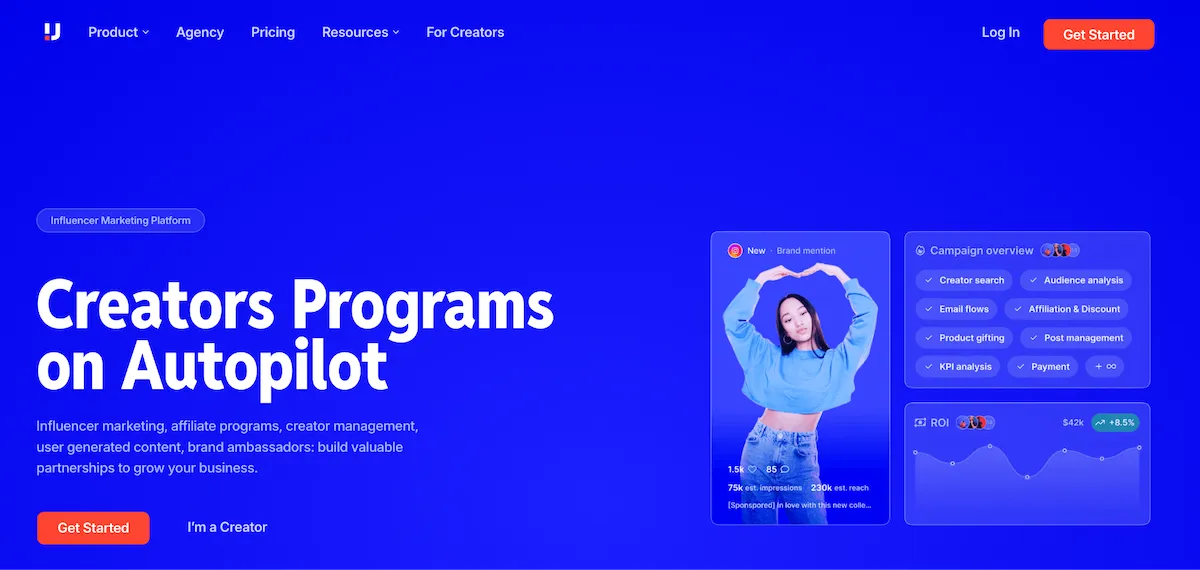
Upfluence feels a bit more like a control center than an influencer marketplace.
Yes, the discovery process for finding creators is deep and very filterable but there’s more to it than that.
You can slice by audience data, engagement quality, location, platform, and even ecommerce signals if you’ve integrated your store.
What really sets Upfluence apart is the CRM layer.
Every creator becomes a record you can tag, score, track, and build a long-term history with.
You can see who you’ve worked with before, how they performed, what you paid them, and where they are in the relationship lifecycle.
It’s also one of the few platforms where influencer marketing and affiliate performance feel genuinely connected.
You can track which creators drive revenue and use that data to decide who gets repeat work.
The trade-off is speed.
Upfluence takes time to set up properly, and you’ll only get the most value once your processes are properly dialled in.
Upfluence’s key features:
- Influencer discovery with advanced filters across platforms and audience data
- CRM and relationship tracking for managing creators over time
- Affiliate and performance tracking tied to real revenue signals
- Ecommerce integrations that connect creators to sales outcomes
- Ai-powered influencer marketing with Jaice AI
Alternative #9: Modash
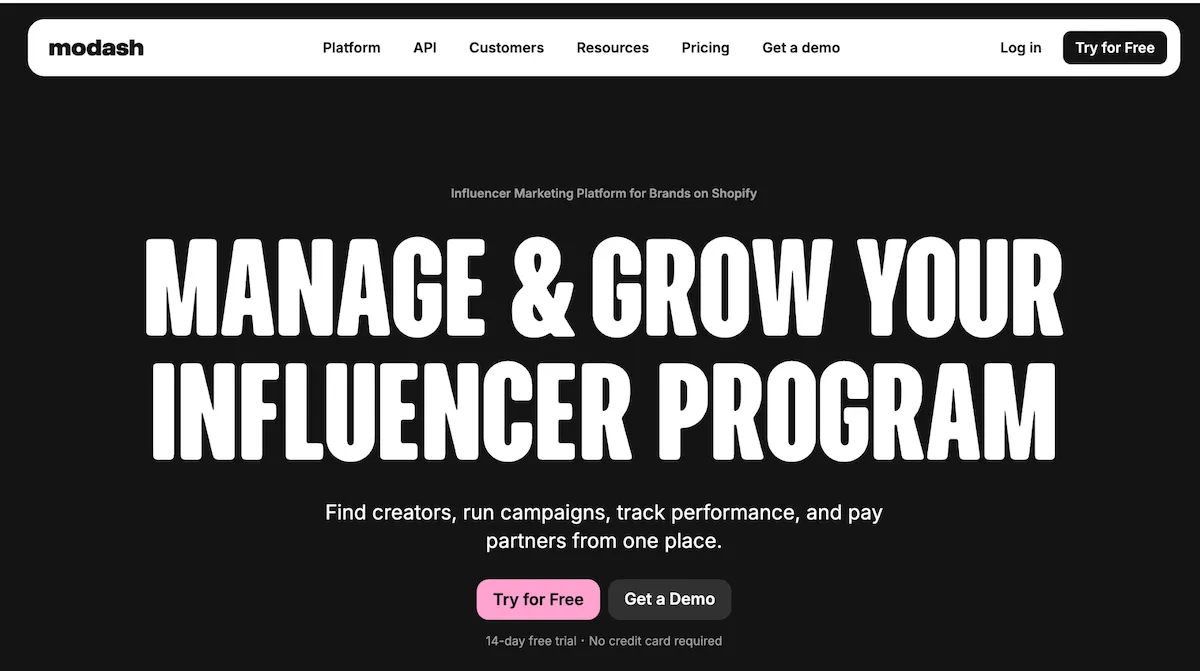
Modash describes itself as an end-to-end influencer marketing platform specifically for brands that use Shopify.
Instead of pushing you toward big names or flashy profiles, Modash forces you to look closely at who’s actually behind the numbers.
It absolutely prioritizes quality and audience credibility, but it also has fake follower detection built into the discovery flow so you can figure out if an account is worth your time.
Compared to Influee, Modash feels more investigative.
You’re doing more analysis up front, but you waste far less time later on creators who look good on paper but aren’t up to scratch.
Audience insights are also more granular.
You can see where followers are based, how they engage, and whether engagement looks natural or inflated.
That makes Modash especially useful for brands running paid partnerships where trust, brand safety, and ROI really matter.
The trade-off is that Modash is very much a DIY tool.
You’re expected to build your own workflows and outreach process.
Modash’s key features:
- Influencer discovery focused on first and foremost on audience quality
- Built-in fake follower detection to flag inflated or risky accounts
- Detailed audience insights covering location, engagement, and growth patterns
- Performance tracking to evaluate creator impact over time
Alternative #10: Mogl
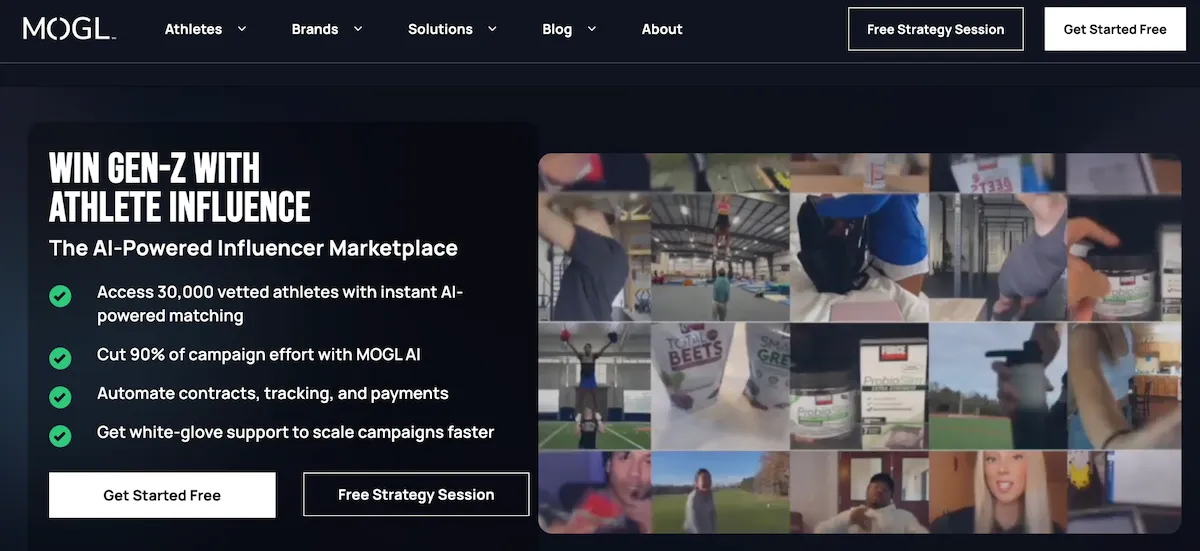
Mogl is not a general influencer platform.
It’s built specifically for working with athletes.
Think college athletes, rising stars, and pros who already have deeply engaged communities around sport, fitness, and lifestyle.
Mogl uses AI to pair brands with athletes based on audience fit, campaign goals, and brand alignment.
Campaigns are also very structured. It handles contracts, compliance, deliverables, and payments all in one place.
Mogl’s key features:
- AI-powered matching between brands and athlete creators
- Athlete-focused creator marketplace built around NIL partnerships
- Built-in contracts, compliance, and payment workflows
Final Thoughts on Influee Alternatives
Influee is a good place to start.
But as soon as your workflows get more complex or you need to scale campaigns, you’ll probably want something more flexible.
Luckily, there are lots of Influee alternatives on the market.
Some are great at data. Some are great at reviews. Some are great at getting you fast UGC.
But very few cover the full picture.
Insense stands out because it connects creator sourcing, content creation, and performance into one workflow.
You get better filters, access to better, vetted creators, and better tools for turning creator content into ads that actually convert.
You can run campaigns yourself or hand things over to a managed team.
You can build TikTok Shop and affiliate collaborations.
And you can scale paid social without duct-taping tools together.
If you’ve outgrown basic influencer collaborations and want creator marketing to work like a growth channel, Insense is built for exactly that.
FAQs
Is Influee still a good option?
Yes, especially for simple collaborations and European-focused campaigns. It just isn’t built for performance-led or paid social-heavy strategies.
What’s the biggest difference between Insense and Influee?
Insense is built for scale and performance. Influee is built for simpler influencer collaborations
Do I need a big budget to use Insense?
No. You can start small and scale up as campaigns prove ROI.
Can Insense replace multiple tools?
For many brands, yes. Creator sourcing, UGC production, paid social workflows, and affiliate-style collabs can all live in one place.
Is Insense only for paid ads?
No. It works just as well for organic UGC, social content, and ecommerce pages.
.avif)

.avif)