Content from a UGC creator can cost you anywhere from $50 to $3,000+, and that pricing variation has almost nothing to do with the creator's follower count. That range comes down to three things: the creator's production experience, the usage rights you need, and whether the content stays organic or gets put behind paid spend.
Most performance teams get this wrong at the budgeting stage: they treat a UGC creator like a media buy, assuming more reach means a better, pricier asset. UGC creators are paid for production (shooting, editing, delivering a usable file), and not for an audience.
Our breakdown below covers real UGC pricing in 2026 across tiers, platforms, and sourcing methods, so you can budget UGC as a production-line cost instead of guessing at an influencer-style rate card.
TL;DR
Key learnings from this article:
- UGC creator rates run $50–400 for a beginner-level video and $500–3,000+ for premium, priced on production effort, not follower count.
- Platform barely moves the number: TikTok, Instagram, and YouTube Shorts all land in roughly the same $125–1,100 band once you account for complexity.
- How you source UGC creators is a big lever: DIY costs = creator fees plus $7,000–10,000+/month in staff time, agency retainers start at $2,000/month, and creator platforms start around $500/month.
- Niche and industry pricing follows scarcity, not budget size: finance, SaaS, and healthcare creators can command a 20-100% premium over base rates, while saturated niches like beauty and fashion stay comparatively cheap despite bigger brand budgets.
What Are UGC Creator Rates?
UGC creator rates are what you pay for content creation, not audience access. A creator shoots, edits, and delivers video or photo assets that you own the rights to use in your own paid and organic campaigns. That's the entire transaction: a deliverable for a fee.
Influencer pricing works differently. You're paying for the creator's audience: their reach, their engagement, their credibility with followers who trust their recommendation. Follower count and engagement rate drive influencer rates. None of that applies to UGC creator pricing, because the content often isn't posted on the creator's own account. It's yours to run wherever you want.
UGC creator rates depend on production effort and skill: deliverables, editing, complexity, and turnaround.
How Much Do UGC Creators Charge?
UGC creator pricing is determined by several compounding variables, such as their level of experience, your editing needs, the licensing rights, and advertising add-ons.
The following chart reflects publicly available creator-economy pricing data as a general benchmark.
Beginner UGC creators are often working with a portfolio of fewer than 20 pieces and little to no brand history. They are good for testing a new UGC angle cheaply, but budget for extra revision cycles since framing and pacing mistakes are common at this level.
Mid-level UGC creators bring the production quality most brands actually need: proper framing, and editing with native-style captions and transitions. Many specialize by niche, such as beauty, tech and fashion, and understand direct-response hooks well enough to shape their own concepts.
Premium UGC creators have a proven, data-backed conversion track record and charge for it: custom scripting, studio-grade lighting and audio, and strategic input on the brief itself rather than just execution. The tradeoff is less flexibility. Expect firmer contract terms and less room to negotiate revisions, since you're paying for judgment as much as production.
UGC Creator Prices by Industry
UGC creator prices by industry are case-by-case, based on supply, geography, and how narrow the request is.
Scarcity of the right creator can affect price as much as production cost. Finance and health niches need a mature, authoritative on-camera presence, and creators who can credibly explain complex software or crypto products are in short supply; a software demo alone can require hours of screen-recording setup and precise editing.
Production requirements explain part of the spread too. Tech and luxury niches often need macro lenses and stabilizers, and travel content can require drones and gimbals.
The following table reflects publicly available creator-economy pricing data as a general benchmark.
UGC Creator Rates by Platform
True UGC is platform-agnostic. A creator isn't charging more because the video runs on TikTok instead of Instagram. Formatting expectations and platform-native trends still nudge the base price, though the swing is smaller than most brands expect.
The following reflects publicly available creator-economy pricing data as a general benchmark. For Insense platform pricing download our guide to compensating creators.
TikTok
TikTok rates track base UGC pricing closely: $125-300 for lower-tier creators, up to $500-1,100 for creators handling higher production demands. Higher engagement, reach, and view counts can push pricing up further even though you're not paying for the creator's audience directly.
Instagram (Reels & Stories)
Instagram pricing runs a similar band: $125-300 for lighter content, scaling to $500-1,250 for higher production complexity. Stories price lower than Reels because of the format's short shelf life and lower production bar.
YouTube Shorts
YouTube Shorts uses the same vertical, short-form spec as TikTok and Instagram Reels, so the current working price is the same $125-1,100 band as those platforms.
Long-form YouTube (3-5 minute videos, which need heavier scripting and editing) is a separate, pricier category (commonly $1,000+) and shouldn't be confused with Shorts pricing.
UGC Pricing by Sourcing Method
The method you use to source UGC can significantly influence the total budget.
Direct UGC sourcing (DIY) means finding, vetting, briefing, and paying creators yourself. There's no platform fee, but there's also no time savings. A US-based influencer marketing manager averages $84,000-121,000 a year: roughly $40-58/hour, or $7,000-10,000 a month in salary alone at full-time hours, before benefits or tools.
DIY is also where usage rights get expensive: unlike creator platforms like Insense, DIY creators don't automatically grant extended usage, so brands pay separately to license content beyond a basic post.
Traditional agencies remove the sourcing work but charge for it. Retainers commonly run $2,000-10,000+ a month, with mid-tier retainers delivering 8-20 finished videos. That premium buys creative strategy and account management on top of production, as a fixed monthly cost regardless of how many usable assets come back.
Creator platforms sit between fully DIY sourcing and full-service agencies, and this category splits into two models.
- Self-serve platforms work like a creator marketplace: you pay a flat monthly fee (starting from around $400-500/month plus marketplace fees) in exchange for access to creators and tools to manage briefs, applications, and payouts yourself.
- Managed-service platforms remove the hands-on work. A dedicated platform manager (from $2,500/month, creator cost billed separately) runs campaign launches, shortlisting, and creator communication, saving 40+ hours a month of internal time. Fully managed production can deliver finished content end to end for roughly $440 per video, all-in.
What Actually Drives the UGC Creator Costs?
Here’s a breakdown of the key variables driving UGC creator costs:
Usage Rights
Usage rights are one of the biggest levers on a UGC quote, because the price scales with how widely and how long a brand can use the footage.
A base rate typically covers narrow, short-term organic use. Extending that to paid ads, multiple platforms, or a longer time window asks more of the creator. Their face and voice keep working for the brand well after the shoot is over. So the price moves up accordingly, with unlimited or perpetual rights (needed for indefinite whitelisting or dark-posting) representing the largest ask of all.
Standard usage rights come included by default with all UGC received through Insense.
Whitelisting & Paid Amplification (Spark Ads / Partnership Ads)
If you source UGC directly from creators, running paid ads (whitelisting) through a creator's own account, rather than from the brand's handle, is priced separately from the content itself because you're buying account access, not more footage.
The price scales with how much control the brand is given: letting the creator approve a single boosted post is a small ask, while getting full ad-account access for TikTok Spark Ads and Meta Partnership Ads, hands over meaningful control of their identity and reputation, so it costs more.
Some creators prefer to tie the price to outcomes instead, taking a share of the sales the ads generate rather than a flat fee, which shifts some of the risk onto the creator and some of the upside their way. Larger, more established creators tend to price this as a share of their standard rate rather than a flat number, since their account carries more brand risk if something goes wrong.
Raw Footage
Raw, unedited footage costs less to produce than a finished video, but it isn't free, because the creator still has to plan and shoot usable material even if they're not editing it.
Asking for raw UGC footage pre-separated into distinct segments, so you can cut multiple ad variants yourself, asks for more shooting effort and more forethought about how the pieces will be used, so it costs more than a single unbroken clip.
Turnaround Time
Turnaround time reflects how much room a creator has to plan, shoot, and edit properly, and less experienced creators generally need more of that room than established ones.
Compressing the timeline costs extra almost everywhere, because the creator has to deprioritize other paying work or cut corners to hit a faster deadline, and the tighter the deadline, the bigger that trade-off gets. Not every sourcing model offers a rush option at all, so if speed matters more than cost, confirm upfront whether expedited delivery is even on the table before budgeting for it.
Production Complexity
Costs climb with anything beyond one person, one camera, and natural light, because each additional element adds planning, coordination, and risk to the shoot.
A second person in the video (a partner, a child, or two people interacting on camera) means coordinating another schedule and another performance.
Specialized equipment (external microphones for podcast-style content, a green screen with a suitable backdrop, studio lighting) means the creator needs gear and skills beyond a standard phone setup. Unusual props or filming locations (a specific vehicle, an outdoor setting, animals, particular wardrobe) add logistics the creator has to solve before filming even starts.
Creator Profile
Creator demographics affect sourcing difficulty more consistently than they affect a fixed price premium. Brands increasingly seek out older, more experienced-looking creators for categories like beauty, health, finance, and wellness, where that presence reads as more authoritative and tests better with the buying audience than a younger or more generic look.
That demand creates real pricing pressure simply because those creators are harder to find relative to how many brands want them, and the same logic applies to specific geographies or other demographic profiles that are in short supply.
How to Scale UGC Production with Insense
Insense is a creator engine that scales, with 115,000+ vetted creators across 57+ countries.
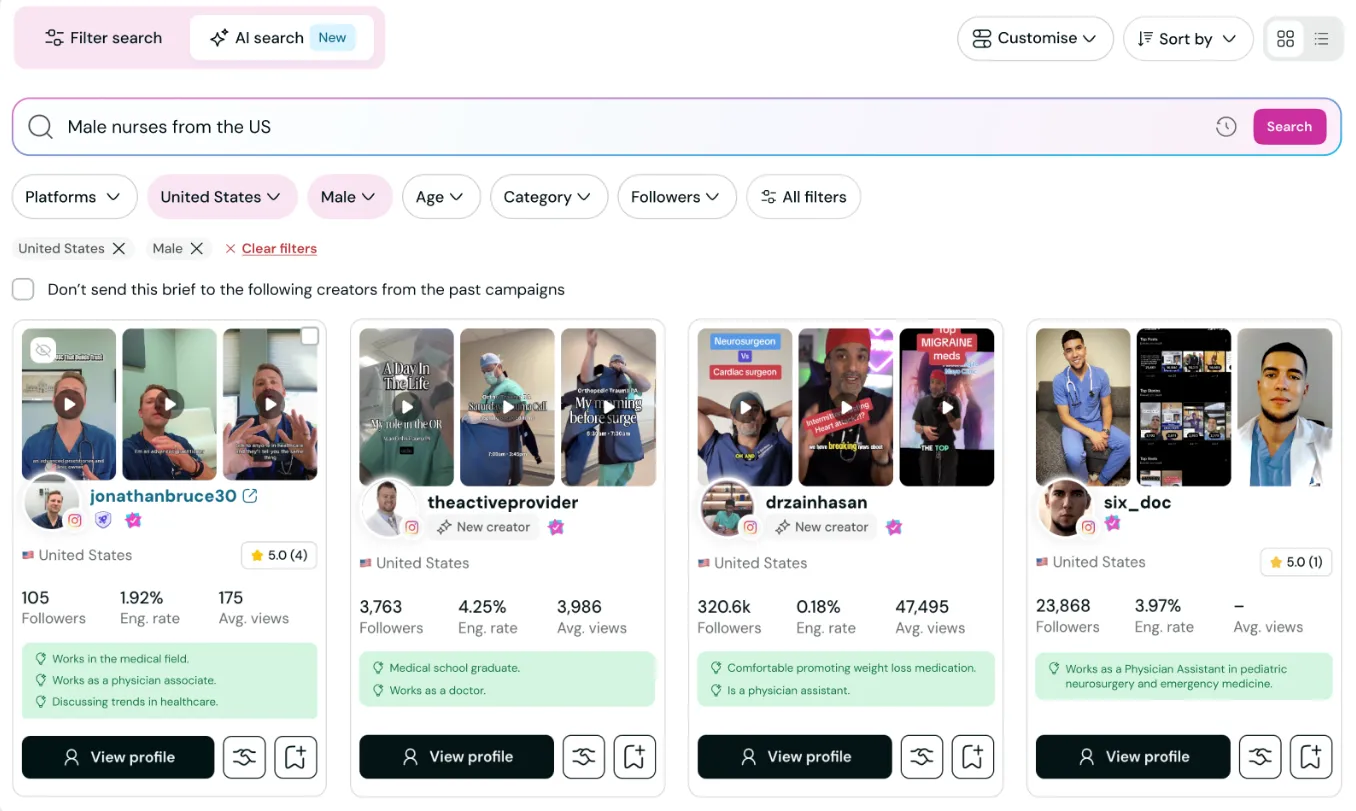
Every cost driver has a direct answer inside the platform:
- Usage rights are included in the base price as standard
- Whitelisting & paid amplification run through native Meta Partnership Ads and TikTok Spark Ads connections, so account access is set up once through the platform rather than re-negotiated per creator, per campaign.
- Raw footage is included in our interactive briefs, so it isn't a separate line item every time you need assets to cut your own variants.
- Turnaround time benefits from scale: applications typically land within days, and delivery stays on a standard timeline without needing to pay a rush premium to jump the queue.
- Production complexity gets easier to solve, not harder, in a pool this size. Find creators who already have the right equipment, location, or experience for a complex brief takes a search, not a bespoke casting process.
- Creator profile: with creators across 57+ countries, hard-to-source demographics or geographies are easier to find without the scarcity premium described above.
Over 3,500 DTC brands, apps, and agencies already run their campaigns through the platform.
Book a demo or try for free today.
FAQs
The questions brands ask most before setting a UGC budget:
How much do UGC creators charge in 2026?
Pricing varies by experience tier, deliverable type, and how much production work goes into the piece. A raw clip costs less than a fully edited video, and an experienced creator handling a complex brief charges more than someone just starting out. See the tier breakdown above for the current working ranges.
Do follower counts affect UGC rates?
No. UGC rates are priced on production effort (deliverables, editing, complexity) not audience size, because the content usually isn't posted to the creator's own account. Follower count only matters for influencer pricing, where you're paying for reach.
What's the difference between UGC pricing and influencer pricing?
UGC pricing pays for content creation as a service. Influencer pricing pays for access to an audience - the creator posts on their own account, and you're compensating them for their followers' attention. The two are separate line items and shouldn't be quoted against the same rate card.
.png)