#CleanBeauty has over 1.9 billion views on TikTok and 6.1 billion tags on Instagram.
It couldn’t be more clear that shoppers want to know what’s in their products, where ingredients come from, how packaging is made, and whether brands are actually walking the walk when it comes to ethics and the environment.
The proof is also in how much the sustainable beauty industry has grown.
The market was valued at $190.7 billion at the end of 2024 and is predicted to reach $433.2 billion by 2034.
It’s… massive.
This is why clean and sustainable beauty influencers are so important.
These creators help bridge the gap between brand promises and real-world trust. They don’t just promote products; they educate, test, question, and explain, often to audiences who are actively trying to make better buying decisions without falling down a research rabbit hole.
So… what exactly are sustainable beauty influencers?
They’re creators who focus on beauty products that are made with safety, transparency, and sustainability in mind.
But despite the name, their content usually goes far beyond ingredient lists.
You’ll often see them:
- Breaking down ingredient formulas
- Talking honestly about what does and doesn’t work
- Sharing personal journeys toward more conscious consumption
- Calling out greenwashing (yes, even when it’s uncomfortable)
- Highlighting small, ethical, or founder-led brands alongside bigger names
Most importantly, clean beauty influencers build trust by being selective.
Their audiences know that not every launch makes the cut and that credibility is exactly what makes their recommendations powerful.
Why Invest In Sustainable Beauty Influencers?
- Higher-quality engagement as well as reach. Sustainable beauty audiences tend to be deeply invested. They save posts, read captions, ask thoughtful questions, and come back for updates. That kind of engagement is gold, especially for products that really benefit from education and context.
- Credibility you can’t manufacture. You can’t “ad spend” your way into authenticity. When a trusted creator explains why they use your product, it lands very differently than a polished brand ad.
- Longer-term brand loyalty. Clean beauty shoppers don’t tend to hop between brands every week. When they find something that works and aligns with their ethics, they stick with it. Beauty influencers can help kickstart that relationship.
- Stronger storytelling opportunities. Influencers can unpack your sourcing, packaging choices, certifications, and impact initiatives in a way that feels human and relatable without overwhelming people.
- Protection against greenwashing backlash. Working with creators who are known for being thoughtful (and sometimes critical) actually strengthens your credibility. If they believe in your brand, their audience is far more likely to believe too.
Top Sustainable & Clean Beauty Influencers
Here are some of the top sustainable beauty influencers around at the mo.
1. Yoga Mama
Yoga Mama shares skincare advice, ingredient education, and holistic lifestyle content. Her work centers on transparent, “non-toxic” product reviews and simple, wellness-inspired routines that connect self-care with mindfulness.
2. Hey Haley Taylor
Haley mixes personal storytelling with practical clean beauty education, often testing products on camera and talking through why they work (or don’t).
3. Vegan Beauty Addict
True to the name, the Vegan Beauty Addict (a.k.a. Jess) is a go-to resource for vegan, cruelty-free beauty launches. Expect deep-dive reviews, ingredient callouts, and side-by-side comparisons that help followers make confident buying decisions.
4. Hailee Jones
Hailee Jones is a Los Angeles–based makeup artist, content creator, and beauty influencer known for her focus on clean beauty and cruelty-free products. She specializes in user-generated content (UGC), product demonstrations, and social media campaigns that blend artistry with authentic consumer engagement.
5. Hola Daniela
Daniela is a digital creator and big advocate for clean beauty and mindful self-care. She creates educational and lifestyle content focused on sustainable skincare, non-toxic cosmetics, and holistic well-being.
6. Brandy Reyes
Brandy Reyes is a clean beauty and lifestyle content creator known for her content about natural skincare, minimalist makeup, and sustainable living. She’s built a following on social media by sharing ingredient-conscious product recommendations and holistic wellness routines.
7. Organic Oracle
Organic Oracle (a.k.a. Jeannine) shares plenty of ingredient breakdowns, myth-busting posts, and explanations that make complex clean beauty topics easy to understand. Her main focus is on ingredient transparency, sustainability, and educating her followers so they can make informed choices about the products they use on their skin.
8. Em J Edit
Em creates polished yet understated routine videos (think sink-side skincare, close-up texture shots, and soft voiceovers) that show exactly how sustainable products fit into real daily rituals.
9. Kabuki Rune
Kabuki Rune is a UK-based cruelty-free beauty and lifestyle creator who promotes clean beauty rituals, eco-conscious skincare, and minimalist self-care. Her videos feel almost meditative, and include slow beauty routines, intentional product use, and a strong focus on self-connection.
10. Ce Bek
Ce Bek is a German creator who brings a thoughtful, analytical approach to skincare, often reviewing products over time and sharing realistic expectations. She highlights brands and routines that work well but also have ethical ingredients and packaging.
11. Sruthi Jayadevan
Sruthi Jayadevan is an Indian-American content creator, stylist, and model known for blending traditional South Asian aesthetics with contemporary fashion and clean-beauty ideals. She creates informative, approachable videos that blend science-backed skincare with clean beauty principles.
12. Jeans and a Tea Cup
Jessica founded Jeans and a Tea Cup in 2012 to promote “elevated casual” style through ethical fashion, sustainable living, and clean beauty. Her aim is to inspire readers to make intentional purchases and embrace slow fashion.
13. Valeri Almanskaya
Based between Europe and the United States, Valeri combines lifestyle, fitness, and sustainable beauty themes that lean hard into the “clean girl” aesthetic. Her content is very bold and detail-oriented, often focusing on textures, routines, and close-ups of products.
14. Blessed Holistic Life
Blessed Holistic Life is run by Brianna. She’s known for promoting low-tox wellness, faith-centered self-care, and clean-beauty education across her blog and social media. Her content is all about mindful product choices, balanced nutrition, and integrating health with spirituality.
15. Kristin from Seattle
Kristin From Seattle is the online moniker of Kristin Adair, a Seattle-based clean beauty reviewer, writer, and content creator. She’s best known for her detailed product reviews and advocacy for ethical, transparent practices within the beauty industry. She uses her large platform to spotlight independent and sustainable skincare and cosmetics brands with non-toxic and cruelty-free principles.
16. Nazila
Nazila’s content focuses on conscious care, including skincare, self-care, and sustainability. She’s become well known for promoting ethical beauty choices.
17. Immy Lucas
Immy Lucas (formerly of Sustainably Vegan) is a British sustainability and vegan lifestyle influencer. She’s known for promoting low-impact living, ethical consumerism, and plant-based eating through her YouTube channel and Instagram.
18. Eco Well
Eco Well is a science-based beauty education and media platform founded by cosmetic scientist Jen Novakovich. It focuses on science communication in cosmetics, helping consumers and professionals understand product formulation and ingredient safety in the beauty industry.
19. Glow by Ramón
Ramón Pagán, known online as Glow by Ramón, is a cosmetic chemist, licensed esthetician, and skincare content creator. He is recognized for demystifying skincare science through accessible education.
20. The Green Product Junkie
Katie O’Sullivan is a long-standing voice in the clean beauty space, known for thorough reviews and thoughtful brand evaluations.
How to Collaborate with Clean Beauty Influencers
Collaborating with clean beauty influencers works best when you treat it as a partnership. These creators are trusted because they’re selective, honest, and have very high values.
If you want results (and avoid awkward, low-performing campaigns), here’s how to do it properly.
Look for Creators Who Practice What They Preach
Start by checking whether a creator genuinely lives the clean beauty lifestyle or just occasionally posts about it.
Look past their follower count and ask:
- Do they use the same products repeatedly over time?
- Do they talk openly about ingredients, packaging, and brand values?
- Are they willing to say something wasn’t for them in reviews?
Scroll back a few months. If their feed shows a consistent pattern of promoting similar products or messages, that’s a good sign.
Basically, if the creator could talk about your product without being paid, you’re on the right track.
Set Clear Campaign Goals
Clean beauty is an interesting one because it’s not usually an impulse buy.
Research shows 46% of consumers buy more sustainable products to reduce their environmental impact, and many are willing to pay a premium for that. A higher price point usually needs more deliberation and education.
Before you brief creators, be clear on what you’re optimizing for:
- Education: ingredient explainers, “who this is for / not for,” or myth-busting
- Product longevity: showing a product over weeks, not one unboxing
- Refill or routine adoption: how the product fits into everyday life
Pro tip: Fewer creators and deeper storytelling often outperforms large, shallow seeding campaigns.
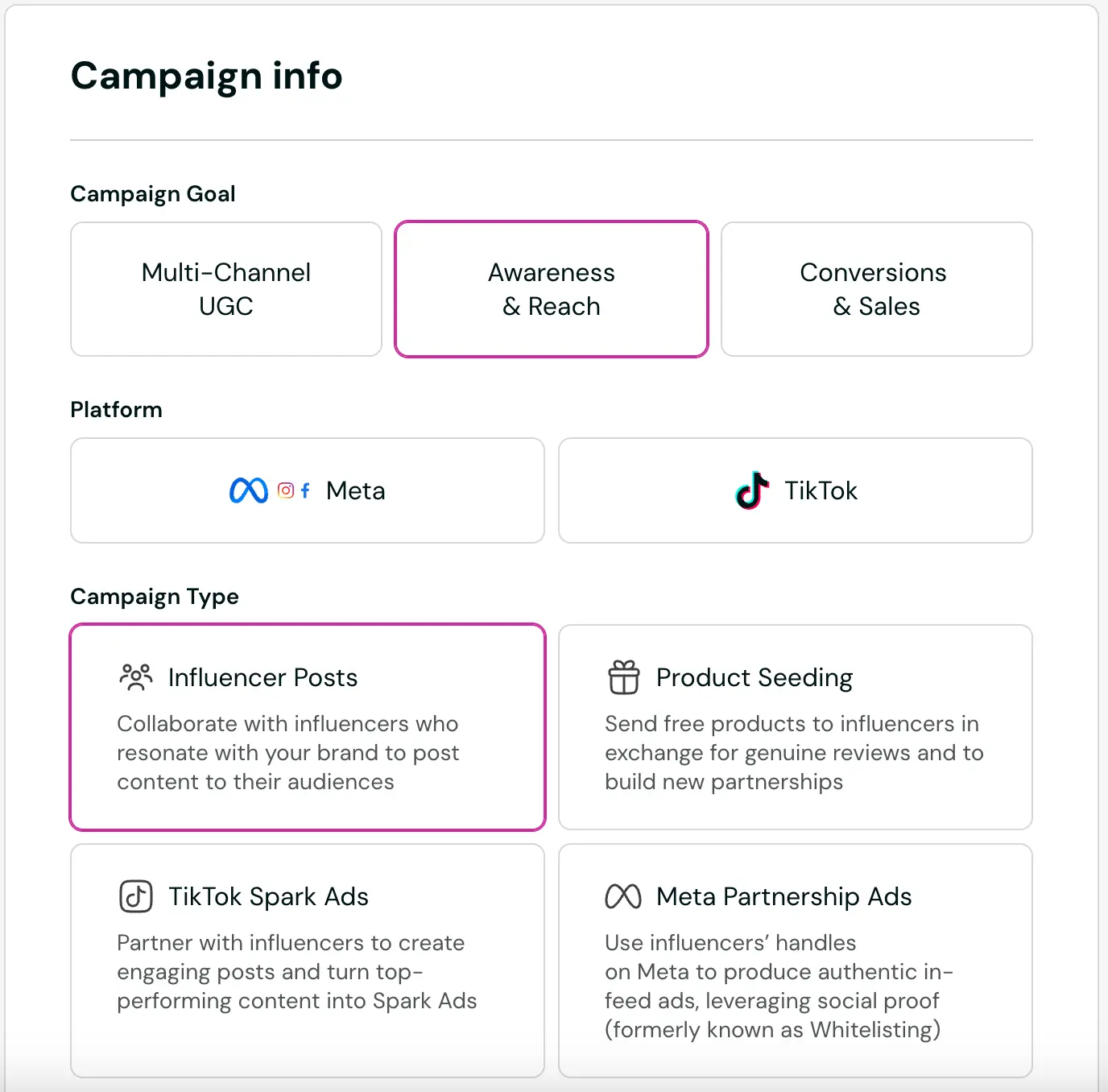
Insense’s creative brief builder lets you get really granular on what you want from creators. Tell them exactly what kind of content you want while still giving them free reign to be creative (they know their audience best, after all).
Design Collaborative Content
Clean UGC beauty creators know how to talk to their audience. Your job is to provide direction rather than a script and let them do what they do best.
High-performing formats include:
- “Why I choose clean” stories that tie personal values to product choices
- Routine diaries that show how they use products across mornings, nights, or travel
- Refill or repurchase moments that highlight sustainability in action
Invite creators into the process early. Ask how they would naturally introduce your product, and build the campaign around that.
Track Metrics That Actually Matter
Impressions alone don’t give you the full story of how something performed, especially in clean beauty, where shoppers might take a bit longer to commit.
Instead, look at:
- Engagement quality: saves, thoughtful comments, repeat questions
- EMV lift: are people talking about your brand more during and after the campaign?
- Long-term retention signals: repeat creator mentions, audience familiarity, post-campaign DMs or email signups
Platform Strategy for Sustainable Beauty Influence
Not every platform plays the same role in influencer marketing for clean beauty, and that’s a good thing.
The strongest campaigns adapt the message to how people actually use each channel, rather than doing a good ol’ copy-paste job everywhere.
Here’s how to think about platform strategy:
Instagram: Educate and Build Trust Over Time
Instagram tends to be a “slow-consumption” platform.
People save posts, come back to them, and use them as reference points when they’re ready to buy.
What works best here:
- Ingredient explainers that break down what’s inside a product and why it matters
- Educating via carousels (e.g. “5 things to know before switching to clean retinol”)
- Sustainability rituals like morning or evening routines that show repeated, realistic use
Instagram is ideal for positioning your brand as thoughtful and transparent.
It’s not a platform for instant conversions (although that can be a nice side effect).
Instead, you want to become the brand someone remembers when they happen to be standing in front of a shelf or filling their online cart.
TikTok: Show the Proof
TikTok is great for inspiring people to buy (it’s why the #TikTokMadeMeBuyIt hashtag is so popular).
Short-form video (a la TikTok) is perfect for showing how sustainable beauty works in real life, particularly for things like packaging and refills.
High-performing formats here include:
- Packaging hacks (how refills work, how to reuse or recycle components)
- Refill demos that make sustainability feel simple, not inconvenient
- Ingredient comparisons (“clean vs conventional… here’s the difference”)
Scrappy, real-world demos often do better than highly polished content on TikTok, especially when creators explain things as they go. Keep that in mind.
YouTube and Long-Form: Go Deep for High-Intent Buyers
YouTube and written guides are where sustainable beauty brands can slow things right down and build serious credibility.
This is the place for:
- Deep dives into formulations, sourcing, and brand philosophy
- Sustainability interviews with founders, formulators, or supply-chain experts
- Lifecycle breakdowns that explain packaging, refills, and environmental impact end to end
These formats attract high-intent audiences, a.k.a. people who are actively researching and comparing before they buy.
In fact, 40% of consumers always or usually research a beauty brand’s sustainability credentials before making a purchase.
So, one strong long-form piece can continue driving trust and traffic a long time after a campaign ends.
How Insense Helps You Do It Better
Running influencer campaigns in sustainable beauty comes with an extra layer of complexity.
You have to vet for authenticity, manage long-term partnerships, and brief creators properly so they stick to your values and mission. This is where Insense really shines. It’s built to support thoughtful, high-quality collaborations, rather than just one-off posts, so it’s ideal for brands in the sustainability sector.
Here’s how:
- Smart briefs that set creators up for success. Insense’s detailed brief builder helps you communicate why your product exists. Through the pre-built blocks, you can share your brand values, set clear goals, and add context while still giving creators the room to stay authentic.
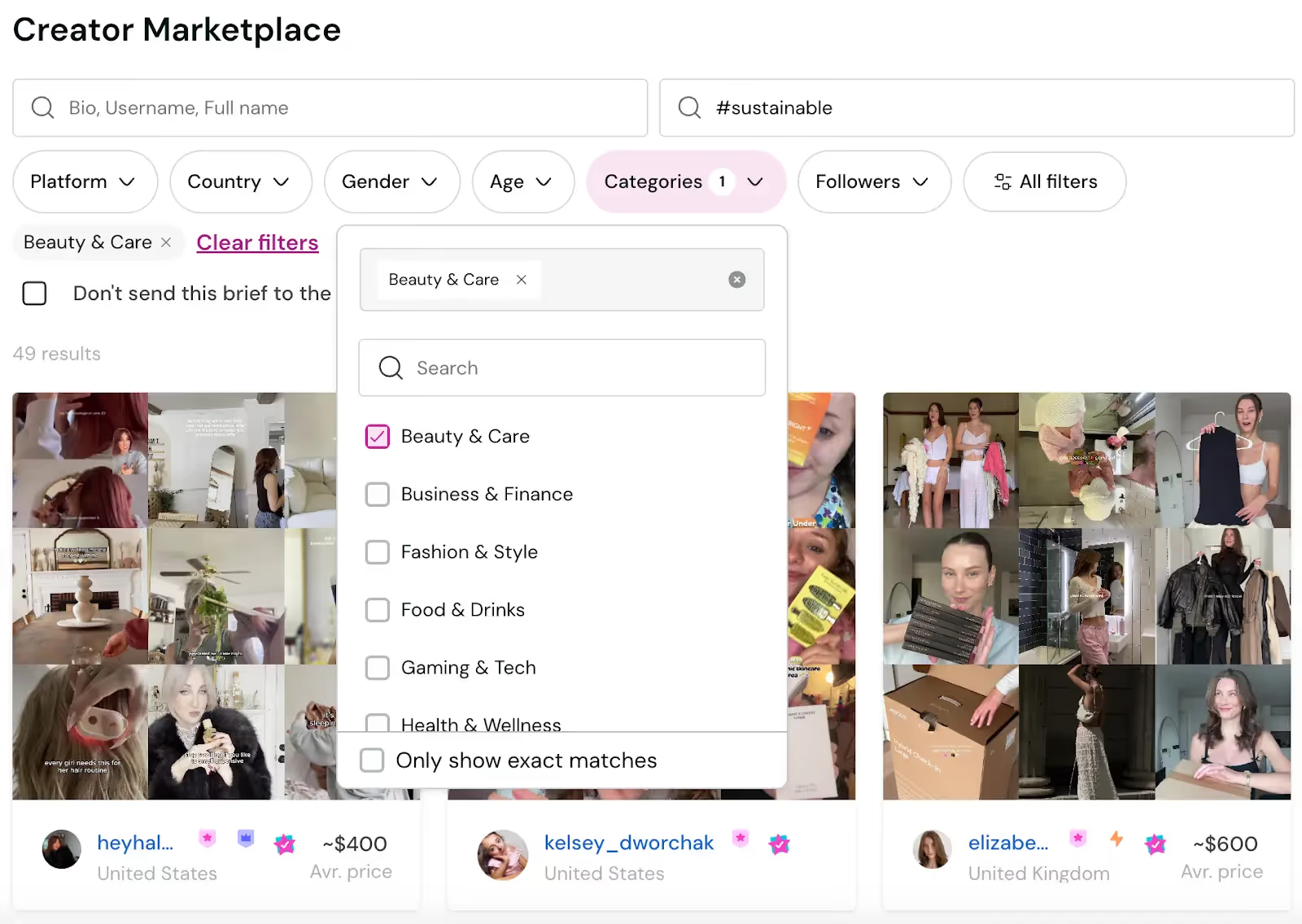
- A marketplace to help you find every type of creators. Use filters like location, category, and hashtags to find relevant creators who are strong on specific platforms. You can see their past collaborations and style for extra info.
Choose the “beauty & care” category in the creator marketplace and refine your search with hashtags like #sustainable.
- Centralized campaign management. Sustainable beauty campaigns often involve several touchpoints (especially if you’re using a variety of platforms). Insense can track and store contracts, approvals, and deliverables all in one place. This is especially useful for brands investing in long-term trust-building rather than quick-hit campaigns.
- Repurpose content in ads. With Insense you can reuse your best performing content in ads. Whitelist creators and run ads directly from their profiles, test user-generated content against traditional brand ads, and scale the things that work.
- Managed services for a more hands-off approach. If your team is lean (or stretched), Insense’s managed services can take all this off your place. The dedicated team can source and vet creators for you, set up your campaigns, and optimize them so they perform as best as they can.
If you’re serious about working with creators who actually align with your sustainability values (and you should be!), try Insense for free or book a demo.
.avif)

.avif)